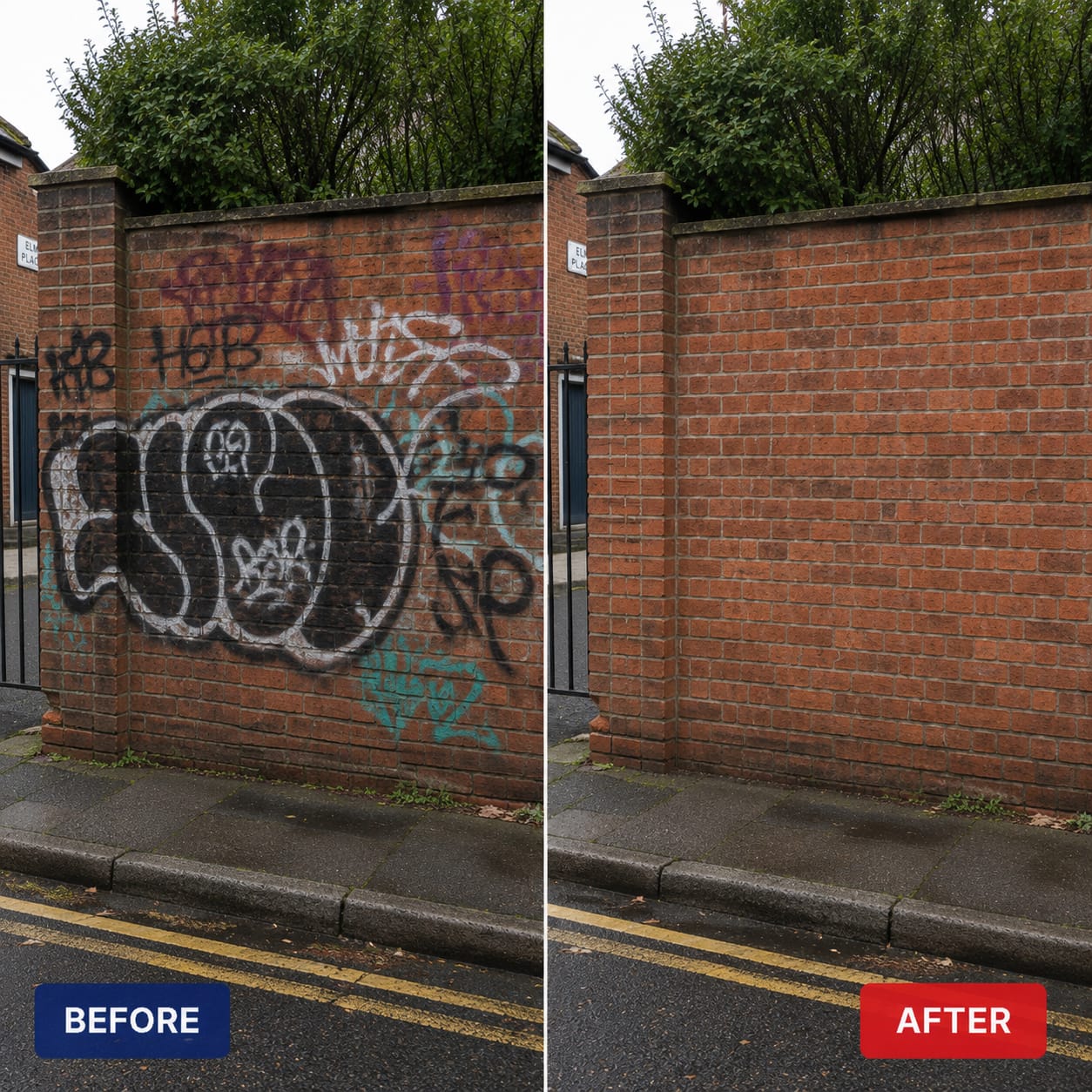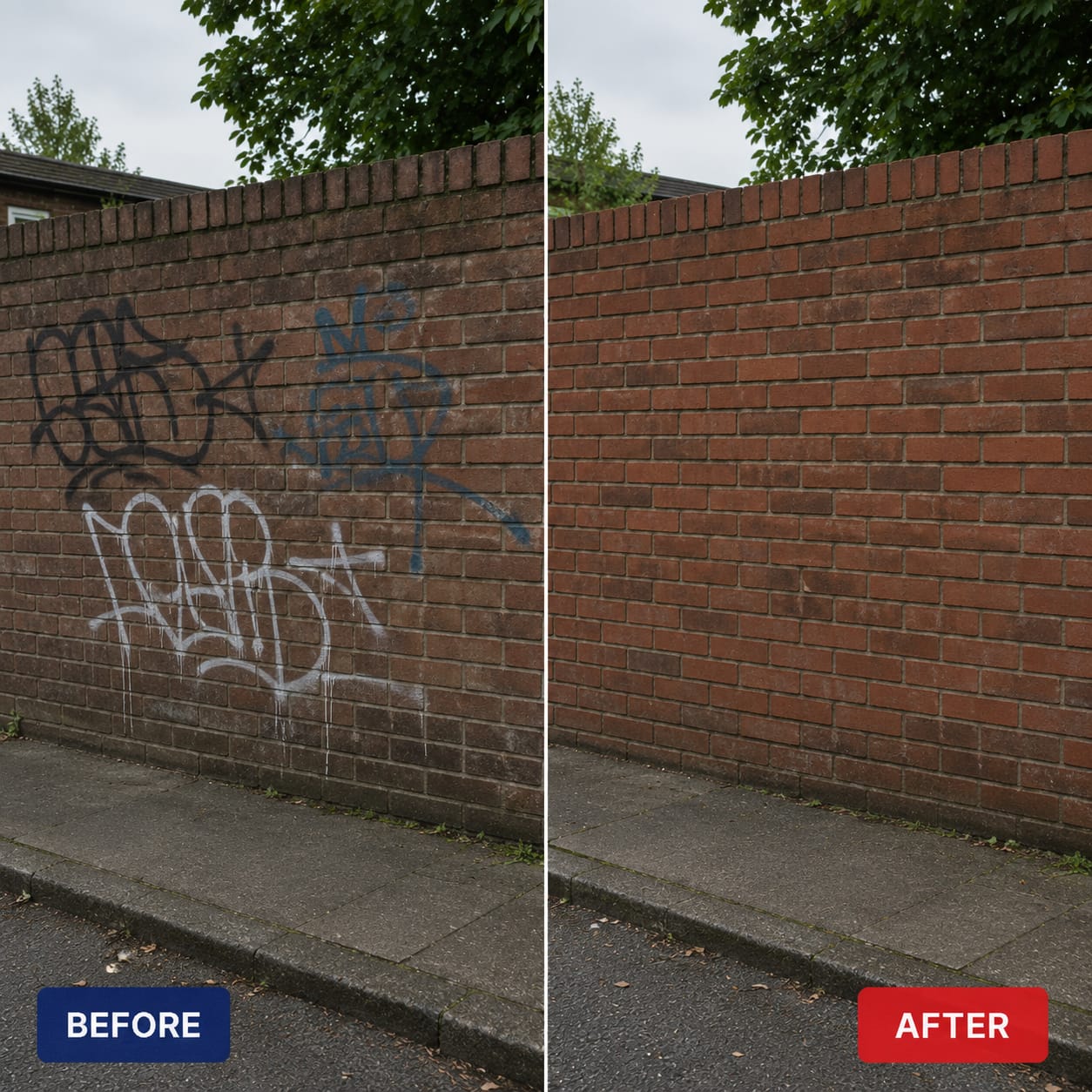
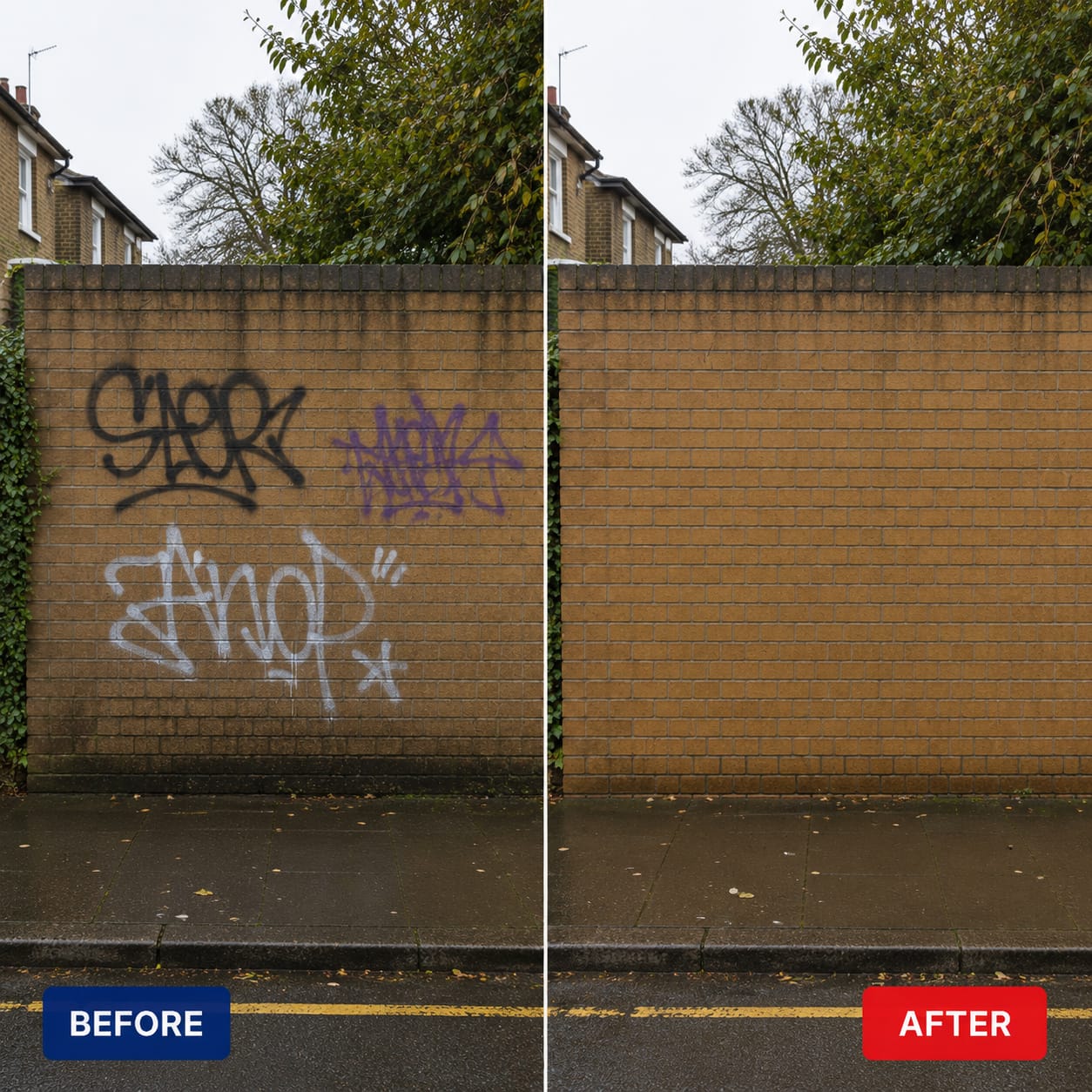
Spray paint on a brick wall is one of the most common graffiti problems — and one of the easiest to make worse. Reach for a pressure washer or the wrong chemical and you can be left with a permanent shadow of the tag, crumbling mortar, or a bleached patch that looks worse than the graffiti did.
This guide walks you through how to remove graffiti from brick safely, step by step: what to check first, which methods actually work, the mistakes to avoid, and when it's smarter to bring in a specialist.
Why brick is so difficult to clean
Brick and the mortar between it are porous. The surface is full of tiny pits and channels that soak up spray paint like a sponge, so the pigment doesn't just sit on top — it draws down into the material. That's why scrubbing or jet-washing so often fails: it drives the paint deeper and spreads it over a wider area.
The stakes are higher than they look. Older, softer bricks and the lime mortar used on period and listed buildings are easily damaged. Strip away the hard outer 'fireskin' of a brick and you expose the soft core underneath, which then weathers and crumbles far faster. A rushed clean-up can turn a small problem into a repointing or brick-replacement bill — which is exactly why matching the method to the surface matters so much.
Before you start: what you'll need
A little preparation saves a lot of damage. Before you touch the main tag, get the following in order:
- A clear look at the wall in daylight — you need to see the brick type and how far the paint has spread.
- The type of paint, if you can tell — spray paint, emulsion and marker all behave differently.
- A dedicated graffiti remover made for masonry — not a general household solvent.
- Basic PPE: gloves and eye protection, plus a mask and good ventilation when using chemicals.
- Clean water and a low-pressure hose or sprayer for rinsing.
- A small, hidden test patch chosen before you start.
- An honest look at the wall's age — if it's old, soft or listed, consider stopping here and calling a specialist.
Step 1: Identify the brick and the paint
Why it matters: the safe method depends entirely on what you're dealing with. Modern, hard-fired facing brick can take a firmer approach than soft Victorian stock or heritage stone.
How to do it: look closely at the brick — is it hard and uniform, or soft, flaky and old? Then identify the paint: fresh spray paint lifts far more easily than paint that's been baked on by weeks of sun. If the wall is listed or you're unsure of its age, treat it as delicate by default.
Step 2: Always test a small area first
Why it matters: every brick and every product reacts differently. A test patch is the difference between a clean result and a permanent stain across the whole wall.
How to do it: pick a low, hidden section, apply your chosen remover to a small area, and follow the product's dwell time exactly. Gently remove, rinse, and — crucially — let it dry before judging it. Bricks can look clean when wet and reveal a shadow later. Only continue if the test area comes up clean with no damage.
Step 3: Choose the right removal method
Why it matters: the wrong tool causes most of the damage. Professionals keep several methods on hand and pick per surface. The main options are:
- Specialist masonry graffiti removers — gels and poultices that draw the pigment back out of the pores rather than pushing it in. Best for porous brick and stone.
- Low-pressure steam or superheated-water systems (such as ThermaTech or DOFF) that lift paint with heat rather than force, so the surface isn't eroded.
- Chemical-free methods for sensitive spots — important near canals, rivers and watercourses, which run through much of the North West.
The golden rule: heat and the right chemistry beat brute force. If you find yourself turning the pressure up, that's the sign to change your approach — not push harder.
Step 4: Apply, wait, and work gently
Why it matters: most removers work by dwelling on the paint and breaking its bond with the surface. Rushing this stage is what tempts people into scrubbing and blasting.
How to do it: apply the remover evenly, give it the full dwell time on the label, then agitate gently with a soft brush only if needed. Let the product do the work, and never finish with a full-power pressure washer — a low-pressure rinse is plenty on brick.
Step 5: Rinse, check for ghosting, and repeat if needed
Why it matters: brick often needs more than one gentle pass. Trying to get it all in a single aggressive go is what causes the damage.
How to do it: rinse thoroughly with clean, low-pressure water and let the area dry fully before judging the result. If a faint 'ghost' of the tag remains, a second light application is far safer than a harder scrub. Deep staining that won't shift after a couple of gentle passes is your cue to call a professional rather than escalate.
Pro tips from the field
- Act fast — fresh graffiti lifts far more easily than weathered paint, and quick removal discourages repeat tagging.
- Work on a mild, dry day where you can; extreme cold or strong sun can affect how removers perform.
- Keep a photo record if it's for a council report or insurance claim.
- Once the wall is clean, consider an anti-graffiti coating so any future tags simply wash off.
Common mistakes to avoid
- Full-power pressure washing — it erodes the brick face and blasts out the mortar.
- Household paint strippers or random solvents — the wrong chemical can set a permanent stain.
- Wire brushes and abrasive pads — they scratch the surface and grind pigment deeper.
- Painting over the tag — it rarely matches, draws the eye, and traps the problem underneath.
- Judging the result while the wall is still wet — always let it dry first.
A real-world example
A scenario we see often: a business finds its red-brick frontage tagged overnight and attacks it with a hired pressure washer before opening. The paint fades — but the mortar is left pitted and a pink shadow stays baked into the brick, turning one problem into two. Handled the other way, with a masonry-safe remover, the right dwell time and a gentle rinse, the same wall comes up clean with the brick untouched. The lesson is always the same: patience and the right product beat force every time.
Frequently asked questions
Can I remove graffiti from brick myself?
For a small, fresh tag on modern, hard-faced brick, yes — with a proper masonry graffiti remover and a careful test patch. For old, soft or listed brick, large or ingrained graffiti, or anything you're unsure about, it's safer and usually cheaper to call a specialist than risk damaging the wall.
Will a pressure washer remove graffiti from brick?
Not safely on its own. High pressure erodes the brick face and mortar and tends to drive paint deeper. Professionals use low-pressure steam or hot-water systems combined with the right chemistry — not raw pressure.
What is 'ghosting' and can it be removed?
Ghosting is the faint shadow left after the main paint is gone, caused by pigment that soaked into the pores. It can usually be lifted with a further gentle application or a specialist poultice — but not by scrubbing harder.
How do I stop the same wall being tagged again?
Fast removal is the best deterrent, and an anti-graffiti coating makes any future clean quick and cheap. For repeatedly-targeted walls, a coating usually pays for itself.
The bottom line
Removing graffiti from brick comes down to three things: identify the surface, match the method, and choose patience over pressure. Test first, work gently, and know when the job needs a professional — the cost of specialist removal is almost always lower than repairing a damaged wall.
Graffiti on your brickwork?
We remove graffiti from brick, stone and render across Manchester, Cheshire and the North West — matched to every surface, with rapid response available. Get a free quote or site assessment.