Paint Stripping from Brick, Stone & Exterior Walls
No Graffiti strips old masonry paint, limewash, textured coatings and failed paint from brick, stone, render and metalwork across Manchester, Greater Manchester, Cheshire and the North West. We use stripping poultices and low-pressure steam, never grit blasting, so the paint comes off and the face of the building stays on. Every job starts with a trial patch, and we have been doing this work since 2001.
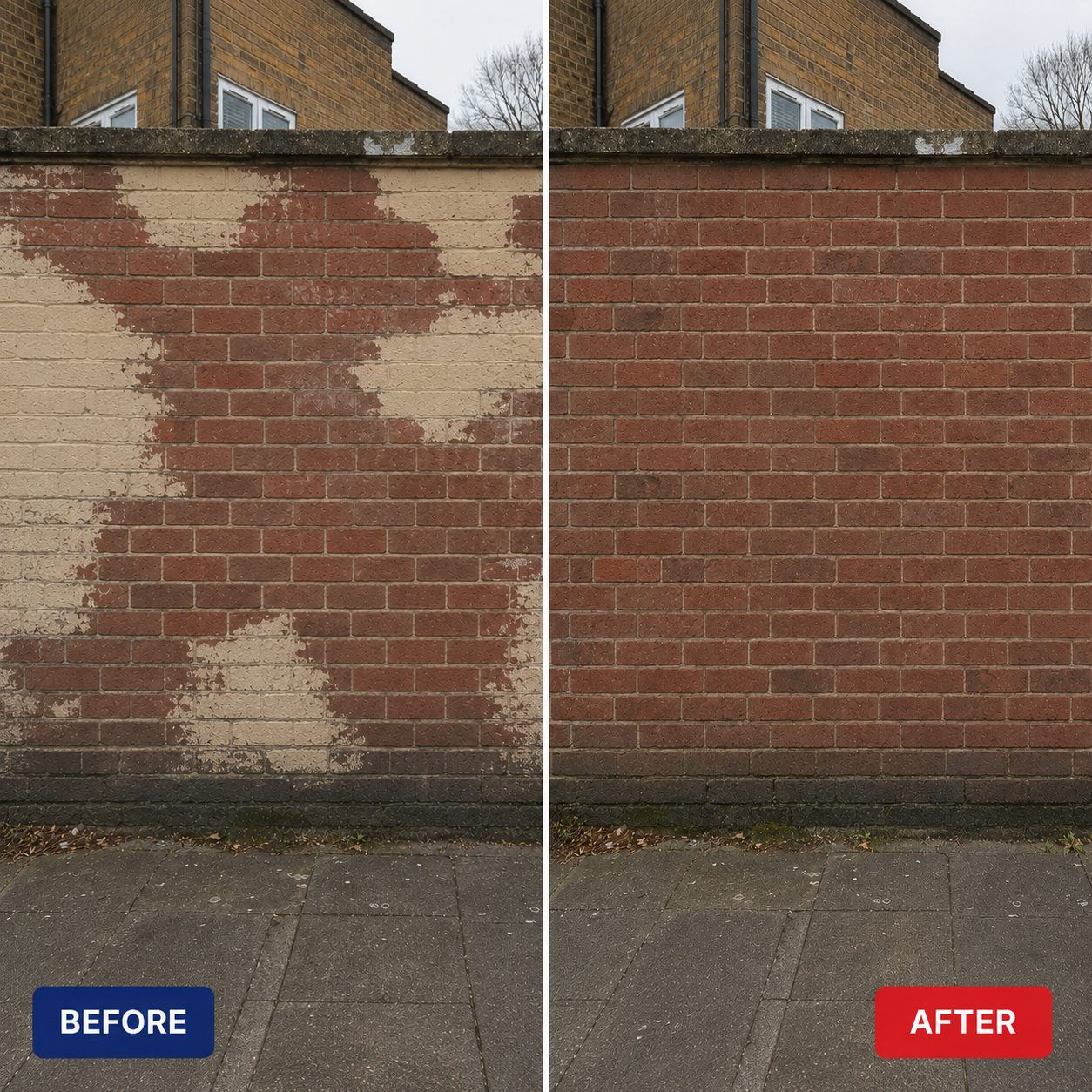
Paint stripping is the job of taking a building back to its original brick, stone or render after it has been painted. It might be masonry paint put on a Victorian terrace in the 1980s, limewash on an old cottage, textured coating on a block of flats, or paint used to cover up graffiti on a boundary wall. Whatever the paint, the aim is the same: get it off without damaging the surface underneath.
That second part is where most paint stripping goes wrong. Brick, stone and render are porous, so paint keys deep into the surface. The fast methods that remove it, grit blasting and high-pressure jet washing, remove the surface along with it. We take the slower, safer route, and the result is a wall that looks like it was never painted.
What is the best way to strip paint from brick?
The best way to strip paint from brick is a chemical stripping poultice followed by a low-pressure steam or hot-water rinse. The poultice is spread over the paint, covered and left to work, usually for several hours or overnight. It softens the paint and breaks its grip on the brick. The softened paint is then lifted off with the poultice and the wall is rinsed with gentle heat rather than force.
Thick or many-layered paint usually needs two or three applications. That is normal and is why a trial patch matters. It tells us which stripper works on that particular paint, how many coats are needed, and what the brick looks like underneath.
Avoid anyone who offers to sandblast or jet wash paint off old brick. It works fast, but it strips the fired face off the brick for good, and the wall will soak up water and dirt for the rest of its life.
What can you strip paint from?
We strip paint and old coatings from most exterior surfaces:
- Brick: houses, terraces, mills, gable ends and garden or boundary walls. See our brick cleaning service for the clean that follows.
- Stone: sandstone, limestone and York stone, including window surrounds, sills and steps. See stone and masonry cleaning.
- Render: painted or textured render taken back to a sound base. See render and cladding cleaning.
- Concrete: walls, steps, columns and car park structures.
- Metal and timber: railings, gates, doors, shutters and steelwork prepared for repainting.
- Painted-over graffiti: mismatched patches of cover-up paint removed so the wall looks even again.
Why strip masonry paint off an old house?
Most brick buildings in the North West were built to breathe. Rain soaks into the brick and dries back out through the face. Modern masonry paint, especially plastic-based paint, seals that face, so moisture gets trapped behind it. Over time the paint bubbles and flakes, the brick behind can crumble in frosty weather, and damp can show up inside the house.
Stripping the paint lets the wall dry out properly again. It also brings back the look of the original brick or stone, which is why it is so common on Victorian and Edwardian terraces across Manchester, Stockport, Salford and Cheshire. It ends the cycle of repainting every few years too.
Got a painted wall you want back to brick?
Send us photos and rough sizes. We'll tell you honestly whether stripping is the right answer and how we'd do it.
How does a paint stripping job work?
Every paint stripping job follows the same five steps:
- Survey: we check the paint type, how many layers there are, the condition of the brick or stone, the mortar, the access, and whether lead paint is present.
- Trial patch: we strip a small, discreet area and agree with you, in writing, what the finished wall will look like.
- Protection: windows, doors, plants, paths and drains are sheeted and protected, and run-off is controlled.
- Stripping: poultice applied, left to work, then lifted with low-pressure steam or hot water. Repeated where needed.
- Finishing: a final clean and neutralising rinse, waste collected and taken away, and photos of the finished job.
Is paint stripping safe for listed and heritage buildings?
Yes, when the method is gentle enough. Heritage brick, soft sandstone and lime mortar are exactly the surfaces that blasting destroys, so they are where poultices and low-pressure steam cleaning make the biggest difference. We can provide a written method statement for the building owner, their surveyor or the council's conservation officer before work begins.
If a building is listed or in a conservation area, changing its appearance may need consent from the local council. We are happy to give you the information your council asks for. Our guide to chemical cleaning and poultices explains how the strippers work in more detail.
What happens after the paint comes off?
Once a wall is back to bare material, you can see its true condition for the first time. Most walls then get a full clean to even out the colour, and any repointing or brick repairs that were hidden under the paint become clear. On a whole building, stripping often runs alongside facade cleaning so the access only has to be set up once.
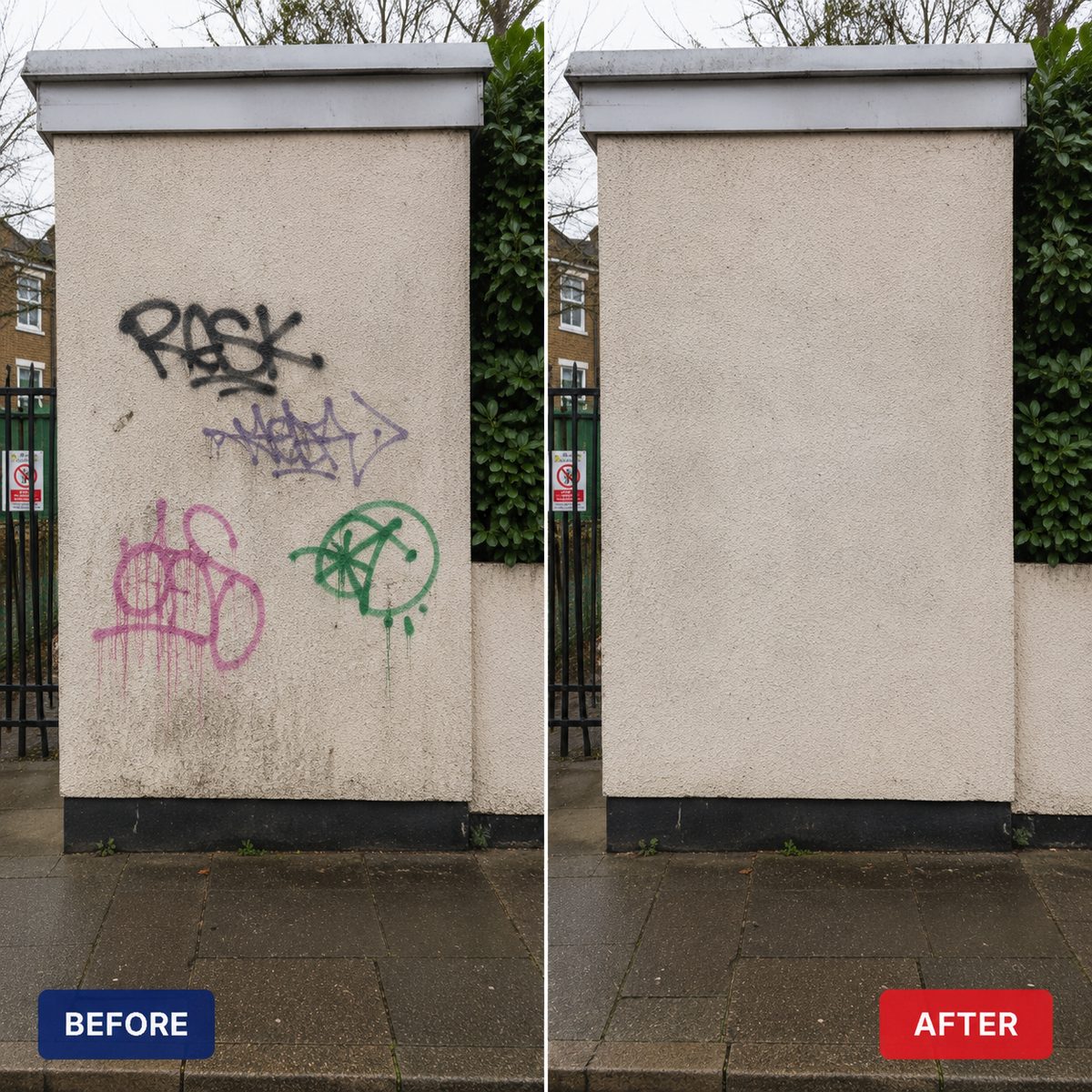
If the paint you are removing was covering graffiti, the bigger question is how to stop it happening again. An anti-graffiti coating on the freshly stripped wall means the next tag washes off in minutes. For smaller jobs like a fresh tag, paint splash or spill, see our spray paint removal service instead.
Who do we strip paint for?
We strip paint for councils, housing associations, managing agents, commercial landlords, schools and developers, as well as homeowners restoring a painted house. Councils and housing associations often use us to take mismatched cover-up paint off estate walls and civic buildings, while homeowners usually want a painted terrace taken back to its original brick.
Whoever the client, the standard is the same: CHAS-accredited, fully insured teams, a risk assessment and method statement for every job, and a same-day response to every enquiry.
Paint stripping across Manchester and the North West
Serving Greater Manchester, Cheshire, Merseyside and Lancashire. Call us or request a free, no-obligation quote.
What's Included
Painted brick
Masonry paint stripped off brick houses, terraces, gable ends and boundary walls, back to the original brick.
Stone & render
Paint, limewash and textured coatings removed from sandstone, limestone and render without scarring the surface.
Heritage buildings
Gentle methods and written method statements for listed buildings and conservation areas.
Metal & timber
Flaking paint stripped from railings, gates, doors and steelwork ready for repainting.
Why Choose No Graffiti
- Working since 2001, with more than 10,000 projects completed
- Poultices and low-pressure steam, never grit blasting
- A trial patch and an agreed finish before the full job starts
- CHAS-accredited and fully insured, with RAMS for every job
Who We Do This For
Councils & Local Authorities
Housing Associations
Commercial & Facilities
Facilities Management
Maintenance Contractors
Business Improvement Districts
Managing Agents
Transport & Highways
Retail Parks & Shopping Centres
Multi-Site Retail & Hospitality
Shops & Restaurants
Construction & Development
Schools & Academy Trusts
Universities & Colleges
Healthcare
Industrial & Business Parks
Utilities & Telecoms
Homeowners & Landlords
Areas We Cover
We provide paint stripping across Greater Manchester, Liverpool and Merseyside, Lancashire, Cheshire, Leeds, Sheffield and Birmingham:
Frequently Asked Questions
Can paint be stripped from brick without damaging it?
Yes, in most cases. The safe way is a stripping poultice or gel that softens the paint so it can be lifted off with low-pressure steam or hot water. Grit blasting and high-pressure jet washing also remove paint, but they take the hard fired face off the brick too, which leaves it rough, thirsty and quick to get dirty again. We never use them on masonry.
How long does paint stripping take?
A typical terraced house front takes two to four days. Most of that time is the stripper working on the paint. Thick or many-layered paint often needs a second coat of stripper, and we tell you how many to expect after the trial patch, so the programme is realistic from the start.
How much does paint stripping cost?
It depends on the size of the wall, how many layers of paint there are, the type of paint and the access needed. Our call-out fee is around £200 + VAT depending on where the site is, with the stripping priced on top. Send us photos and rough sizes and we will give you a clear, written price after a site visit and a trial patch.
Should I strip the paint off my house?
Often, yes. Masonry paint on old brick traps moisture in the wall, which can cause damp inside and flaking outside. Stripping it lets the brick breathe again. But if the brick underneath is badly damaged or patched, repainting with a breathable paint can be the better answer, and we will tell you that at the survey.
Can you strip paint from a listed building?
Yes. We use gentle, low-pressure methods suited to heritage brick, stone and lime mortar, and we can supply a method statement for the owner, their surveyor or the council's conservation officer before work starts. You may need listed building consent first, so check with your local council.
What about old lead paint?
Many buildings painted before the 1960s have lead paint somewhere. We test for it, and if it is there we use wet stripping methods that keep dust out of the air, collect the waste and dispose of it properly. Lead paint should never be sanded or blasted.
Is paint stripping the same as graffiti removal?
No. Graffiti is a thin layer of spray paint that our graffiti removal teams lift in minutes or hours. Paint stripping removes full coats of paint that have been on a wall for years, often several layers deep, which takes stronger strippers, longer dwell times and more care.
Which areas do you cover for paint stripping?
We cover Manchester and all of Greater Manchester, Cheshire, Liverpool and Merseyside, Lancashire, and we also work in Leeds, Sheffield and Birmingham.
Ready for your procurement process
- CHAS accreditedHealth & safety prequalified
- Fully insuredPublic & employers' liability
- RAMS & COSHHSupplied before mobilisation
- Since 2001Council & housing experience
- Rapid responsePriority on offensive graffiti
Insurance certificates, RAMS, COSHH assessments and method statements available on request, ask and we'll send the pack.
Need graffiti gone fast?
Call 0161 399 5247 or request a free quote. We respond the same day.