Paint Removal from Brick, Stone & Masonry
Spray paint removal and full paint stripping across Manchester, Greater Manchester and the North West. Removing paint from masonry is a very different job from washing off a tag — old coatings, misguided masonry paint and painted-over graffiti all need stripping in a way that releases the paint without taking the face of the building with it.
Paint removal is the most technically demanding thing we do. Removing a fresh tag from a coated shutter is quick, predictable work; stripping decades of masonry paint off a Victorian brick elevation is not. The paint has bonded into the pores of the material, the material itself may be soft or previously damaged, and the methods powerful enough to remove the coating are also powerful enough to destroy the surface underneath if they are used carelessly. Done properly it transforms a building. Done badly it causes permanent, visible damage.
No Graffiti carries out specialist paint removal across Manchester, Greater Manchester and Cheshire — stripping masonry paint from brick, stone, render and concrete, removing painted-over graffiti, and taking failed or vandalised coatings off metal and timber. Every job starts with an assessment and a trial, because this is not work that tolerates assumptions.
The jobs we're usually called to
Paint removal enquiries tend to fall into a handful of recognisable situations:
- Painted brickwork — masonry paint applied years ago, now flaking, patchy and trapping moisture in the wall.
- Painted-over graffiti — 'buffed' patches in mismatched colours that stand out more than the original tags did.
- Paint spills and overspray on paving, stonework, glazing, signage and street furniture.
- Vandalism with emulsion or gloss, which behaves very differently from spray paint and needs a different approach.
- Failed coatings on metal and timber — railings, gates, doors, shutters and structural steel due for stripping and repainting.
How we take paint off masonry
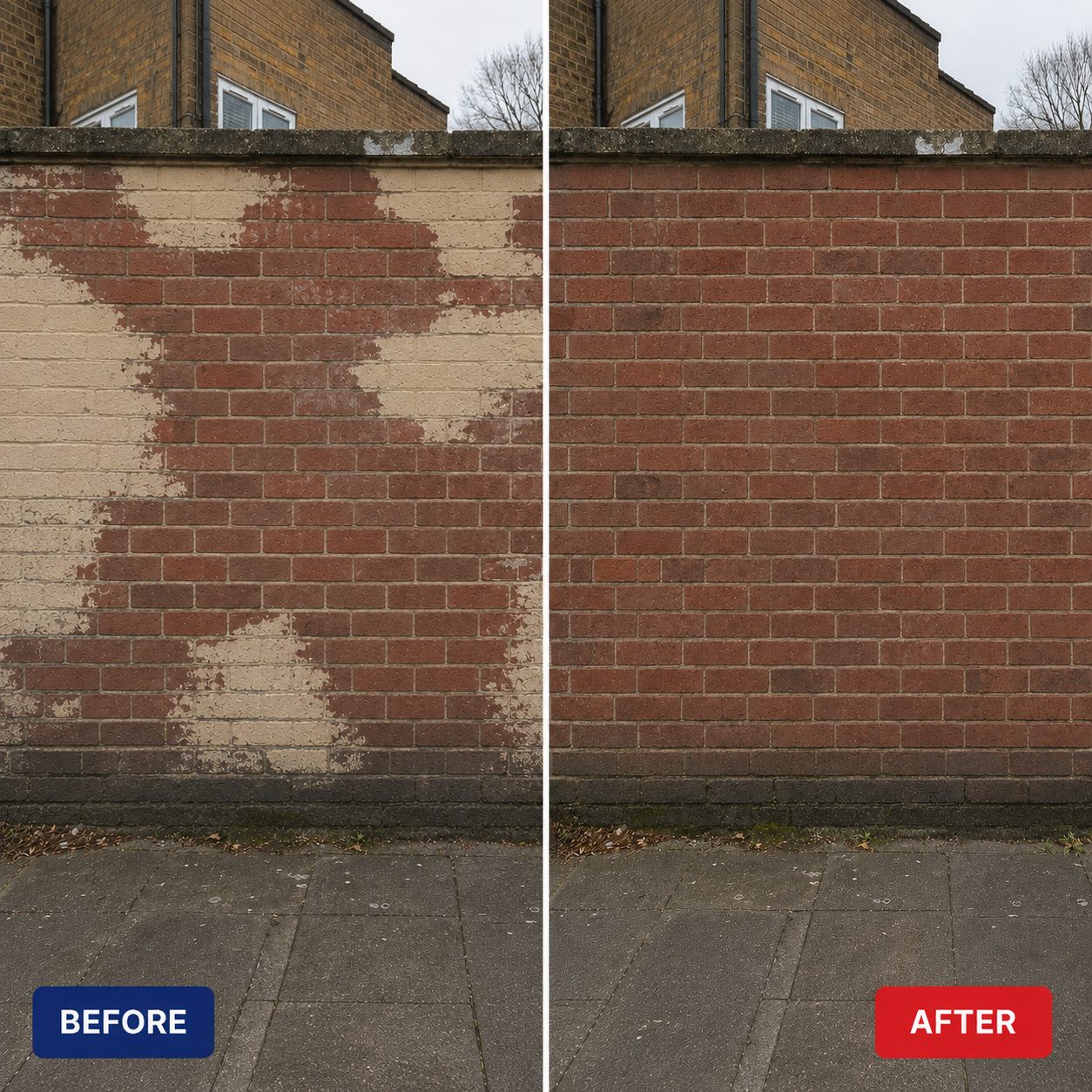
The core of this work is chemistry and dwell time, not pressure. A stripping poultice or gel is applied to the painted surface and left long enough to penetrate the coating and break its bond with the masonry. The softened paint is then removed together with the poultice, taking the coating with it, and the surface is rinsed gently and neutralised where the system requires it. Thick or multi-layered paint often needs more than one application — which is normal, and is why realistic programme times matter on these jobs.
Hot water and steam systems have a role too, particularly on limewash, distemper and some water-based coatings, and they are gentle enough for heritage fabric. What we avoid is the shortcut: heavy grit blasting and high-pressure water will remove almost any paint, and they will also remove the fired outer face of brick and the tooled surface of stone. That damage is irreversible and it makes the wall more absorbent, so it soils and weathers faster forever afterwards.
If a previous contractor has already blasted an elevation, tell us before we quote. Pre-damaged masonry behaves differently and needs a gentler system than an untouched wall.
Got paint that needs removing?
Send us photos of the surface and we'll come back with an honest assessment, a method and a clear price.
Why the trial area is non-negotiable
On a paint removal job the trial is not a formality. It establishes which stripping system actually breaks down that particular coating, how many applications will be needed, how the masonry underneath responds, and what the realistic finished appearance will be once decades of paint have come off. That last point matters more than people expect: the wall beneath old paint is often patched, repointed in mismatched mortar, or discoloured, and a trial reveals that before it becomes an unwelcome surprise across a whole elevation.
We agree the trial location and the acceptable finish with you in writing before proceeding. It is the single most effective protection against a disappointing outcome, and it is standard practice on every masonry stripping job we take on.
Doing it safely and responsibly
Paint stripping involves chemicals, waste and — on older buildings — the real possibility of lead-based coatings, which have to be identified and handled under proper controls rather than sanded or blasted into the air. We plan for containment, collection and correct disposal of stripped material and washings, protect glazing, planting, drainage and adjacent surfaces, and take particular care where run-off could reach a watercourse, which is a common consideration across the North West's canal network.
Each job comes with a site-specific risk assessment and method statement covering access, working at height, chemical handling, waste and protection of the public. Our teams are fully insured and hold CHAS accreditation.
After the paint comes off
Stripping is usually the first stage rather than the last. Once a wall is back to bare material it often benefits from a full masonry clean to even out the finish, and any repointing or repair needed will be obvious for the first time. On a whole building, paint removal frequently runs alongside façade cleaning so the elevation is treated as one piece of work with one access set-up.
Where the paint we removed was buffed-over graffiti, the important question is what stops it happening again. Applying anti-graffiti coatings to the newly stripped wall means the next tag can be washed off with standard removal in minutes — so nobody ever needs to reach for a tin of mismatched paint again.
Paint removal across the North West
Serving Manchester, Greater Manchester and Cheshire. Call us or request a free, no-obligation quote and we'll assess it honestly.
What's Included
Masonry paint stripping
Painted brick, stone and render brought back to the original material using poultices and controlled systems.
Painted-over graffiti
Patchy 'buff' paint used to cover tags removed so the elevation reads evenly again.
Metal & timber
Failed or vandalised coatings taken off railings, gates, doors, shutters and structural steel.
Trial & assessment
Every job starts with an assessment and a trial area, because paint removal is unforgiving of guesswork.
Why Choose No Graffiti
- Specialist poultice systems rather than brute pressure
- Trial area and agreed finish before any full elevation is stripped
- Honest advice when stripping isn't the right answer
- Fully insured, trained and accredited teams (CHAS)
Who We Do This For
Councils & Local Authorities
Housing Associations
Commercial & Facilities
Facilities Management
Maintenance Contractors
Business Improvement Districts
Managing Agents
Transport & Highways
Retail Parks & Shopping Centres
Multi-Site Retail & Hospitality
Shops & Restaurants
Construction & Development
Schools & Academy Trusts
Universities & Colleges
Healthcare
Industrial & Business Parks
Utilities & Telecoms
Homeowners & Landlords
Areas We Cover
We provide paint removal across Manchester, Greater Manchester and the North West, including:
Frequently Asked Questions
Can paint really be removed from brick without damaging it?
In most cases yes, but it takes the right system and patience rather than power. Paint on masonry has keyed into the pores of the material, so anything that removes it must draw or soften it out rather than blast it off. Poultice systems do exactly that: a stripping compound is applied, left to dwell so it can penetrate and break the bond, and then removed together with the softened paint, followed by a gentle rinse. Heavy grit blasting or high-pressure water may look faster, but they take the fired face off brick and the surface off stone, leaving a permanently rough, absorbent elevation that then soils quickly.
Why does painted-over graffiti look so bad?
Because covering a tag with the nearest tin of paint almost never matches. The patch differs in colour, sheen and texture from the wall around it, and it weathers at a different rate, so within a year the 'repair' is more conspicuous than the graffiti was. On porous masonry the original tag frequently bleeds back through as well. Stripping the buff paint back and cleaning the wall properly restores an even elevation — and where a wall is targeted repeatedly, protecting it afterwards is what stops the cycle repeating.
Is stripping always the right answer?
No, and we will say so when it is not. Occasionally an old coating is doing a job — protecting a poor or previously damaged substrate — and removing it exposes a surface in worse condition than the paint. Sometimes the paint has penetrated so deeply, or the masonry beneath is so soft, that the honest outcome of stripping is an uneven finish. In those cases redecoration or a specialist repair is the better result, and we would rather tell you that at survey stage than take on a job that ends in disappointment.
Ready for your procurement process
- CHAS accreditedHealth & safety prequalified
- Fully insuredPublic & employers' liability
- RAMS & COSHHSupplied before mobilisation
- 20+ yearsCouncil & housing experience
- Rapid responsePriority on offensive graffiti
Insurance certificates, RAMS, COSHH assessments and method statements available on request — ask and we'll send the pack.
Need graffiti gone — fast?
Call 0161 399 5247 or request a free quote. We respond within one working hour.