Commercial Render & Cladding Cleaning in Manchester
Commercial render and cladding cleaning across Manchester, Greater Manchester and the North West. Green algae, black streaking and atmospheric soiling removed with low-pressure and soft-wash methods — because render and panel systems are the two surfaces most often ruined by pressure.
Render and cladding are the two exterior finishes most commonly damaged by cleaning. Both look robust and both are, in cleaning terms, delicate — a thin decorative layer over something that needs to stay sealed. Both also soil visibly and quickly, especially in the North West, where the combination of damp air, shaded elevations and urban pollution produces green algae on one wall and black streaking down another within a few years of a building being finished.
No Graffiti cleans commercial render and cladding across Manchester, Greater Manchester and the North West using low-pressure hot water and soft-wash treatment rather than force. The aim is a building that looks like it did when it was handed over — not one that has had its finish taken back to the aggregate.
Why pressure is the wrong tool here
The instinct with a dirty wall is to turn the pressure up. On render that instinct is expensive. Modern silicone and acrylic renders carry their colour and their weather resistance in a coat a few millimetres thick. High-pressure water removes the surface texture, exposes the aggregate beneath as a paler patch, opens micro-cracking that then takes on water, and in the worst cases blows sections off entirely around movement joints and beads.
None of it shows immediately. A scoured wall looks clean while it is wet. It is when it dries — patchy, uneven, lighter where the lance dwelled — that the damage becomes visible, and at that point cleaning cannot fix it. The wall needs re-coating.
Cladding fails differently but just as expensively. Panel systems stay weathertight through their joints, gaskets and drainage detailing. Directing high pressure at a joint, particularly upwards, can push water past the line into the cavity or the insulation behind. The algae was cosmetic; water behind the panels is not.
How we clean it instead
- Survey and test patch. We identify the render or panel system, check its condition, and clean a discreet test area so the achievable finish is agreed before the main elevation is touched.
- Treatment first. Algae and biological growth are killed off with an appropriate treatment and given dwell time. Dead growth releases; live growth clings and comes back within months.
- Hot water at low pressure. Heat does the work that pressure would otherwise have to. See steam and hot-water cleaning for how these systems work.
- Rinse and inspect. Worked in sections with a controlled rinse, checking as we go rather than after the whole elevation is done.
- Optional biocidal finish. A residual treatment that slows regrowth, which typically buys another year or two before the elevation needs attention again.
What we treat
Green and black algae, lichen and general biological growth — the same problem covered on our moss, algae and lichen page. Vertical run-staining below sills, copings, window heads and drip details. General atmospheric soiling from traffic and urban pollution. Rust bleed from fixings and rainwater goods. And graffiti, which on render is a specialist job in itself — the surface is porous and takes pigment readily, so it needs treating rather than scrubbing. Our graffiti removal and paint removal pages cover that in detail.
For the technical background on each material, our render and cladding surface pages set out how each behaves and what it will and will not tolerate.
If a contractor quotes render cleaning without asking what type of render it is, or offers to jet wash it, get another quote. Silicone, acrylic, monocouche and traditional sand-and-cement renders all behave differently, and the difference between the right method and the wrong one is a repaint of the whole elevation.
Render or cladding needing cleaning?
Send photographs of the elevation and we will tell you what the surface is likely to be and how it should be treated.
Access, honestly handled
Most commercial render and cladding soiling that people actually notice is at the lower levels — the first storey, the entrance, the areas people walk past. That work we carry out directly from the ground and from low-level access.
For genuinely high-level elevations we arrange the right access equipment and quote it as part of the job: a MEWP, a mobile tower, or a pole-fed reach-and-wash system where the elevation suits it. We would rather price the correct access than promise an elevation can be done from a longer lance, which is how both bad results and accidents happen. Our specialist access page sets out how this is arranged.
Planned cleaning for managed buildings
Render and cladding soil on a fairly predictable cycle, which makes them well suited to a planned programme. For managing agents, FM contractors and property teams running several buildings, a scheduled clean every two to three years costs far less than letting elevations reach the point where residents complain or a building is being marketed and needs urgent attention.
It also protects the finish. Algae is not merely unsightly — it holds moisture against the surface and, over long periods, contributes to the breakdown of render coatings. Regular cleaning is cheaper than the re-render that neglect eventually forces. See planned maintenance for how programmes are structured, and commercial exterior cleaning for the full range of exterior work we bring to a site in one visit.
Get your elevations looking right again
Commercial render and cladding cleaning across Manchester, Greater Manchester and Cheshire.
What's Included
Render, done gently
Silicone, acrylic, monocouche and traditional render cleaned with heat and low pressure. High pressure scours the finish off render and it does not grow back.
Cladding and panel systems
Composite, metal, fibre-cement and timber-effect panels, plus curtain walling — cleaned without driving water behind the panel line.
Algae and streaking
The green film and the black run-marks below sills and copings are biological growth and atmospheric soiling. They need treatment, not force.
Access arranged properly
Ground and low-level work direct; genuine high-level elevations quoted with the right access equipment rather than attempted from a ladder.
Why Choose No Graffiti
- Method chosen for the panel or render system, agreed before we start
- Test patch offered as standard on any surface we have not cleaned for you before
- Fully insured and CHAS accredited, with RAMS and COSHH available on request
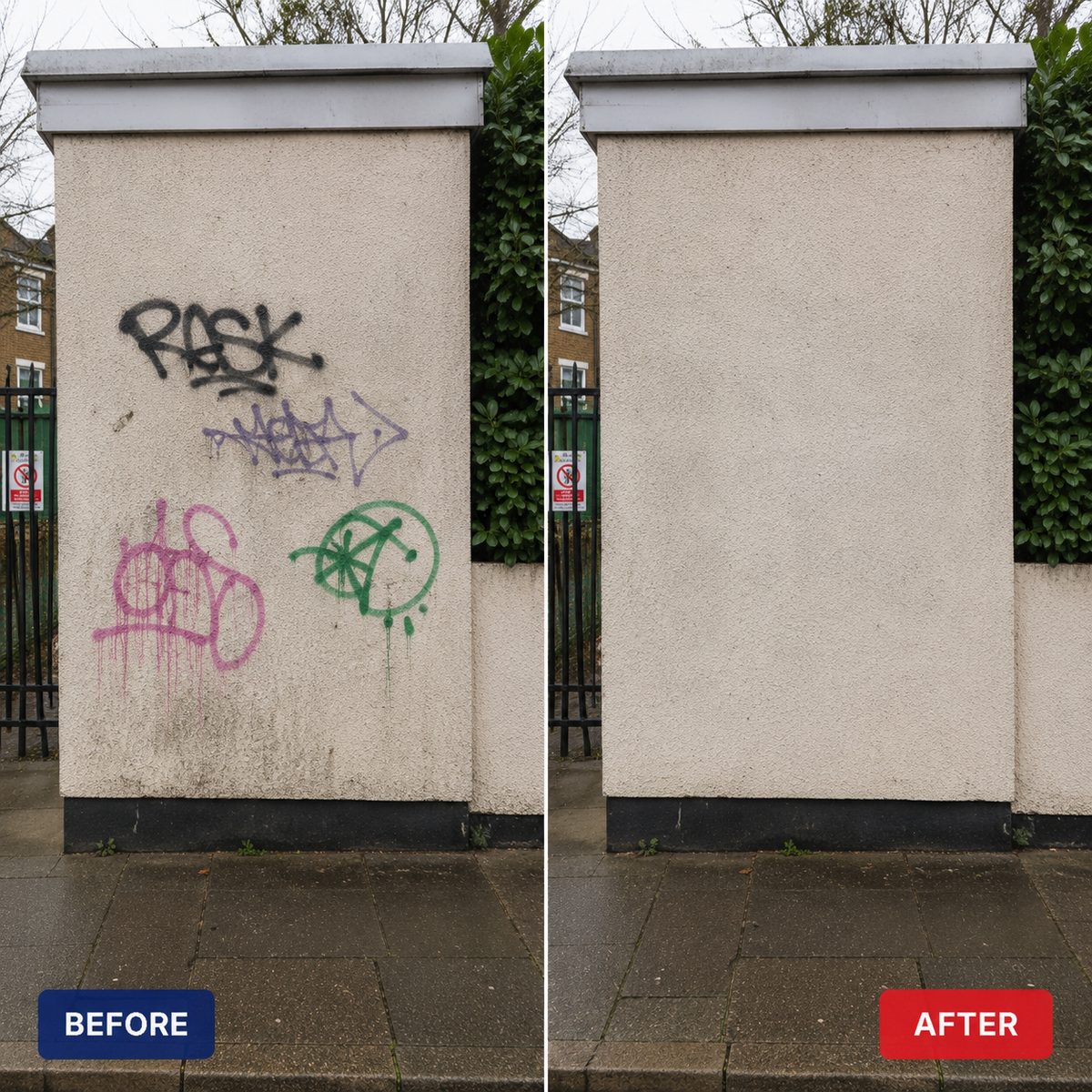
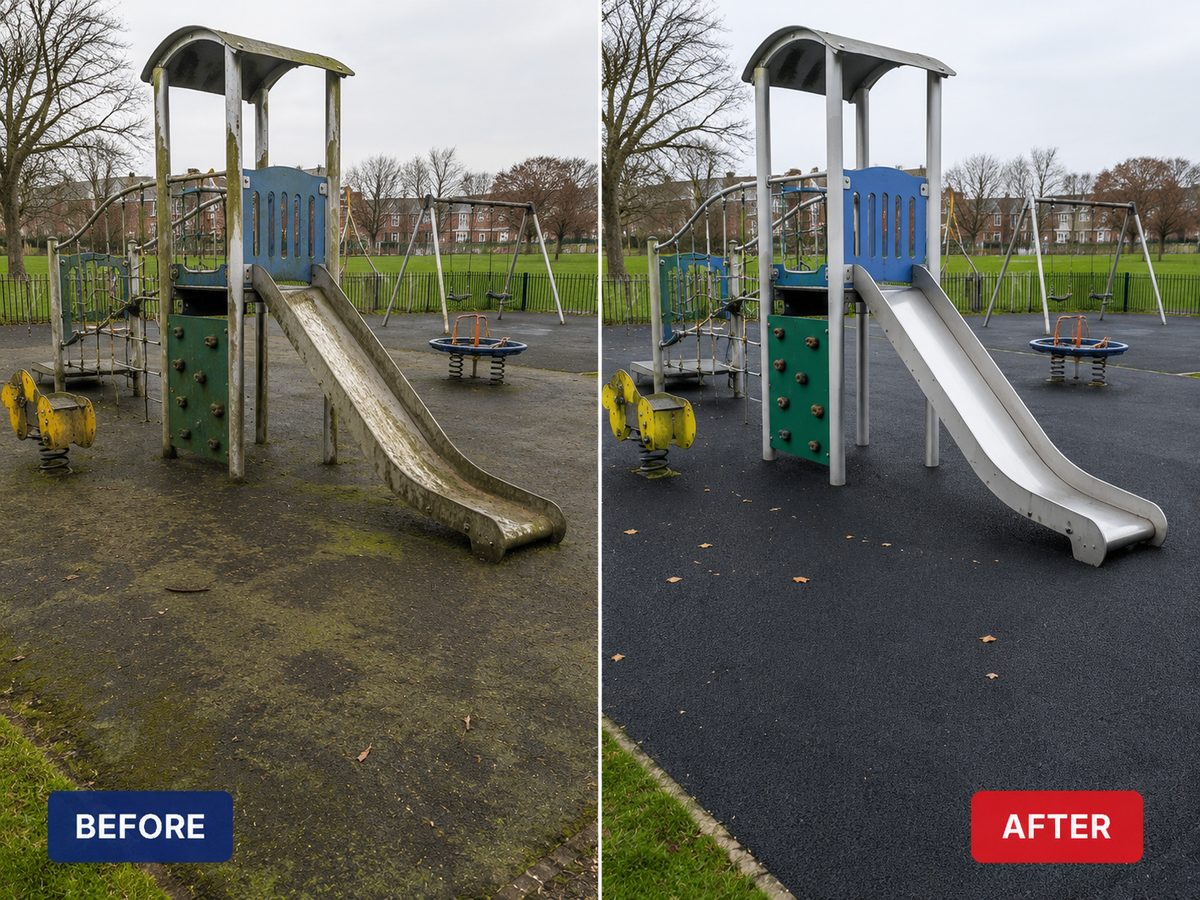
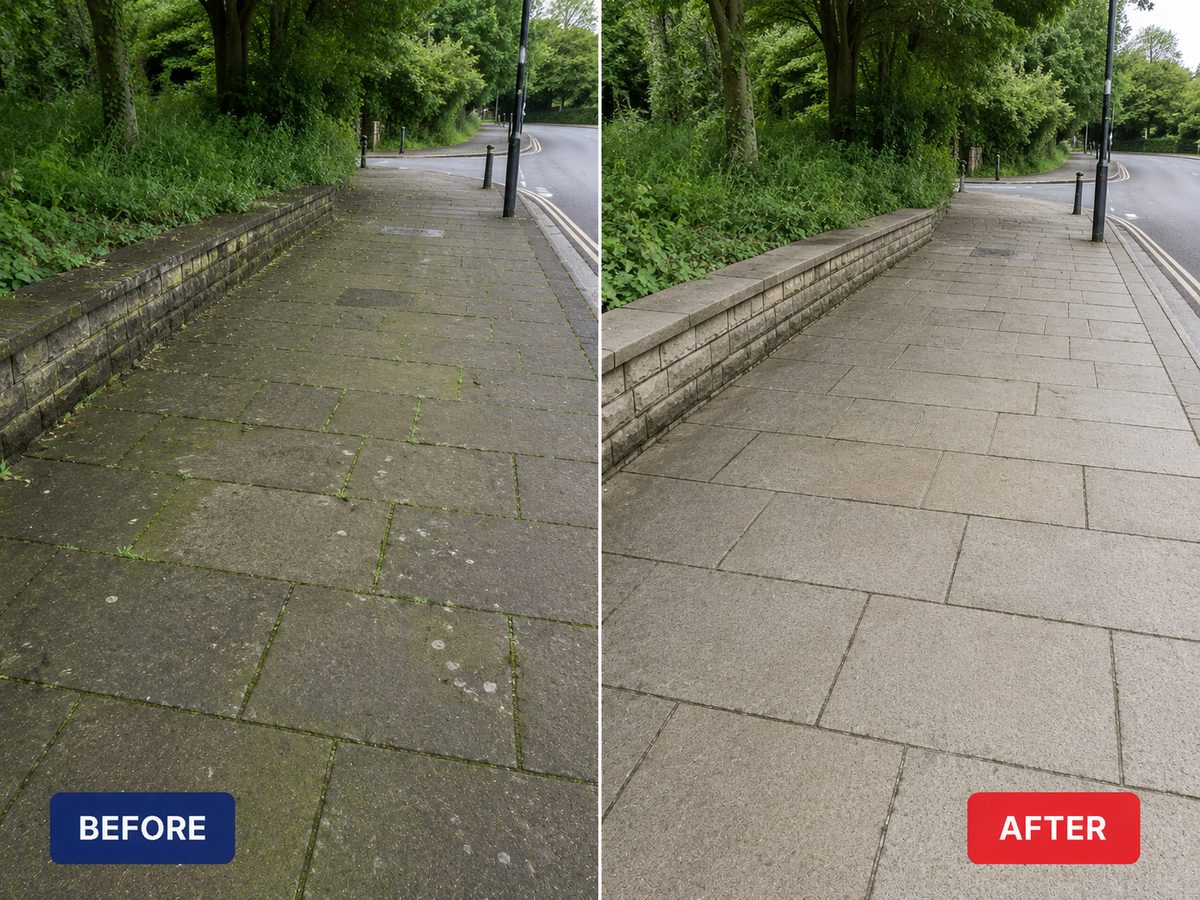
- Before-and-after photographs on every job
Who We Do This For
Councils & Local Authorities
Housing Associations
Commercial & Facilities
Facilities Management
Maintenance Contractors
Business Improvement Districts
Managing Agents
Transport & Highways
Retail Parks & Shopping Centres
Multi-Site Retail & Hospitality
Shops & Restaurants
Construction & Development
Schools & Academy Trusts
Universities & Colleges
Healthcare
Industrial & Business Parks
Utilities & Telecoms
Homeowners & Landlords
Areas We Cover
We provide render & cladding cleaning across Manchester, Greater Manchester and the North West, including:
Frequently Asked Questions
Will pressure washing damage my render?
It very often does, which is why we generally do not use it. Render is a thin decorative and protective coat, and high pressure removes the surface texture, exposes the aggregate, opens up micro-cracking and can drive water into the wall behind. Once render has been scoured it cannot be restored by cleaning — it has to be re-rendered or coated. We use hot water at low pressure and soft-wash treatments instead.
Why does render go green and streaky?
The green is algae, which needs only moisture and daylight and thrives on north-facing and shaded elevations — very common in the North West's climate. The dark vertical streaking below sills, copings and window heads is atmospheric soiling washed down by rain following the same path every time. Both are surface deposits and both come off with the right treatment.
How long does the result last?
Typically two to four years on render before algae becomes noticeable again, depending on the elevation's aspect, shading and exposure. A north-facing wall under trees will regrow faster than a south-facing one in the open. A biocidal treatment applied at the end of the clean slows the regrowth considerably.
Can you clean cladding without damaging the joints?
Yes — and this is exactly why method matters. Panel systems rely on their joint and gasket detailing to stay weathertight. Aiming high pressure at a joint can force water past it, which is a far more expensive problem than the algae was. We work at controlled pressure and appropriate angles, and we treat rather than blast.
Ready for your procurement process
- CHAS accreditedHealth & safety prequalified
- Fully insuredPublic & employers' liability
- RAMS & COSHHSupplied before mobilisation
- 20+ yearsCouncil & housing experience
- Rapid responsePriority on offensive graffiti
Insurance certificates, RAMS, COSHH assessments and method statements available on request — ask and we'll send the pack.
Need graffiti gone — fast?
Call 0161 399 5247 or request a free quote. We respond within one working hour.