Moss, Algae & Lichen Treatment
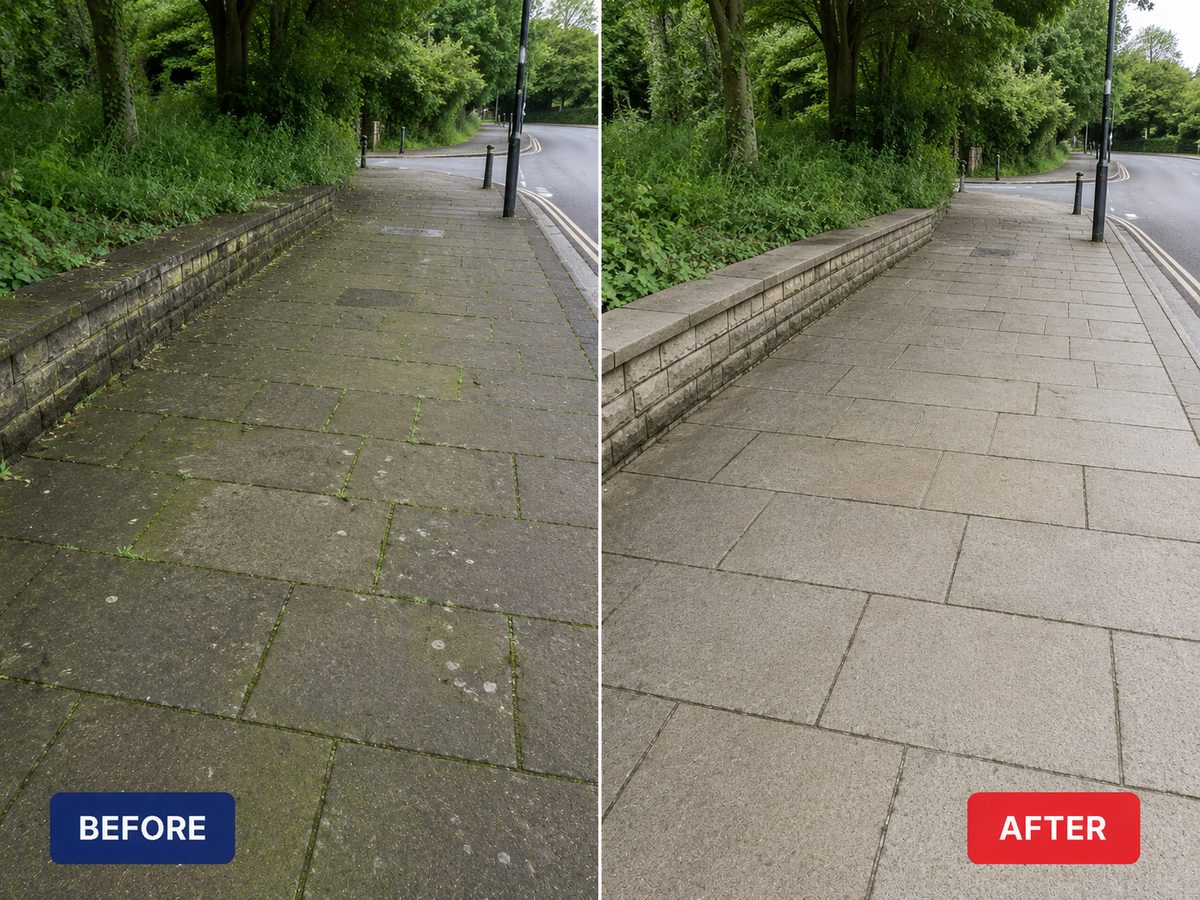
Green film on render, black streaks down a wall, slippery moss on a footpath — organic growth makes a well-kept building look neglected and creates a genuine slip hazard. We treat and remove moss, algae and lichen across Manchester, Greater Manchester and the North West, using methods that clear the growth properly and slow its return.
Moss, algae and lichen are the quiet form of neglect. Unlike graffiti, they don't appear overnight — they creep in over months and years, and by the time anyone really notices, a smart building looks tired, a clean path looks grubby, and a well-maintained estate starts to give the impression that nobody is looking after it. In the North West's damp climate, with shaded elevations and long wet spells, organic growth takes hold quickly and returns readily.
No Graffiti treats and removes moss, algae and lichen right across Manchester, Greater Manchester and Cheshire. We work on roofs, render, brickwork, paving, footpaths, steps, walls and street furniture, and we treat as well as clean — because clearing the surface without killing what is underneath simply resets the clock on the same problem.
The difference between cleaning and treating
This is the single most important thing to understand about organic growth. Pressure washing a green wall or a mossy path will make it look dramatically better on the day. What it will not do is remove the spores, root structures and lichen anchors left behind in the pores of the material — and those are what regrow. That is why so many surfaces are back to looking the same within a year of being jet washed.
A proper job has two stages. First the bulk of the growth is removed, using the gentlest effective method for the material. Then a biocide treatment is applied, which kills the remaining organic matter at the root and continues working after we leave. The result is a surface that not only looks clean but stays clean for considerably longer, and that is far easier to maintain on future visits.
Where organic growth causes the most trouble
Some locations are far more prone to growth than others, and some carry more risk when they are affected:
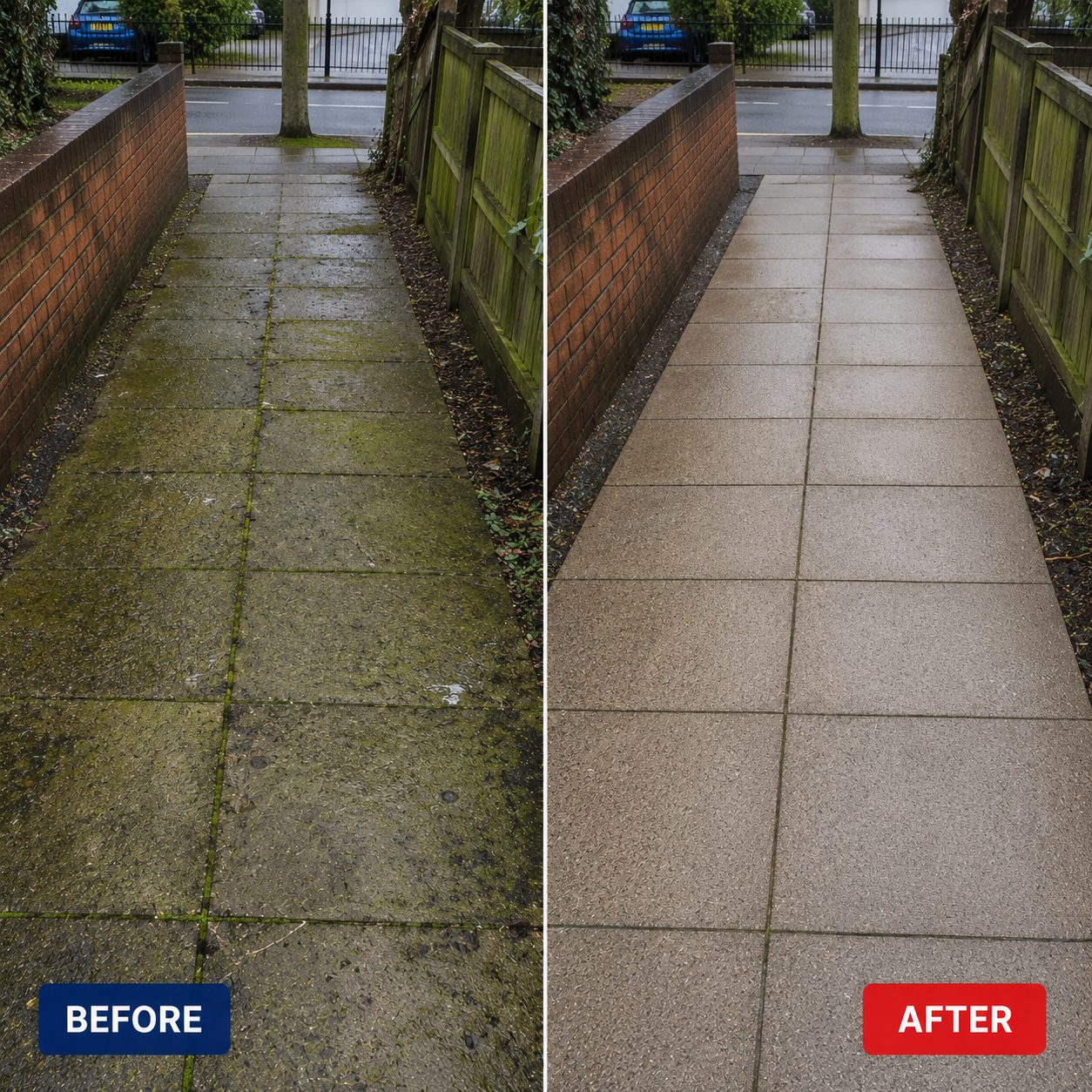
- Footpaths, steps and ramps — wet moss and algae are genuinely slippery, and this is where organic growth stops being cosmetic and becomes a liability issue.
- North-facing and shaded elevations — walls that never get direct sun stay damp, and green or black algae films build up quickly.
- Rendered and painted walls — light-coloured render shows algae staining badly, often as dark streaks below sills and gutters.
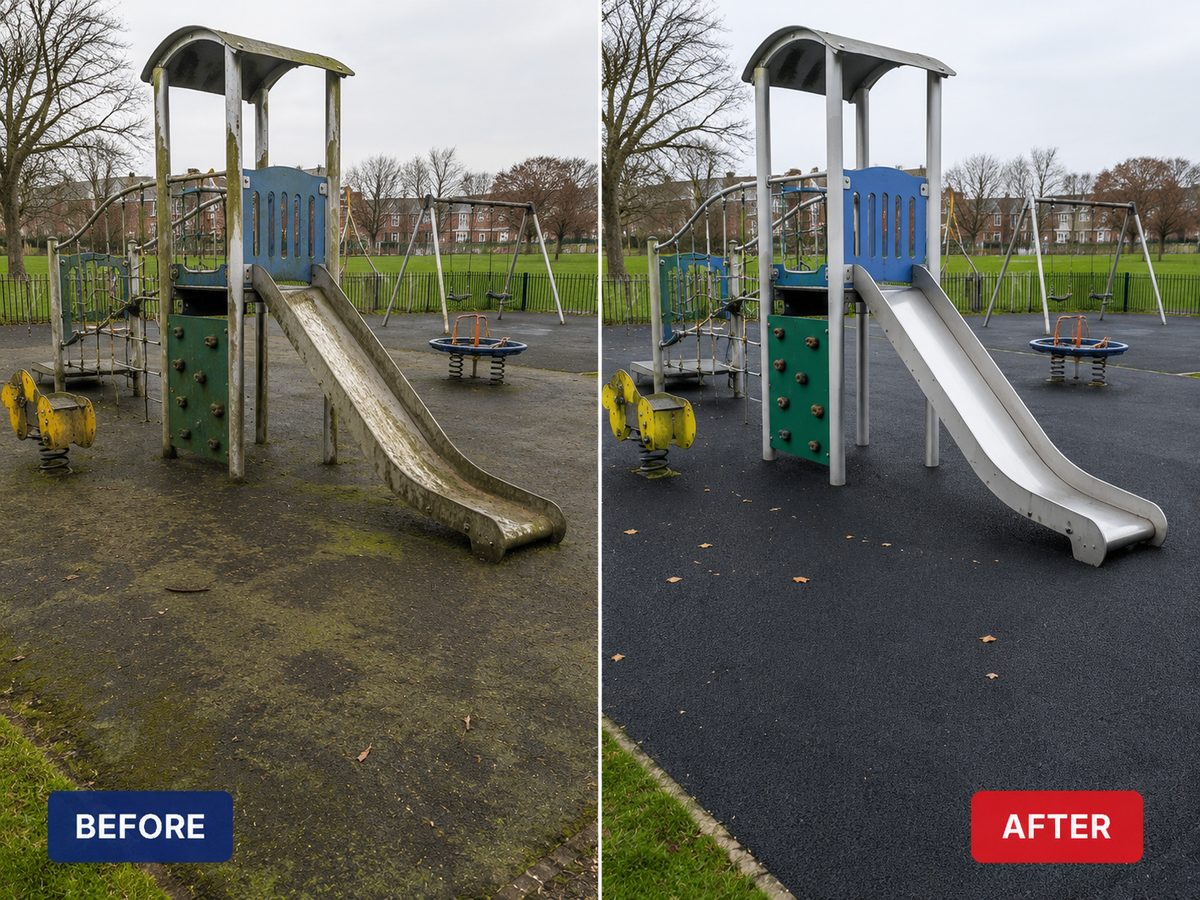
- Roofs and gutters — moss holds water against the covering and sheds into gutters and downpipes, causing blockages and overflow.
- Paving, patios and car parks — growth in joints lifts and loosens units over time as well as looking unkempt.
Got green walls or slippery paths?
Send us a photo and a location and we'll come back with a clear price and a plan for treating it properly.
Choosing the right method
There is a strong temptation to attack moss and algae with the highest pressure available, and it is usually the wrong call. High pressure can strip the surface off render, blast out soft lime mortar, erode the face of soft brick and stone, and on a roof it can lift tiles or force water underneath the covering — turning a cosmetic problem into a repair bill.
We assess the material first and choose accordingly. Much of this work is done by soft washing: applying the treatment at low pressure, letting the chemistry do the work, and rinsing gently. Where a surface is robust enough, controlled pressure washing speeds up the removal of heavy moss on paving and hard standing. On heritage and softer masonry we use the same careful approach we apply to stone and masonry cleaning, protecting the fabric of the building while still getting a genuinely clean result.
If a path or a set of steps has become slippery, treat it as a priority. Slip risks on public routes carry a duty to act, and organic growth on a walkway is one of the easiest hazards to remove.
Working responsibly on site
Treating organic growth means working with water and chemistry around planting, drainage and, across much of the North West, canals and watercourses. We plan for that: containing and directing run-off, protecting nearby planting and choosing products appropriate to the setting. On occupied sites — housing estates, schools, retail parades, care settings — we work around people, with site-specific method statements and risk assessments, signage and safe working areas, and DBS-checked operatives where the setting calls for it.
Our teams are fully insured and hold CHAS accreditation, so councils, housing associations and facilities managers can bring us on without a lengthy procurement headache.
Keeping surfaces clear for good
The most effective way to stay on top of organic growth is not to let it get away from you. Once a surface has been properly treated, keeping it clear is a much smaller job than the first clean — which is why moss and algae treatment fits naturally into a planned maintenance programme. Shaded paths and north-facing elevations get seen to on a cycle, everything else gets checked as we go, and the site never slides back to the state it was in.
For managers looking after several sites, that also means one contractor handling growth, grime, gum and graffiti removal together, to a consistent standard, with a clear record of what has been done.
Moss & algae treatment across the North West
From Manchester and Salford out to Stockport, Trafford and Cheshire, we cover the whole region. Call us or request a free, no-obligation quote today.
What's Included
Roofs & render
Moss lifted from tiles and green or black algae cleared from rendered and painted elevations without damaging the finish.
Paths & paving
Slippery walkways, steps and paved areas treated so surfaces are safe underfoot again as well as clean.
Biocide treatment
Cleaning alone removes what you can see; a proper treatment kills the spores and roots so regrowth is much slower.
Sensitive locations
Care taken near planting, drains and watercourses, with methods chosen to suit the setting.
Why Choose No Graffiti
- Growth killed at the root, not just washed off the surface
- Correct pressure and method for each material — no damaged render or tiles
- Slip hazards on paths, steps and walkways properly addressed
- Fully insured, trained and accredited teams (CHAS)
Who We Do This For
Councils & Local Authorities
Housing Associations
Commercial & Facilities
Facilities Management
Maintenance Contractors
Business Improvement Districts
Managing Agents
Transport & Highways
Retail Parks & Shopping Centres
Multi-Site Retail & Hospitality
Shops & Restaurants
Construction & Development
Schools & Academy Trusts
Universities & Colleges
Healthcare
Industrial & Business Parks
Utilities & Telecoms
Homeowners & Landlords
Areas We Cover
We provide moss, algae & lichen treatment across Manchester, Greater Manchester and the North West, including:
Frequently Asked Questions
Why does moss and algae keep coming back?
Because most cleaning only removes what is visible. Moss, algae and lichen hold onto a surface with root-like structures and leave behind spores that are invisible to the eye, so a surface that has simply been washed will often green up again within a season. We follow removal with a biocide treatment that kills what is left behind, which is why properly treated surfaces stay clear for far longer than jet-washed ones. Shaded, north-facing and damp areas will always be more prone to regrowth, so those locations benefit most from a repeat treatment on a planned cycle.
Will treatment damage my render, paint or roof tiles?
No. The risk with organic growth comes from using too much pressure, which can strip render, force water behind tiles or erode soft mortar. We assess the surface first and match the method to it — often soft washing and chemical treatment rather than high pressure, which does the job thoroughly without stressing the material. On roofs in particular we work carefully, because aggressive pressure washing can dislodge tiles and shorten the life of the covering.
How long do results last?
It depends heavily on the setting. A sunny, well-drained, south-facing elevation may stay clear for several years after a proper treatment, while a shaded path under trees or a north-facing wall that never fully dries out will show growth returning sooner. Because of that we often recommend folding treatment into a planned maintenance cycle, so affected areas are dealt with routinely rather than being allowed to build back up to the point where a full clean is needed again.
Ready for your procurement process
- CHAS accreditedHealth & safety prequalified
- Fully insuredPublic & employers' liability
- RAMS & COSHHSupplied before mobilisation
- 20+ yearsCouncil & housing experience
- Rapid responsePriority on offensive graffiti
Insurance certificates, RAMS, COSHH assessments and method statements available on request — ask and we'll send the pack.
Need graffiti gone — fast?
Call 0161 399 5247 or request a free quote. We respond within one working hour.