Client: A North West town centre BID — operations team
Quick take
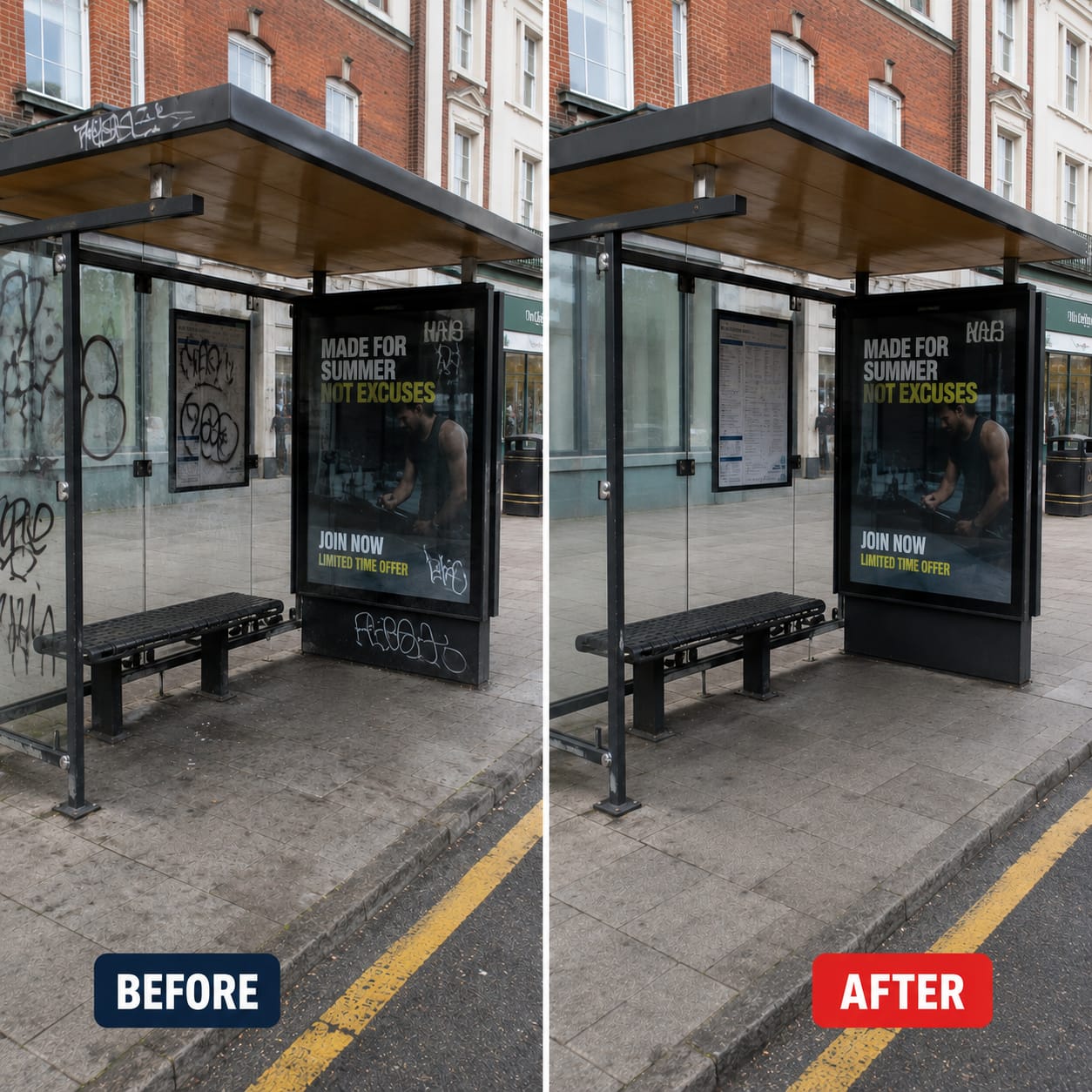
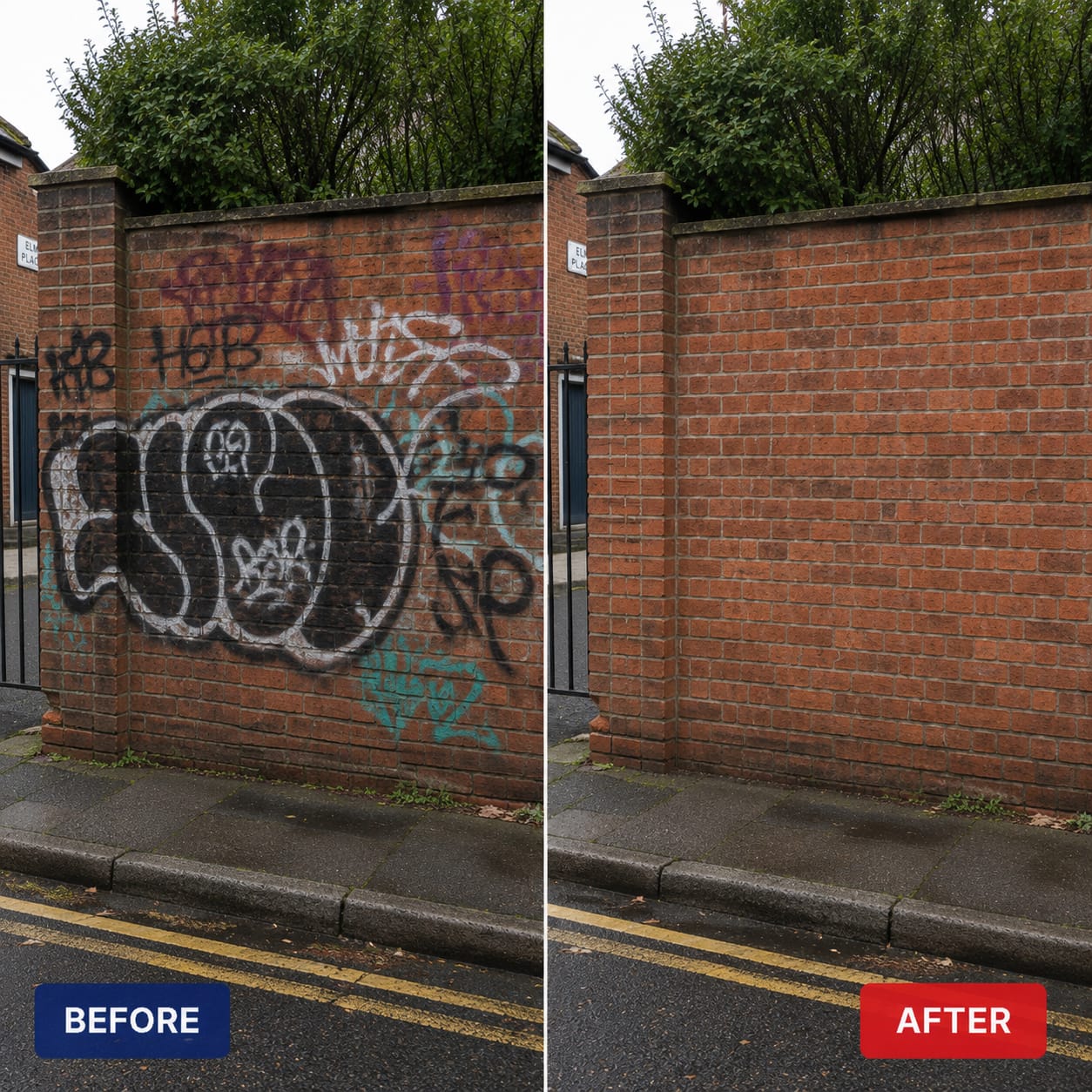
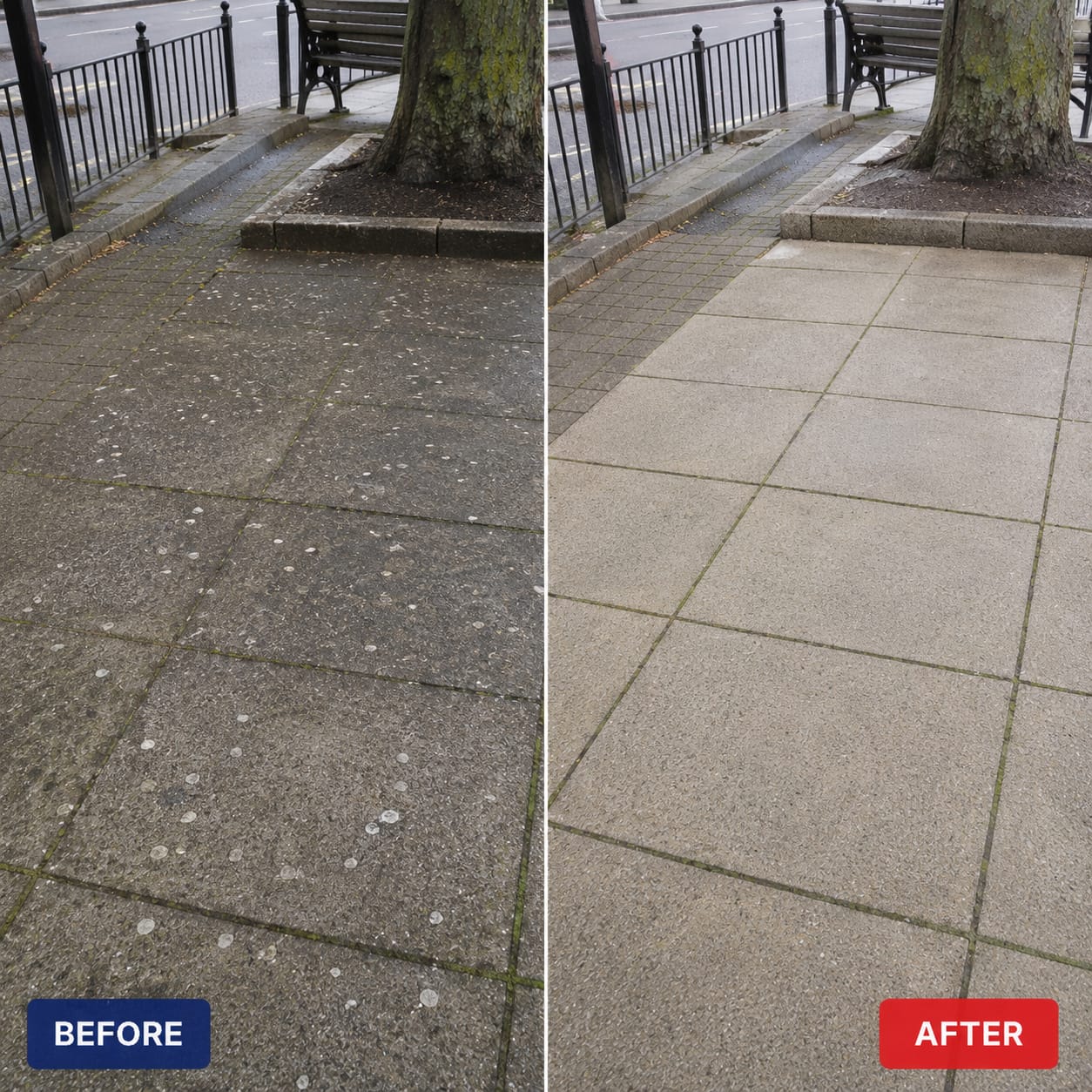
A North West town centre BID was approaching a renewal ballot with levy payers questioning what they were getting. No Graffiti Ltd introduced a monthly early-morning round covering graffiti, stickers, fly-posting, gum and street furniture in a single pass, plus anti-graffiti coatings on the four locations generating most of the problem. Work was recorded by location with dated photographs, giving the BID material for newsletters, board papers and the ballot campaign.
The hardest question a BID manager gets asked is some version of "what am I actually paying for?" Cleanliness is one of the few answers a levy payer can verify from their own shop window, which is why town-centre cleaning tends to carry a disproportionate share of the argument for renewal.
This case study looks at how a North West BID turned that from an assertion into evidence. Names and exact figures have been kept general to respect client confidentiality, but the programme structure and results are representative of the town-centre work No Graffiti Ltd delivers across Manchester and the North West.
About the client
The client is a Business Improvement District covering the retail and hospitality core of a Greater Manchester town — a few hundred levy-paying businesses across a pedestrianised centre, several side streets and the service alleys behind them.
A small operations team delivers the BID's programme, with cleaning as one strand alongside events, marketing and safety initiatives. The BID was around eighteen months from a renewal ballot when they approached us.
The challenge
Key pain points
The BID had been funding cleaning work, but in a way that was hard to see and harder to prove:
- One-off blitzes that faded. Periodic deep cleans looked impressive for a fortnight, after which the centre drifted back and levy payers concluded nothing had happened.
- Several contractors, several visits. Graffiti, gum and street furniture were handled separately, which cost more and meant the centre was never uniformly clean at any one moment.
- The same hotspots every time. Four locations — two service alleys, a run of roller shutters and a gable end — absorbed a large share of the budget and were re-tagged within weeks.
- No usable evidence. Work was done but rarely photographed by location, so the BID could not answer a specific business asking about a specific street.
- A ballot on the horizon. Renewal requires persuading businesses to vote for another term, and "we cleaned things" is a weak case without pictures.
The impact of the problem
Perception was running ahead of reality. The BID was spending real money on cleaning and getting limited credit for it, because the improvement was neither sustained nor documented. Meanwhile the four hotspots were quietly consuming budget that could have been spread across the wider district, and a handful of vocal levy payers had begun using the appearance of the side streets as evidence that the BID was not delivering.
The solution
Why they chose No Graffiti
The BID wanted consistency and evidence rather than another deep clean:
- Everything in one pass. A single team dealing with graffiti, stickers, fly-posting, gum and street furniture on the same visit, rather than coordinating specialists.
- Early-morning working. Rounds completed before businesses opened, so the district visibly improved as staff and shoppers arrived.
- A strategy for the hotspots. Rather than cleaning the same four locations indefinitely, we proposed coating them.
- Evidence by location. Dated before-and-after photographs recorded street by street, designed to be usable in a newsletter or a board pack without editing.
Implementation: team & resources
The programme was built in three stages, with the hotspot work deliberately front-loaded so the savings compounded across the rest of the term.
Phase 1 — Baseline survey (week 1)
We walked the district with the operations team, photographing the current state street by street and logging the surfaces involved. This gave the BID a genuine baseline — useful later, because by the time a ballot comes round nobody remembers how bad the alleys were.
Phase 2 — Hotspot treatment (weeks 2–4)
The four repeat locations were cleaned back properly and then treated with anti-graffiti coatings. On a coated surface a fresh tag lifts off in a fraction of the time, which meant subsequent rounds spent minutes on those locations instead of hours — freeing budget for the wider district.
Phase 3 — Monthly rounds (ongoing)
A monthly early-morning round now covers the core: stickers and fly-posting off columns and cabinets, gum lifted from the highest-footfall paving, street furniture cleaned, and any new graffiti removed. Rounds are timed to land before major trading periods and events.
The results
The district holds a consistent standard rather than cycling between clean and neglected, and the BID has a record it can put in front of anyone who asks.
| Measure | Before | After |
|---|---|---|
| Cleaning pattern | Occasional one-off blitzes | Monthly scheduled round |
| Contractors involved | Several, on separate visits | One team, one pass |
| Four repeat hotspots | Re-tagged and re-cleaned | Coated — minutes, not hours |
| Work during trading hours | Routine | Completed before opening |
| Evidence for levy payers | None by location | Dated photos, street by street |
Time a round to land immediately before your busiest trading period or a major event. The district is at its best exactly when the most people are there to see it.
Client testimonial
“The photographs changed the conversation more than the cleaning did, honestly. When a business tells me their street gets ignored, I can show them the last three months. That is a very different meeting from the ones we used to have.”
Lessons learned & key takeaways
Three key insights
- Consistency beats intensity. A modest monthly round holds a standard that occasional deep cleans never will.
- Coat the hotspots first. A handful of locations usually absorb most of the budget; treating them frees money for everywhere else.
- Photograph by street, not by job. Levy payers ask about their street, and that is the unit the evidence needs to be in.
Advice for others
- Do capture a baseline before you start — by ballot time nobody remembers how it looked.
- Do bundle graffiti, gum, stickers and street furniture into one visit; separate contractors cost more and never coincide.
- Don't keep funding repeat cleans on the same four walls. That is a coating decision, not a cleaning one.
Book a cleaning programme for your district
Need visible improvement across your district?
We deliver scheduled town-centre cleaning for BIDs across Manchester and the North West — one team, one pass, and photographic evidence you can put in front of levy payers. Tell us about your district and we'll set out a programme.
Frequently asked questions
Can you work before businesses open?
Yes, and for most BIDs it is the sensible approach. Working early morning means the district is visibly improved as businesses open and shoppers arrive, with no disruption to trading or pedestrian flow.
Can you provide evidence we can show levy payers?
Yes. We supply dated before-and-after photographs recorded by location, which BIDs routinely use in newsletters, board packs and renewal-ballot material. Demonstrating visible improvement is usually the whole point of the spend, so we make it easy to prove.
What can be done about locations that get tagged repeatedly?
Repeatedly targeted surfaces are the right candidates for an anti-graffiti coating. Once treated, future tags come off far more quickly and cheaply, which turns an expensive recurring problem into a routine one and frees budget for the rest of the district.
Can one visit cover graffiti, gum and street furniture?
Yes. Our teams handle the full range of street-level cleaning, so a single pass deals with tags, stickers, fly-posting, gum and grubby furniture. It is considerably better value than coordinating several specialists on separate visits.