Client: A North West housing association — estate services team
Quick take
A North West housing association had a small number of estates where communal areas, bin stores and boundary walls were being tagged again and again, driving up costs and tenant complaints. No Graffiti Ltd carried out a full deep-clean, then protected the worst-hit surfaces with anti-graffiti coatings so future tags could be wiped off in minutes. Repeat removal visits fell sharply and tenant satisfaction with the estate's appearance rose.
For a housing association, graffiti on communal blocks, stairwells and boundary walls is more than an eyesore — it affects how safe and cared-for tenants feel in their own neighbourhood, and it eats into repairs and maintenance budgets every time it comes back. This case study looks at how No Graffiti Ltd helped a North West housing association break the cycle of repeat graffiti on a problem estate through a combination of deep-cleaning and anti-graffiti protection.
Client details have been kept general, but the methods and outcomes are representative of the estate graffiti removal and protection work we deliver for housing providers across Manchester and Cheshire.
About the client
The client is a housing association managing several thousand homes across Greater Manchester and Cheshire, including a number of low- and mid-rise blocks with shared entrances, stairwells, bin stores and communal grounds. Its estate services team is responsible for keeping those shared spaces clean, safe and well-maintained for tenants.
The challenge
Key pain points
A handful of estates accounted for most of the association's graffiti problem, and the same surfaces were being hit over and over. The main issues were:
- Persistent repeat tagging. Bin stores, stairwell walls and boundary walls were being re-tagged within days of being cleaned.
- Rising maintenance costs. Every repeat visit was another job on the schedule, and the numbers were adding up across the year.
- Tenant complaints and perception of safety. Graffiti in communal areas made tenants feel the estate was neglected and, in places, unsafe.
- Mixed, delicate surfaces. Painted render, exposed brick, powder-coated metal and uPVC all needed different handling to avoid damage.
- No protective strategy. The association was cleaning graffiti but doing nothing to stop it coming straight back.
The impact of the problem
The financial cost was the obvious problem — the same walls being cleaned repeatedly through the year — but the human cost mattered more. Communal graffiti was a recurring theme in tenant feedback and a drag on the association's efforts to show it was investing in its estates. Housing officers were spending time logging and chasing the same jobs, and the estates most affected were exactly the ones the association most wanted to turn around.
The solution
Why they chose No Graffiti
The association wanted a contractor who could both restore the estate and stop the problem returning — not just clean and leave. We were chosen for:
- Surface-safe methods. The estate's mix of render, brick, metal and uPVC meant a single aggressive method was out — we test and match the technique to each surface.
- Anti-graffiti coatings. A clear protective strategy for the worst-hit walls, not just a one-off clean.
- Local reliability. A Manchester-based team able to return quickly when a fresh tag appeared on a protected surface.
- Tenant-friendly working. Tidy, low-disruption working around residents, entrances and parking.
Implementation: team & resources
The project ran in three phases across the worst-affected estate, with a two- to three-person team on site.
Phase 1 — Deep clean & restoration
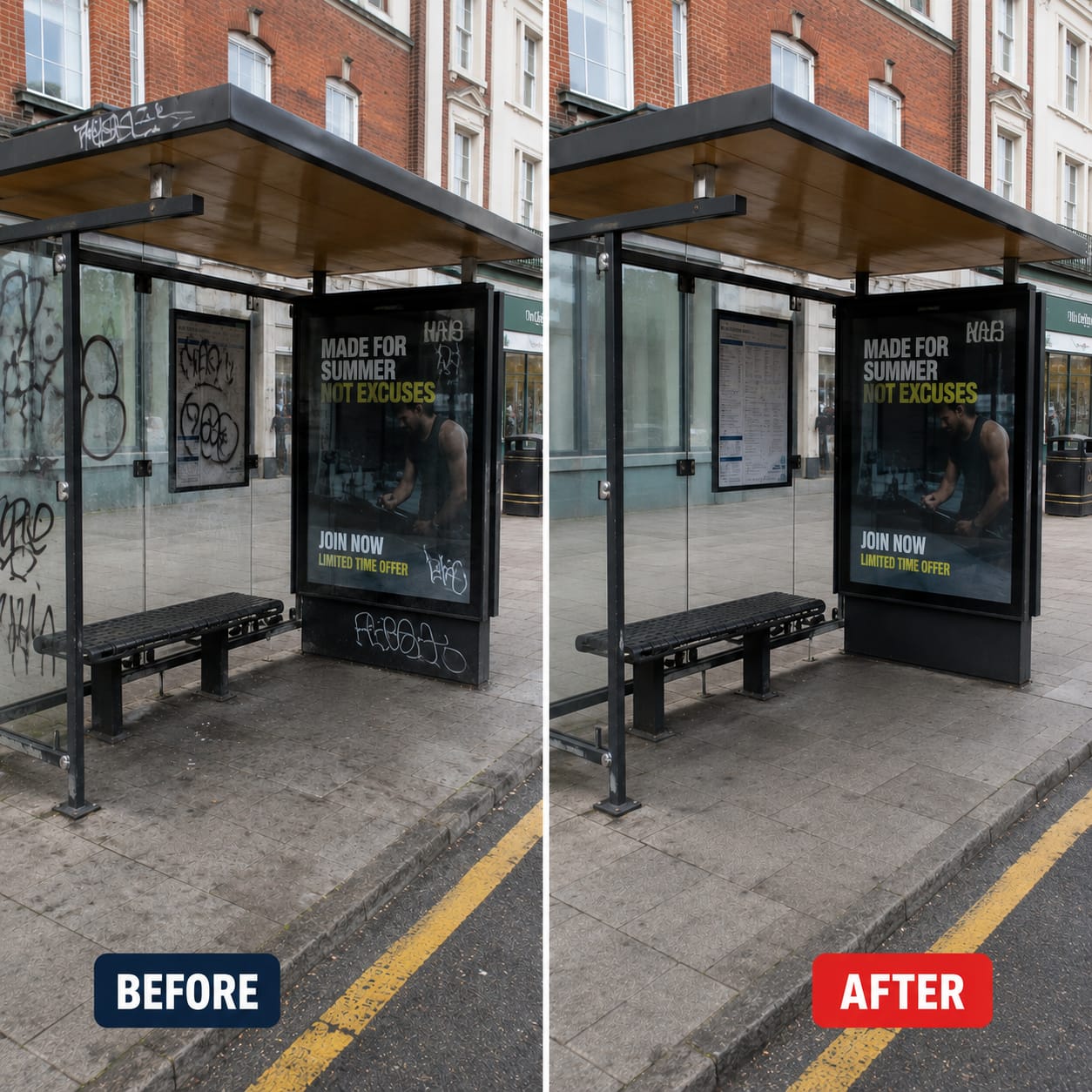
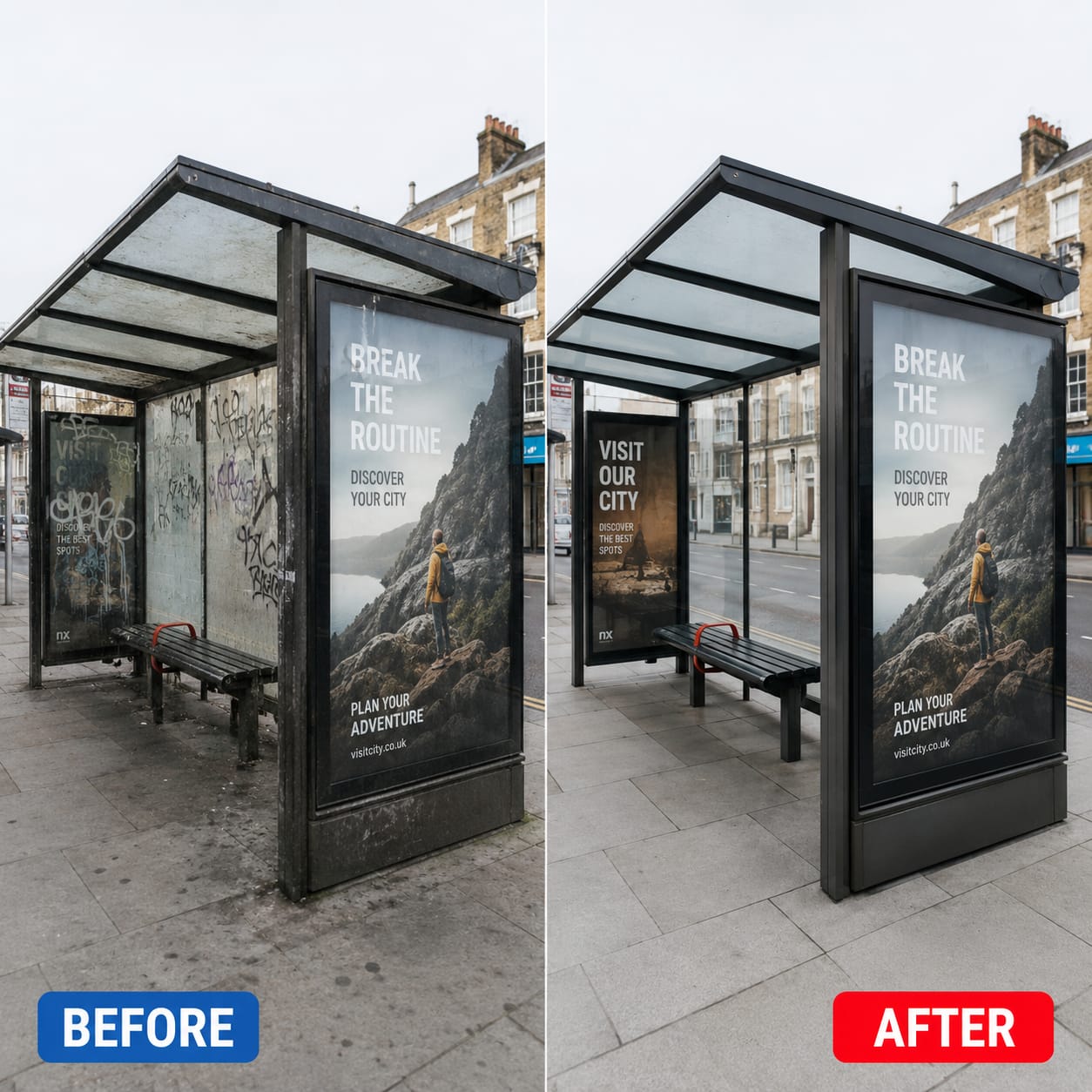
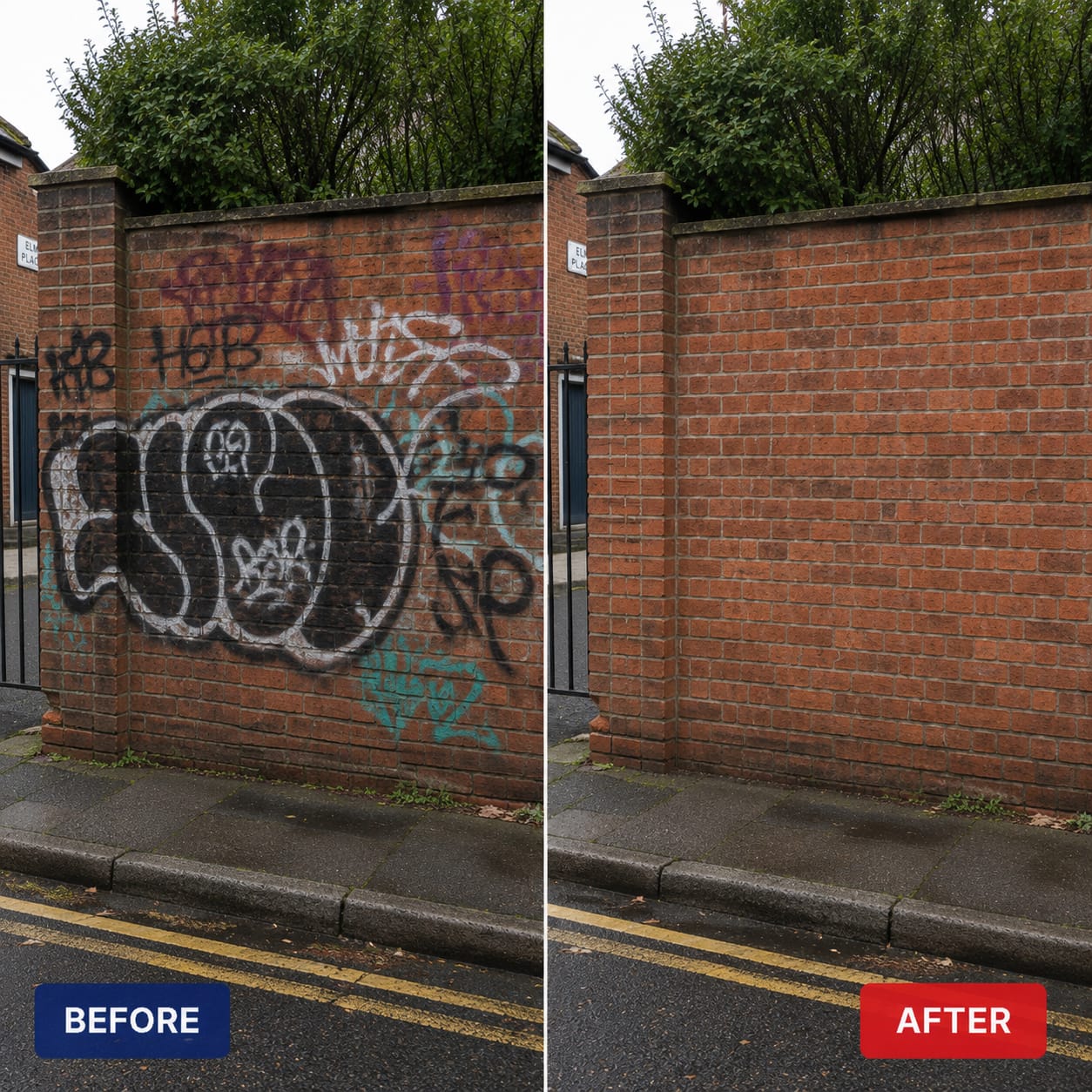
We worked through every communal area — stairwells, entrance lobbies, bin stores, boundary walls and play areas — removing graffiti and, at the same time, the moss, algae and grime that had built up. On painted render we used gentle chemical removers and low-pressure rinsing; on brick and stone, steam and hot-water systems; on metal and uPVC, methods chosen to protect the finish. Over 40 communal areas were restored.
Phase 2 — Anti-graffiti coating
Once clean and dry, the repeat-target surfaces — bin stores, stairwell walls and street-facing boundary walls — were treated with anti-graffiti coatings. These leave the wall looking the same but mean any future spray paint sits on the coating rather than soaking into the surface, so it can be removed in minutes.
Phase 3 — Rapid-response upkeep
The association kept us on a light-touch response arrangement so that when a fresh tag does appear on a coated wall, it's wiped off quickly before it invites more. Fast removal on protected surfaces is what keeps a formerly problem estate looking consistently clean.
The results
The combination of a thorough initial clean and targeted protection changed the estate's trajectory. The single biggest measurable change was the drop in repeat removal visits to the same surfaces.
| Measure | Before | After |
|---|---|---|
| Communal areas cleaned & restored | — | 40+ in the first phase |
| Repeat removal visits to hotspots | Frequent (days apart) | Down 60%+ |
| Time to clear a fresh tag (coated wall) | Full clean each time | Minutes |
| Surface damage from cleaning | Risk of ghosting / damage | None — method matched to surface |
| Tenant feedback on appearance | Recurring complaints | Noticeably improved |
Anti-graffiti coatings are usually the single most cost-effective step a housing provider can take on a repeat-target wall — the wall is cleaned once properly, then future tags become a quick wipe rather than a full job.
Client testimonial
“The difference on the estate is night and day. The blocks were cleaned properly, the walls that used to get hit every week are now a five-minute wipe when anything appears, and our tenants have noticed. It's stopped being the estate we dreaded getting reports about.”
Lessons learned & key takeaways
Three key insights
- Clean once, protect properly. A deep clean followed by anti-graffiti coating outperforms endless repeat cleaning on cost and appearance.
- Match the method to the surface. Render, brick, metal and uPVC each need different handling — the right method restores without damaging.
- Remove fast to stay clean. On protected surfaces, wiping fresh tags off quickly stops a single tag turning into a wall full of them.
Advice for others
- Do identify your genuine repeat hotspots and coat them first — that's where the savings are.
- Do combine graffiti removal with moss and grime cleaning while you're on site; communal areas look transformed for it.
- Don't rely on repeat cleaning alone — without protection, the same walls will keep coming back onto your schedule.
Protect your estates from repeat graffiti
Tired of cleaning the same walls again and again?
We clean and protect communal areas, bin stores and boundary walls for housing associations across Manchester and Cheshire — with anti-graffiti coatings that turn repeat hotspots into quick wipe-downs. Let's look at your worst-affected estates.
Frequently asked questions
How do anti-graffiti coatings work on a housing estate?
The coating is applied to a clean, dry wall and is barely visible. It stops spray paint soaking into the surface, so a future tag sits on top of the coating and can be removed in minutes with far less water and chemical. On sacrificial coatings a fresh layer is reapplied after removal; permanent coatings can be cleaned repeatedly.
Is graffiti removal safe on painted render and uPVC?
Yes, when the method is chosen carefully. Painted render, uPVC and powder-coated metal can all be damaged by the wrong chemical or too much pressure, so we test first and use the gentlest effective method for each surface.
Can you work around tenants with minimal disruption?
Yes. We work tidily around residents, entrances and parking, keep water and mess controlled, and schedule sensibly. Communal cleaning is routine work for us on occupied estates.
Will this really reduce our maintenance costs?
For repeat-target surfaces, almost always. The big cost in estate graffiti is cleaning the same wall over and over — coating those walls once means future tags become quick jobs, which is where the long-term saving comes from.