Client: A North West transport operator — facilities & environment team
Quick take
A North West transport operator needed graffiti removed across a busy interchange without closing platforms or disrupting passengers. No Graffiti Ltd delivered the work overnight, in the gaps between services, cleaning glass, metal, shelters and ticket machines and having everything back in service before the morning peak. Etched-glass 'scratchiti' was the toughest element — handled with anti-graffiti film rather than costly panel replacement.
Transport environments are one of the hardest places to keep graffiti-free. They're busy almost around the clock, they're full of glass, metal and signage that damage easily, and every hour a shelter or ticket machine is out of use is an hour of disruption for passengers. This case study looks at how No Graffiti Ltd removed graffiti across a busy North West transport hub overnight, with zero disruption to services.
Client details are kept general, but the working method and results are representative of the transport graffiti removal we carry out for operators and facilities teams across Greater Manchester and the North West.
About the client
The client operates a busy passenger interchange in Greater Manchester — a mix of covered platforms, waiting shelters, ticket machines, glass balustrades, signage and metal railings, used by thousands of passengers a day. Its facilities and environment team is responsible for keeping the interchange clean, safe and presentable while services run.
The challenge
Key pain points
Graffiti had built up across the interchange, and removing it during the day was effectively impossible without getting in the way of passengers. The specific challenges were:
- No downtime for cleaning. The site was in use from early morning until late at night, leaving only a short overnight window.
- Fragile, high-value surfaces. Glass, ticket machines, signage and powder-coated metal all needed careful handling — a jet wash was out of the question.
- Etched 'scratchiti' on glass. Some panels had been scratched and acid-etched, which no amount of cleaning removes.
- Safety and access. Working near platforms, live areas and passengers demanded proper planning and controlled methods.
- Appearance mattered. As a public-facing gateway, a graffitied interchange reflected badly on the whole network.
The impact of the problem
The graffiti made a well-used public space feel neglected and unsafe, and it was a recurring item in passenger feedback. Daytime cleaning attempts caused their own disruption, and the etched glass was heading towards expensive panel replacement — a big cost for what is, in effect, surface scratching. The team needed a way to deal with all of it without taking any part of the interchange out of service during operating hours.
The solution
Why they chose No Graffiti
The operator needed a contractor comfortable working overnight, around a live transport environment, on delicate surfaces. We were selected for:
- Overnight, off-peak working. We routinely work unsocial hours to fit around operational sites.
- Surface-safe, controlled methods. Steam and hot-water systems, targeted chemical removers and hand-finishing rather than high-pressure blasting near glass and machines.
- An answer for etched glass. Anti-graffiti and anti-scratch film to cover and protect etched panels — a fraction of the cost of replacement.
- Health & safety discipline. Method statements, controlled water use and tidy working suited to a public transport setting.
Implementation: team & resources
The work was planned around a single overnight window and delivered by a team briefed on the site's access and safety requirements.
Phase 1 — Survey & plan
Ahead of the work we surveyed the interchange, logging every graffiti location and surface type and identifying the etched-glass panels that would need film rather than cleaning. That let us plan the overnight shift tightly so nothing overran into service hours.
Phase 2 — Overnight removal
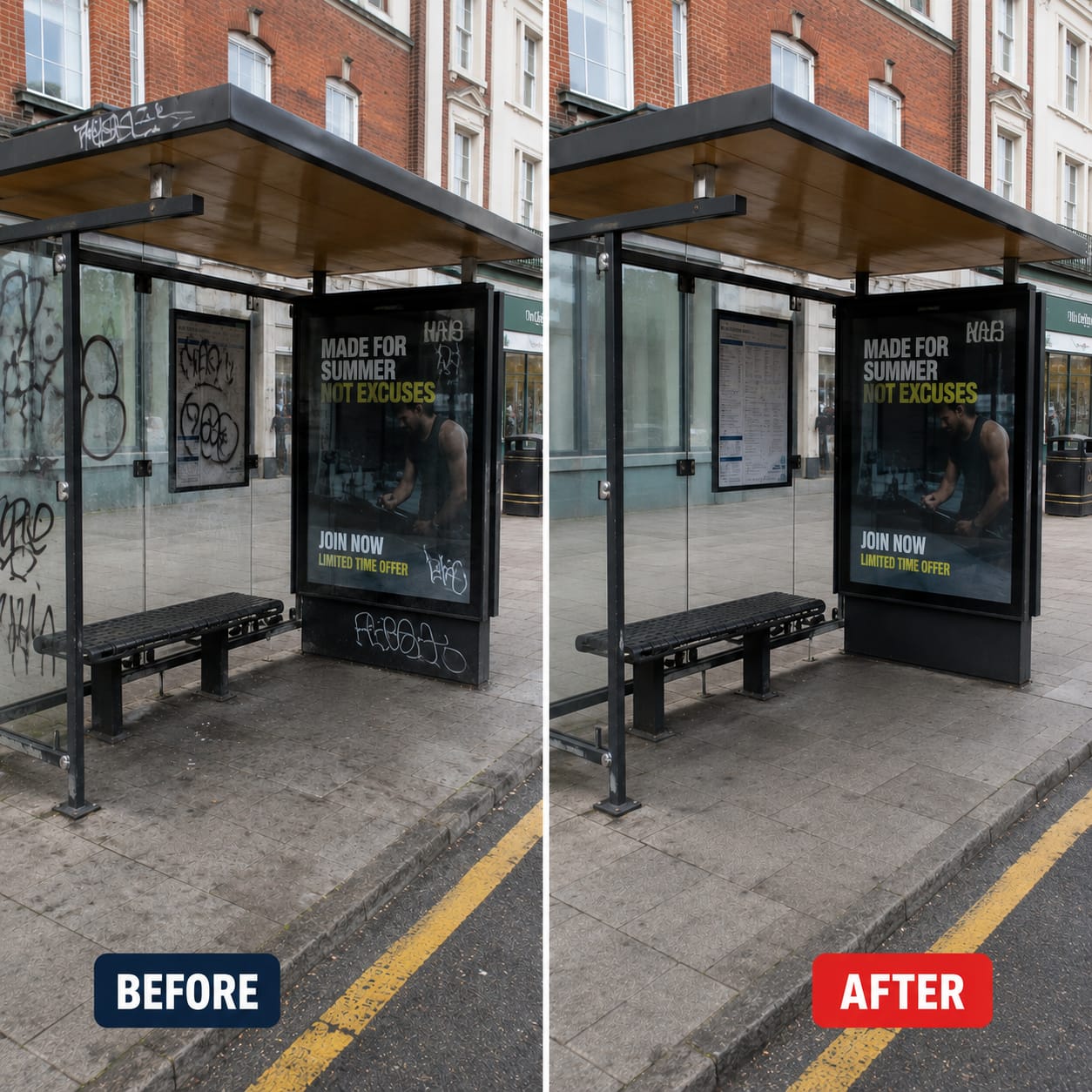
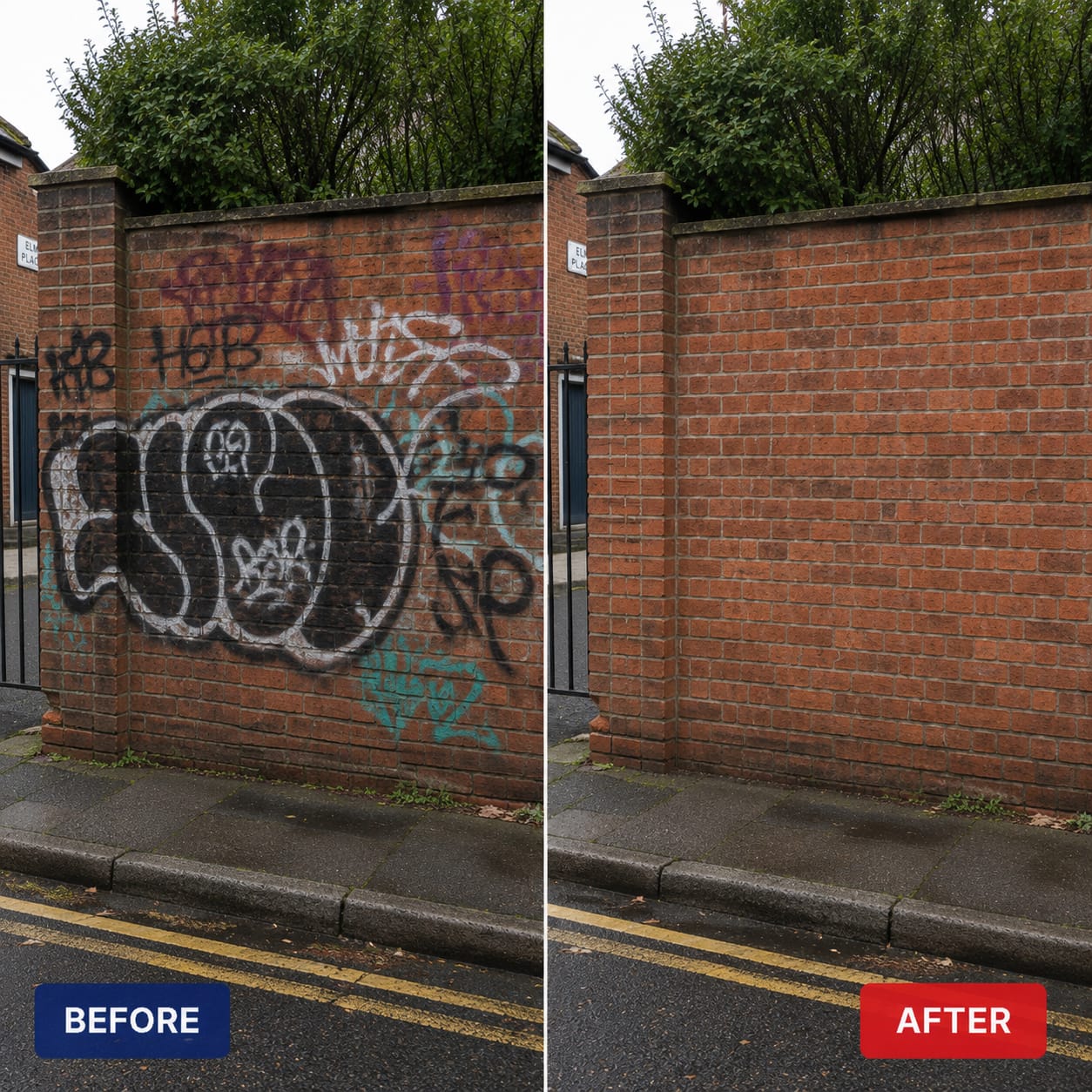
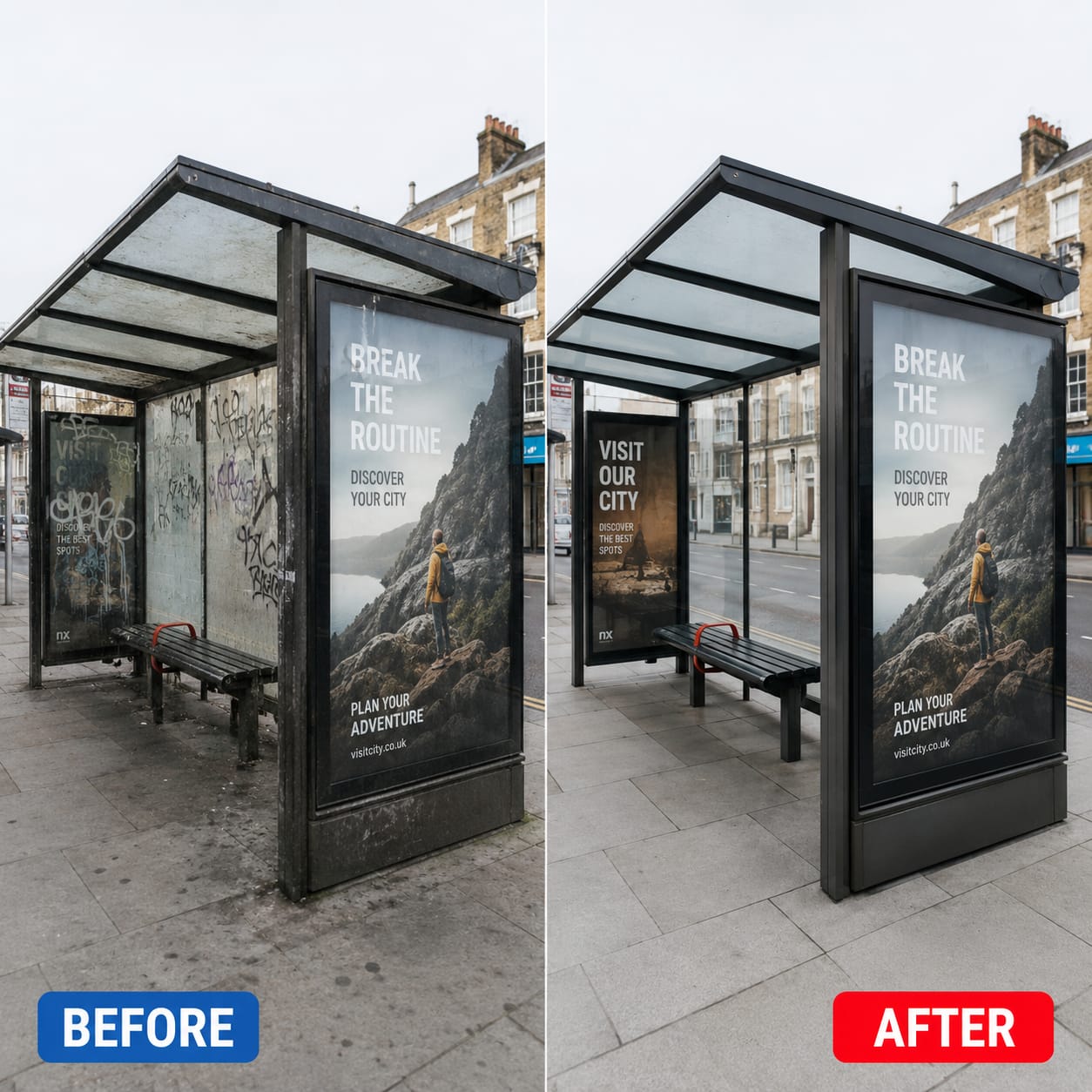
In the overnight window the team worked methodically across shelters, ticket machines, signage, railings and glass, using our full range of graffiti removal methods. Spray paint and marker were removed with surface-appropriate methods; metal and powder-coated finishes were cleaned without stripping them; and the whole area was left dry, tidy and ready for the first services of the day.
Phase 3 — Protecting the glass
The etched panels were covered with anti-graffiti film. The film hides the existing scratching and takes any future etching or tagging itself — so the next time a panel is targeted, the film is simply peeled and replaced rather than the whole glass unit.
The results
The entire interchange was cleaned and protected in the overnight window, and the morning peak ran as normal with no passenger disruption. The etched-glass solution avoided a significant replacement cost.
| Measure | Before | After |
|---|---|---|
| Cleaning window | No usable daytime slot | Delivered overnight, off-peak |
| Service disruption | Daytime attempts caused delays | None — no services affected |
| Etched / scratched glass | Heading for replacement | Covered with anti-graffiti film |
| Surface damage (glass, machines, metal) | Risk from wrong methods | None — controlled removal |
| Interchange appearance | Neglected, tagged | Clean and back to standard |
For scratched or acid-etched glass, anti-graffiti film is usually the smart call — it hides existing damage and means the next attack costs a film change, not a new glass panel.
Client testimonial
“They worked around us completely — in overnight, everything cleaned, gone before the first service. The scratched glass we thought we'd have to replace was sorted with a film instead. Passengers just saw a clean interchange in the morning, which is exactly what we wanted.”
Lessons learned & key takeaways
Three key insights
- Fit the work to the site, not the other way round. Overnight, off-peak working removes graffiti without costing a single service.
- Film beats replacement for etched glass. Anti-graffiti film hides scratching and protects the panel underneath at a fraction of the cost.
- Controlled methods protect valuable kit. Ticket machines, signage and glass need surface-safe removal, never high-pressure blasting.
Advice for others
- Do plan a proper survey first so an overnight shift runs to time and nothing overruns into service hours.
- Do consider anti-graffiti and anti-scratch film on glass that's repeatedly targeted or already etched.
- Don't let untrained staff pressure-wash near glass, machines or signage — the clean-up can cost more than the graffiti.
Graffiti removal that works around your services
Need graffiti gone without stopping the trains or buses?
We remove graffiti overnight and off-peak across transport hubs and public buildings in Manchester and the North West — on glass, metal, machines and shelters — with zero disruption to services. Tell us your site and window.
Frequently asked questions
Can you remove graffiti without closing our site?
Yes. We regularly work overnight and off-peak so removal happens in the gaps between services, with everything cleaned, dry and back in use before you reopen. For live transport environments we work to method statements and controlled, low-water techniques.
Can etched or scratched glass be repaired?
Etching and deep scratching can't be cleaned out — the surface is physically damaged. The cost-effective fix is anti-graffiti film applied over the panel: it hides the existing damage and takes any future scratching itself, so you replace a film instead of the glass.
Is it safe to clean ticket machines, signage and glass?
Yes, with the right approach. We use surface-appropriate methods and hand-finishing rather than high-pressure blasting near sensitive equipment, so finishes, screens and electronics are protected.
Do you carry the right insurance and safety documentation?
Yes. We work with method statements and risk assessments suited to public and transport settings, and can provide the documentation your facilities and safety teams need before we start on site.