Client: A Greater Manchester borough council — neighbourhoods & street-scene team
Quick take
A Greater Manchester borough council was struggling with a slow, reactive graffiti backlog across hundreds of public sites. No Graffiti Ltd introduced a single, borough-wide removal contract with a 24-hour standard response and same-day offensive-tag cover. Within three months the backlog was cleared, repeat hotspots were protected with anti-graffiti coatings, and resident complaints about graffiti fell sharply.
Graffiti is one of the most visible signs of neglect on a high street — and one of the fastest to spread. For a Greater Manchester borough council, a growing graffiti backlog had become a regular source of resident complaints, councillor casework and negative feedback about the look of the town centre. This case study looks at how a single, well-organised graffiti removal contract turned a slow, reactive service into a fast, predictable one across the whole borough.
Names and exact figures have been kept general to respect client confidentiality, but the approach, timescales and results are representative of the borough-wide graffiti removal work No Graffiti Ltd delivers for councils and public-sector bodies across Manchester and the North West.
About the client
The client is a district-level authority in Greater Manchester responsible for street cleaning, parks, and the upkeep of council-owned buildings and public spaces. Its neighbourhoods and street-scene team looks after a busy town centre, several district shopping parades, dozens of parks and play areas, and the bus shelters, subways, bridges and boundary walls in between.
Like most local authorities, the team was working to tight budgets and clear street-cleanliness targets, with graffiti removal competing for resources against litter, fly-tipping, grounds maintenance and seasonal pressures.
The challenge
Key pain points
Before bringing in a specialist, the council was removing graffiti in-house and ad hoc, using general cleaning staff and whatever equipment was to hand. That created several recurring problems:
- Slow response times. Non-offensive graffiti could sit for a week or more before anyone got to it, and by then it had usually spread.
- Offensive and racist tags left too long. Without a dedicated fast-track, hate-speech and offensive graffiti sometimes stayed up for days, generating complaints and reputational risk.
- Surface damage. Well-meaning staff using the wrong pressure-washer settings or harsh chemicals were leaving 'ghosting', bleached patches and damaged mortar behind.
- No single owner. Reports came in through several channels, jobs fell between teams, and nobody had a clear picture of the borough-wide backlog.
- Repeat hotspots. The same subways, shutters and boundary walls were being hit again and again, with no protective strategy to break the cycle.
The impact of the problem
The knock-on effects were bigger than the graffiti itself. Average clean-up time was running at over a week, offensive tags were driving a steady stream of complaints, and the town centre was picking up a reputation for looking tired — which matters when a council is trying to attract footfall and investment. Councillors were fielding casework about specific eyesores, and the street-scene team had no reliable data to show how quickly graffiti was actually being dealt with.
The solution
Why they chose No Graffiti
The council approached several graffiti removal contractors. No Graffiti Ltd was selected on a combination of local knowledge, method and reliability:
- A local, Manchester-based operation. Vans based in the North West meant genuinely fast response, not a national call-centre and a two-day wait.
- The right method for every surface. We use the full range — steam and hot-water systems (DOFF/ThermaTech-style), chemical removers and poultices, chemical-free options and controlled pressure washing — matched to brick, render, stone, metal, glass and street furniture rather than a one-size-fits-all jet wash.
- Clear response standards. A written 24-hour standard for ordinary graffiti and a same-day fast-track for anything offensive, racist or obscene.
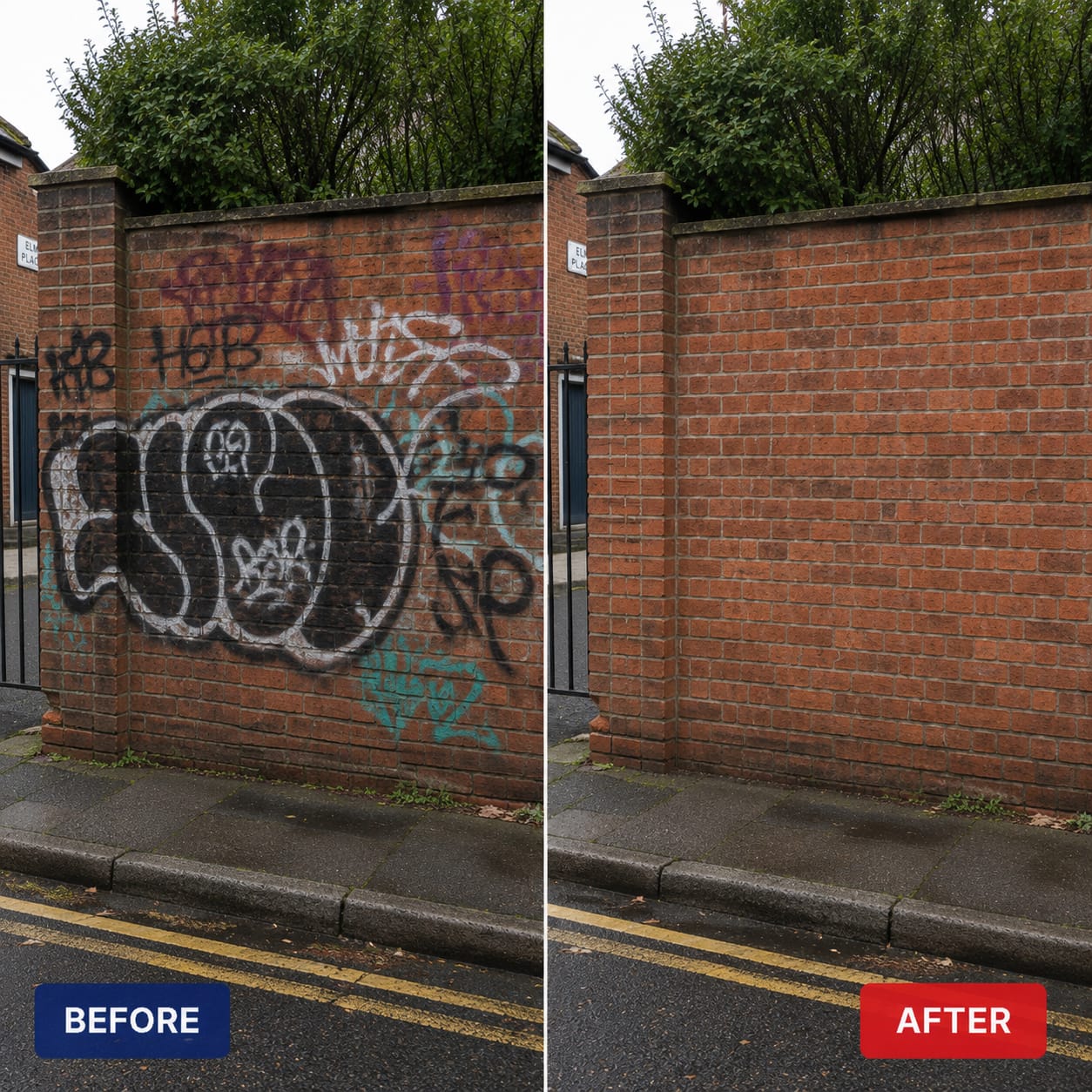
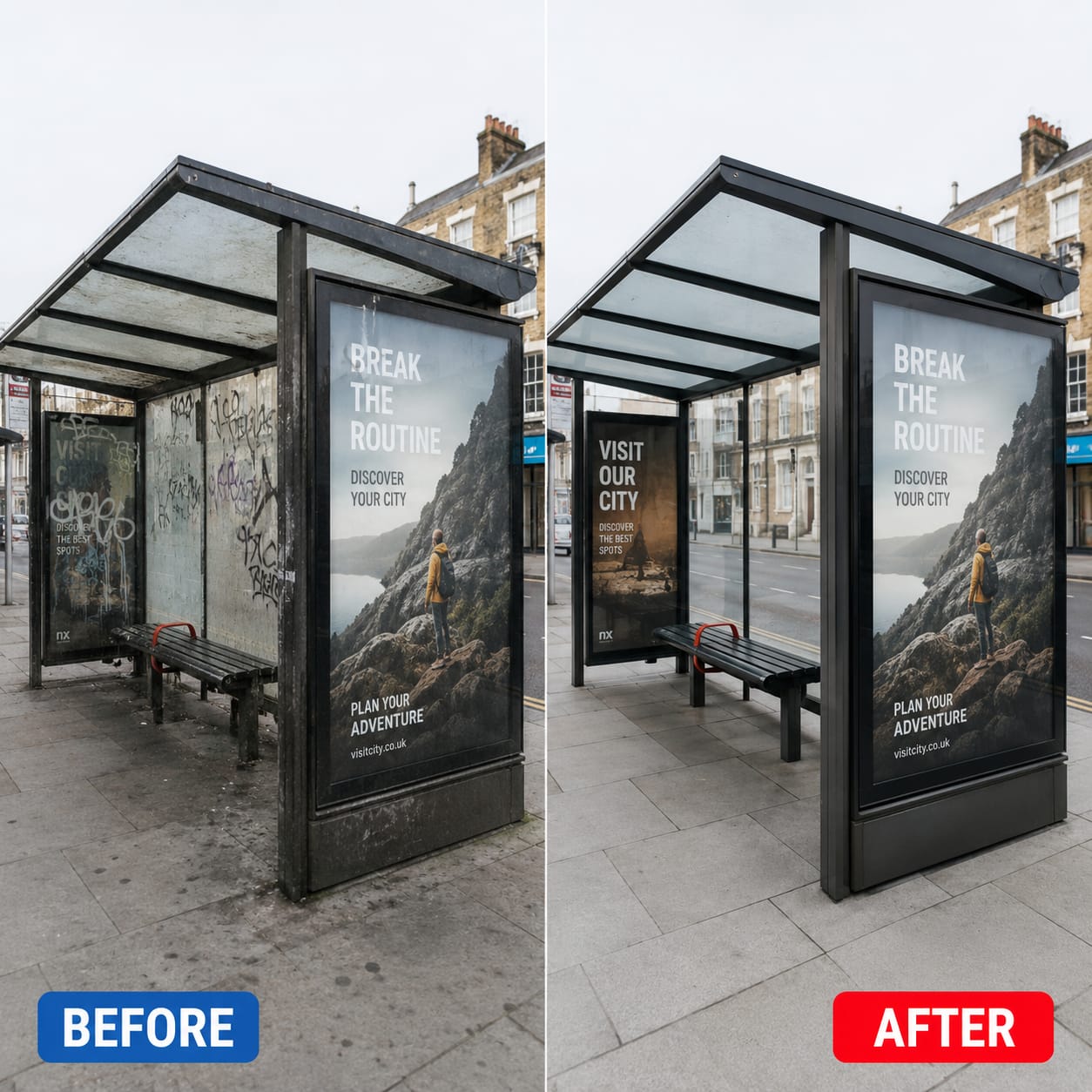
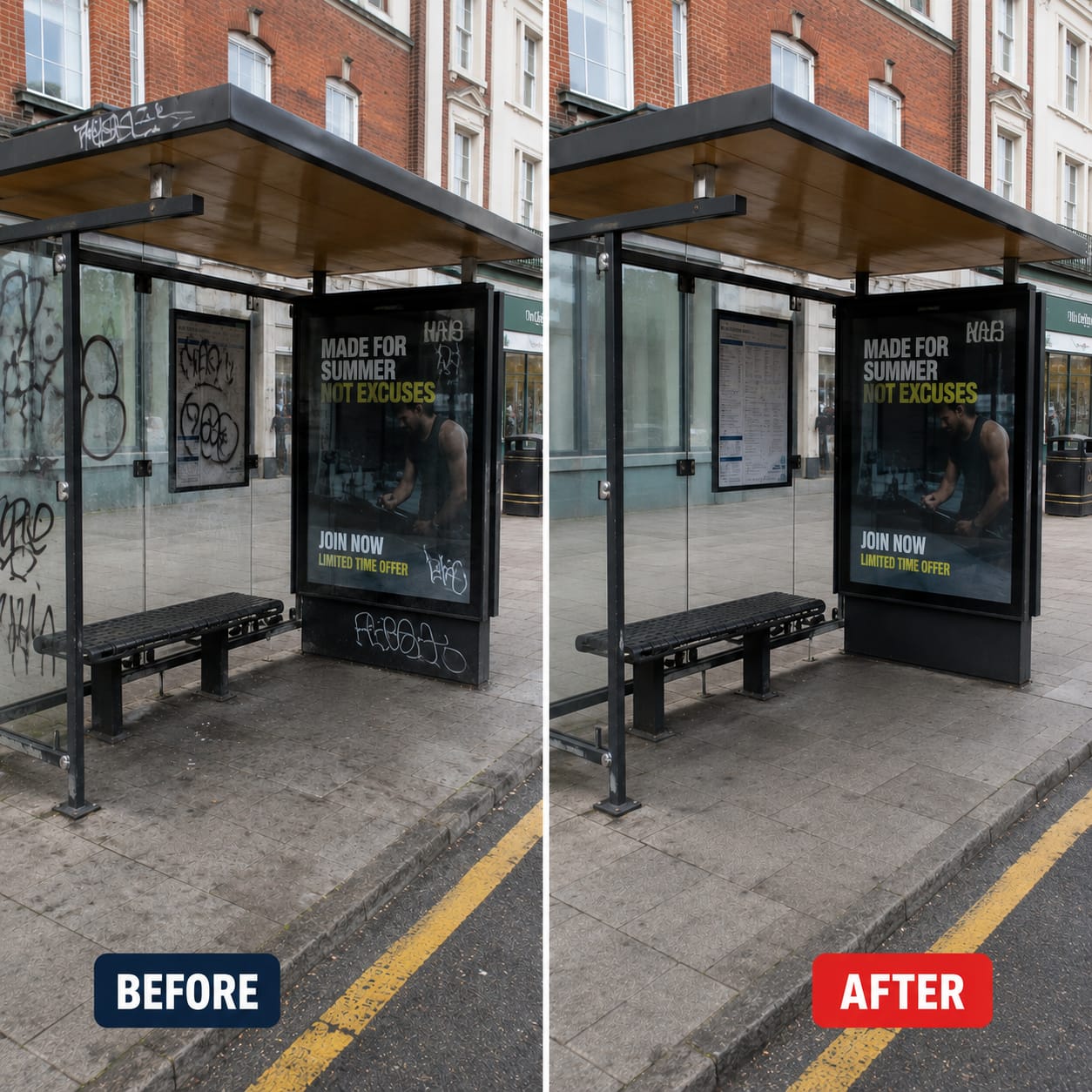
- Proper reporting. Photographic before-and-after records and site logs the council could use for its own performance monitoring.
Implementation: team & resources
The contract was mobilised in three clear phases so the council saw progress quickly without disruption to residents.
Phase 1 — Audit & backlog clearance (weeks 1–3)
We started with a borough-wide survey, logging every known graffiti site with a photo, location and surface type. A dedicated two-person team then worked through the backlog, prioritising the town centre, transport stops and anything offensive. Within three weeks the standing backlog of over 300 sites had been cleared.
Phase 2 — Rapid-response service (ongoing)
With the backlog gone, the contract switched to a maintenance rhythm: a single reporting inbox, a 24-hour standard response and a same-day offensive-graffiti fast-track. Every job was photographed before and after and logged against the address, giving the council a live picture of the borough for the first time.
Phase 3 — Protecting the hotspots (ongoing)
For the walls, shutters and subways that were being repeatedly targeted, we applied sacrificial and permanent anti-graffiti coatings. On coated surfaces, future tags can be removed in minutes with far less water, chemical and cost — turning a recurring problem site into a quick wipe-down.
The results
Within the first 90 days the service was transformed from reactive to predictable. Response time was the headline change, but the protective coatings and single point of contact were what made the improvement stick.
| Measure | Before | After |
|---|---|---|
| Average response time (standard graffiti) | 7+ days | Within 24 hours |
| Offensive / racist graffiti | Up to several days | Same day |
| Standing backlog | 300+ known sites | Cleared in 3 weeks |
| Repeat hotspots | Re-tagged, re-cleaned | Coated — quick wipe-down |
| Before/after records | None | Every job photographed & logged |
On surfaces protected with an anti-graffiti coating, a fresh tag that once meant a full chemical clean can now be removed in minutes — which is where a lot of the long-term saving comes from.
Client testimonial
“Graffiti used to be the thing residents complained about most, and we never had a good answer on how fast we'd deal with it. Now there's one number to call, offensive tags are gone the same day, and the town centre genuinely looks cared for again.”
Lessons learned & key takeaways
Three key insights
- Speed beats everything. Removing graffiti within 24 hours discourages repeat tagging far more effectively than a slow, thorough clean weeks later.
- Coat your hotspots. The cheapest graffiti to remove is graffiti on a protected surface — anti-graffiti coatings turn recurring problem sites into quick jobs.
- One point of contact wins. A single reporting route and one accountable team removed the gaps that jobs used to fall through.
Advice for others
- Do set a written response standard — and a faster one for offensive graffiti — so residents know what to expect.
- Do keep photographic before-and-after records; they prove performance and support enforcement.
- Don't let general staff loose with a pressure washer on brick or stone — the wrong method causes damage that costs more than the graffiti.
Book graffiti removal for your council or town centre
Need a faster graffiti service across your borough?
We provide rapid-response, borough-wide graffiti removal for councils and public-sector bodies across Manchester and the North West — with same-day cover for offensive tags. Tell us your problem sites and we'll put a plan together.
Frequently asked questions
How quickly can you remove graffiti across a whole borough?
For a standing contract we work to a 24-hour standard response for ordinary graffiti and a same-day fast-track for anything offensive, racist or obscene. When we first take on an area we clear the existing backlog within the first few weeks, then move to a rapid-response rhythm.
Do you handle offensive or racist graffiti differently?
Yes. Offensive, racist or obscene graffiti is treated as a priority and removed the same day wherever possible, because of the harm and reputational risk it causes. It's a standard part of our council contracts.
Will removal damage historic brick or stone?
Not when the right method is used. We match the technique — steam and hot-water systems, gentle chemical removers and poultices, chemical-free options or controlled pressure washing — to each surface, and we test first on delicate or heritage materials rather than jet-washing everything.
Can you protect surfaces that keep getting tagged?
Yes. For repeat hotspots we apply sacrificial or permanent anti-graffiti coatings so future tags can be removed quickly with far less water, chemical and cost. It's the most effective way to break the re-tagging cycle.