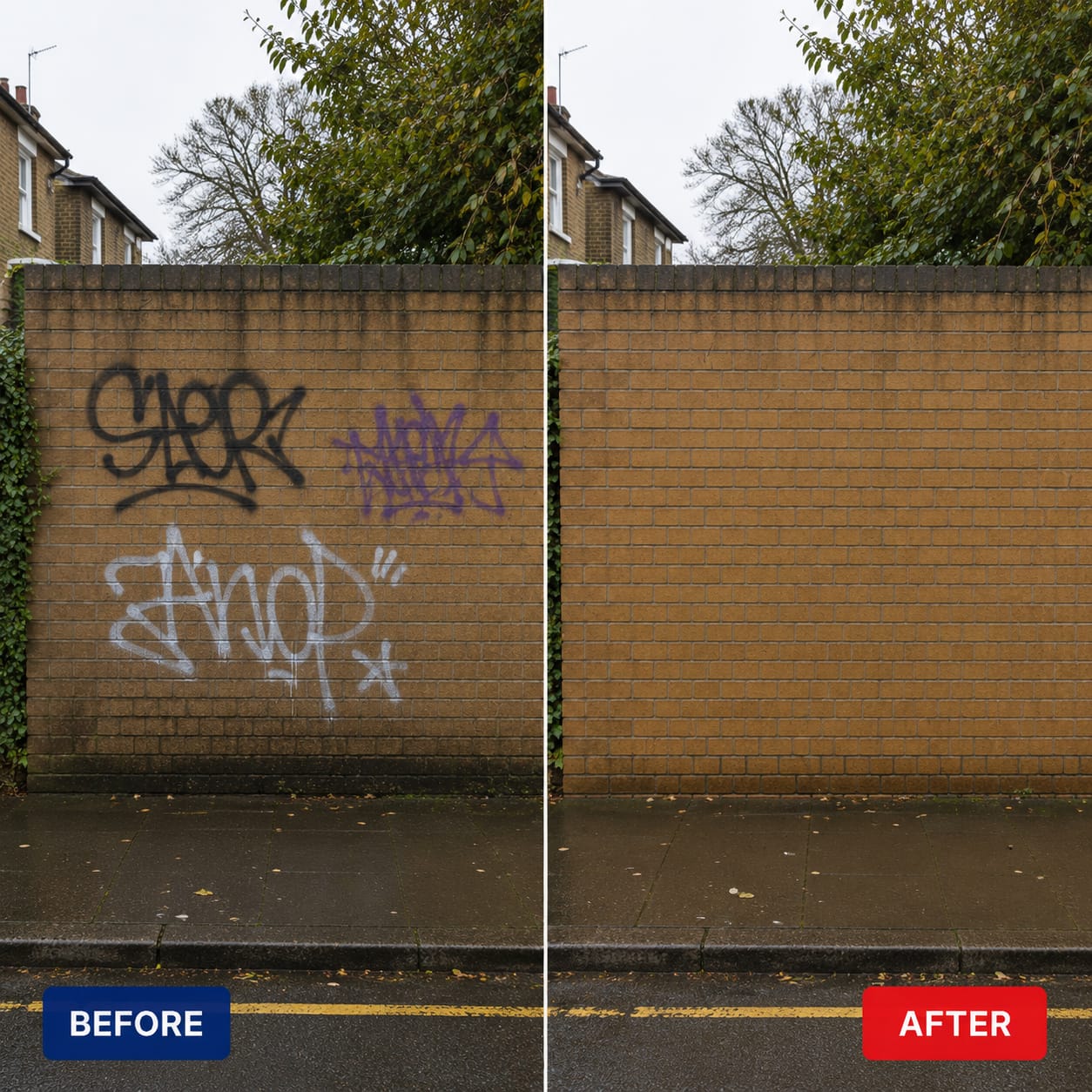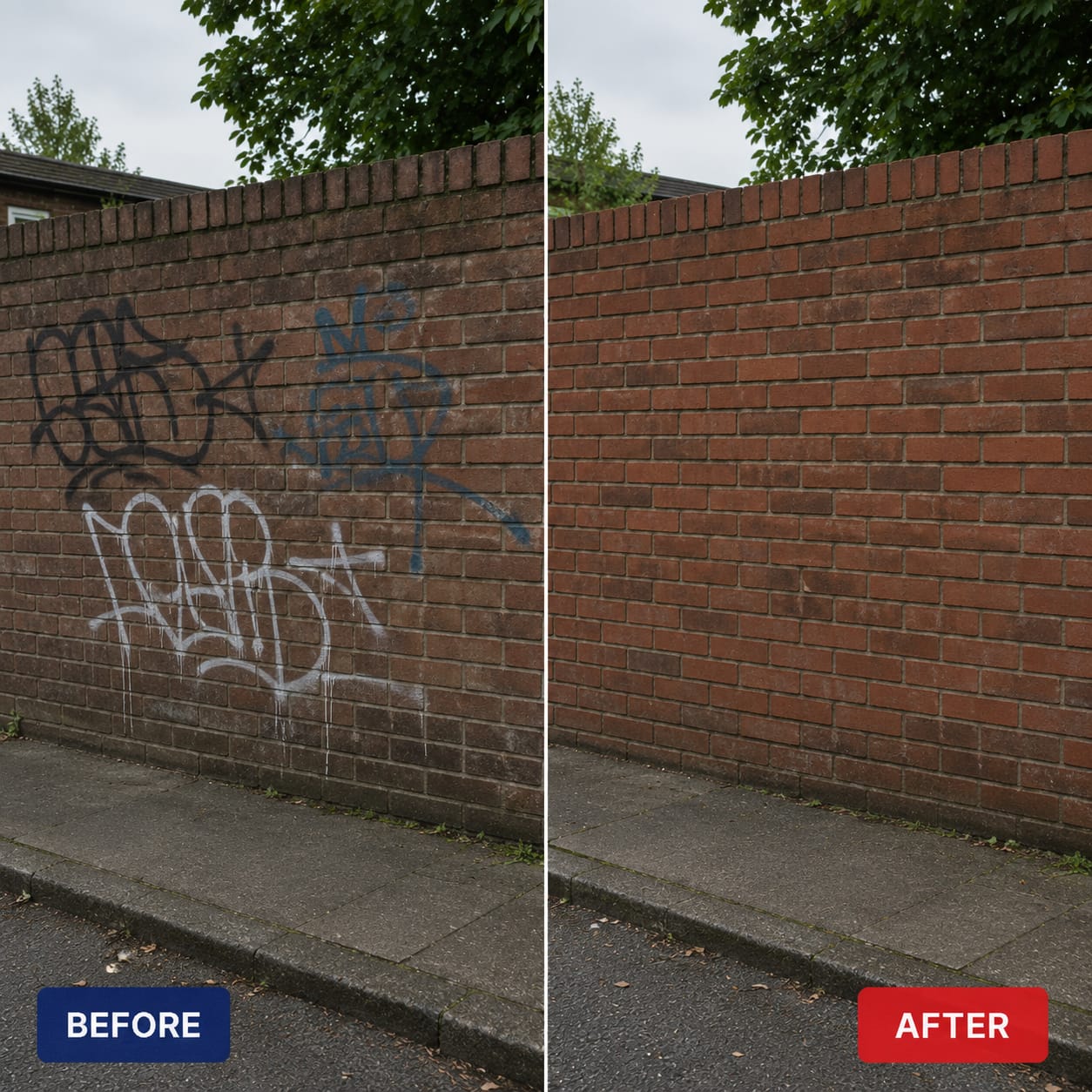
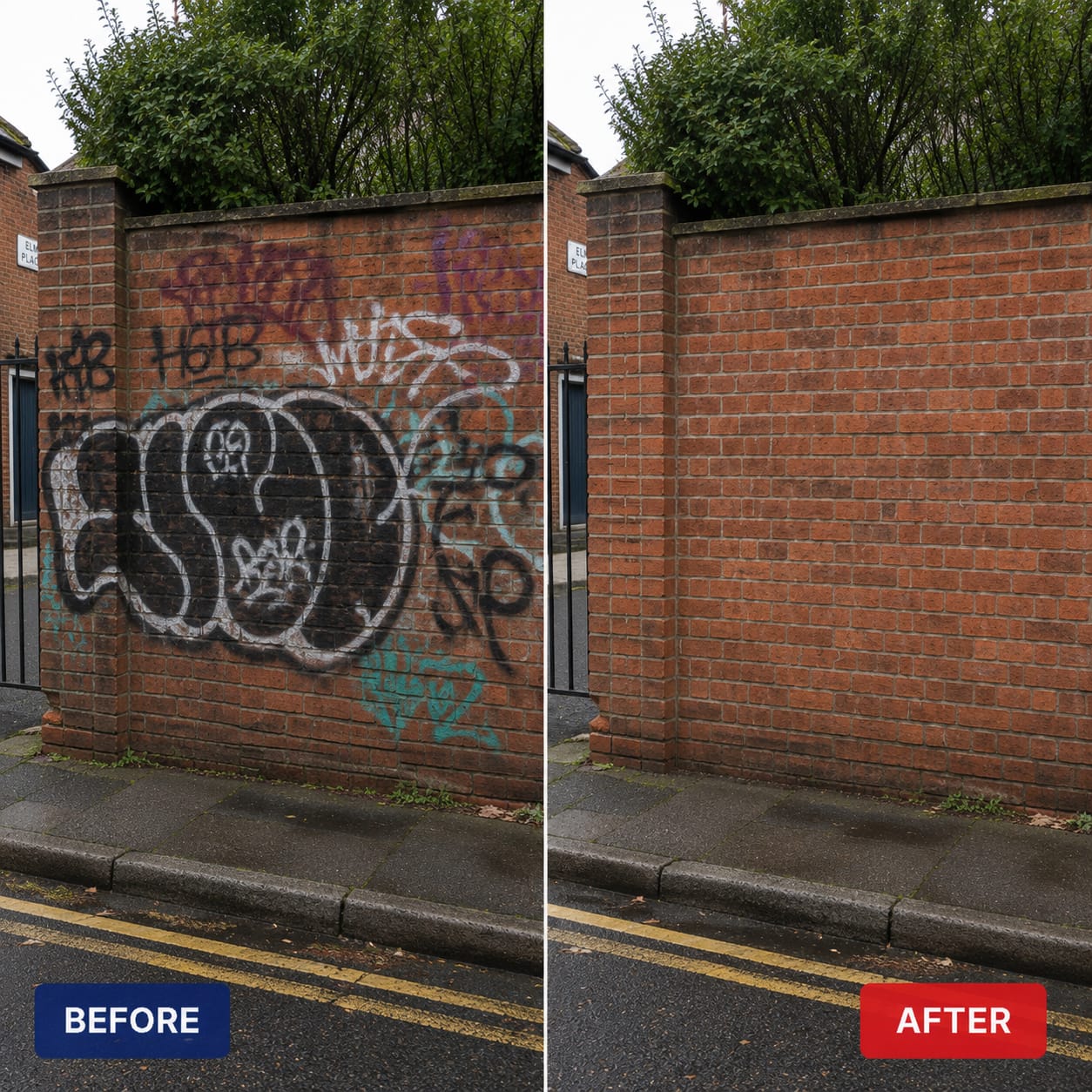
Some walls get hit again and again. For councils, housing providers and businesses, that means repeat call-outs, mounting costs and a site that always seems to look neglected — no matter how quickly it's cleaned.
The good news: repeat graffiti is preventable. This guide sets out exactly how to break the cycle, from fast removal and coatings to simple changes in lighting and design.
Why graffiti keeps coming back
Graffiti attracts more graffiti. A visible tag signals that a location isn't being looked after, which invites others to add to it. Slow removal makes it worse — the longer a tag stays up, the more the spot is seen as fair game.
The most common repeat targets share a pattern: large, blank, easy-to-reach surfaces, poor lighting, and little passing supervision. Understand why your site is being chosen and you're halfway to stopping it.
Before you start: assess the hotspots
A quick assessment tells you where to focus your effort and budget. Walk the site and note:
- Which surfaces have been tagged more than once — these are your true hotspots.
- How accessible and visible each one is (blank walls, shutters, underpasses).
- Lighting and sightlines after dark.
- The surface type — porous brick, render and stone are both easier to tag and harder to clean.
- How quickly graffiti currently gets removed, and who's responsible.
Step 1: Remove existing graffiti fast
Why it matters: speed is the single most effective deterrent. Removing graffiti within a day or two sends a clear message that it won't be tolerated and simply isn't worth the effort.
How to do it: have a plan in place before it happens — whether that's an in-house team or a rapid-response contract with a specialist. Consistency is what counts: a spot that's always cleaned quickly stops being a target. Treat offensive or abusive graffiti as urgent every time.
Step 2: Coat the repeat hotspots
Why it matters: for surfaces that are targeted again and again, an anti-graffiti coating is the most cost-effective long-term fix. It doesn't stop the tag going up, but it makes removing it fast, cheap and damage-free.
How to do it: choose the right type of coating for the surface and how often it's hit —
- Sacrificial coatings — a protective layer that lifts away with the graffiti and is re-applied afterwards. Ideal for very high-frequency hotspots.
- Permanent coatings — a durable barrier that lasts for years; future graffiti washes off without removing the coating.
Rule of thumb: if a surface is tagged more than once or twice a year, a coating usually pays for itself by making every future clean faster and cheaper.
Step 3: Design out the opportunity
Why it matters: small changes to the environment make a big difference to how often a spot is targeted. Vandals prefer blank, hidden, poorly-lit walls.
How to do it: focus on cheap, high-impact changes:
- Improve lighting — well-lit walls are far less attractive after dark.
- Use planting, trellis or greenery to cover and protect large blank walls.
- Restrict easy, unseen access where it's practical and safe to do so.
- Keep the wider area clean and cared-for — tidy surroundings deter tagging.
Step 4: Put it on a planned programme
Why it matters: the most reliable results come from doing all of the above consistently, not reactively. A planned programme turns graffiti from a recurring emergency into a managed, predictable cost.
How to do it: combine fast removal, coatings on the worst spots and scheduled maintenance visits, with simple reporting you can share with stakeholders. This is exactly the kind of programme we build for councils, housing associations and businesses across Manchester, Cheshire and the North West.
Pro tips
- Fix the worst hotspot first — a coating on your single most-tagged wall often delivers the biggest saving.
- Photograph and log every incident; patterns help you target prevention and support any reporting.
- Coordinate with neighbouring owners — a whole clean street is far less of a target than one tidy building.
- Review the site seasonally; access, lighting and greenery change through the year.
Common mistakes to avoid
- Only ever removing graffiti and never addressing why it keeps returning.
- Leaving tags up for weeks — slow removal actively invites more.
- Coating everything indiscriminately instead of targeting proven hotspots.
- Ignoring lighting and landscaping, which are often the cheapest fixes of all.
A real-world example
A housing estate with a repeatedly-tagged bin store and gable wall was stuck in a cycle of monthly clean-offs. Rather than keep reacting, the fix combined a one-off deep clean, a permanent coating on both hotspots, and a low-cost lighting improvement. The next tag that appeared wiped off in minutes, the frequency dropped sharply, and the unpredictable monthly bills became a single planned cost. Prevention did what repeat removal never could.
Frequently asked questions
What's the most effective way to stop repeat graffiti?
There's no single fix — the best results come from combining fast removal, an anti-graffiti coating on the worst hotspots, and cheap environmental changes like better lighting and planting. Together these make a spot far less attractive and far cheaper to keep clean.
Do anti-graffiti coatings really work?
Yes. They don't prevent the tag going up, but they mean it can be removed quickly and easily — often with just water — instead of intensive, damaging cleaning each time. On repeat-target surfaces they usually pay for themselves.
How fast should graffiti be removed?
As quickly as practical — ideally within a day or two. Fast removal is the strongest deterrent, because it signals the location is looked after and isn't worth targeting.
Can you set up a regular prevention programme?
Yes. We build planned programmes for councils, housing providers and businesses that combine rapid response, coatings and scheduled maintenance, with reporting you can share with stakeholders.
The bottom line
Breaking the cycle of repeat graffiti means going beyond removal: clean it fast, coat the hotspots, design out the opportunity, and put it all on a planned footing. Do that and a wall that once got tagged monthly can stay clean for good — at a fraction of the long-term cost.
Tired of the same wall getting tagged?
We help councils, housing providers and businesses across Manchester, Cheshire and the North West stop repeat graffiti with fast removal, coatings and planned maintenance. Get a free assessment.