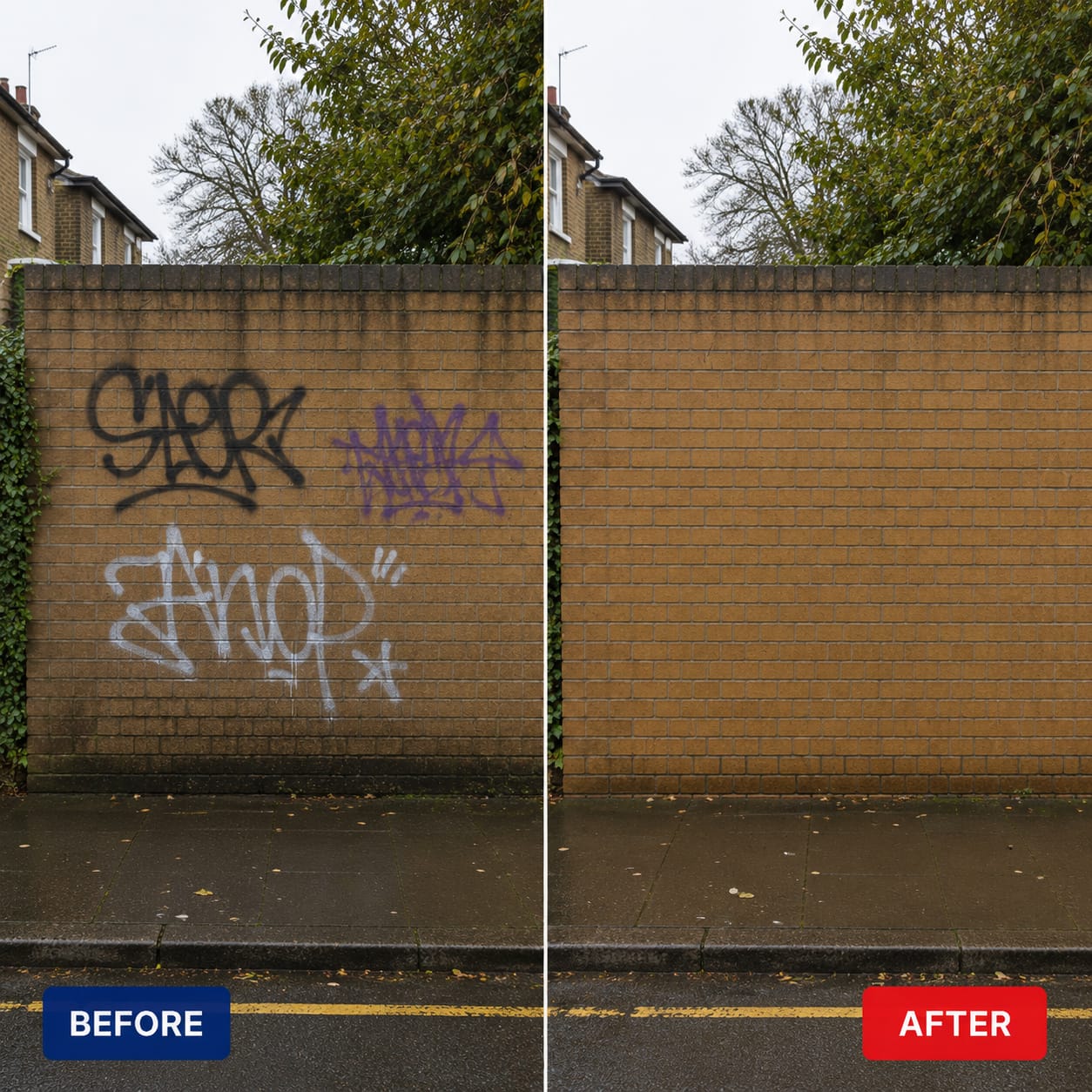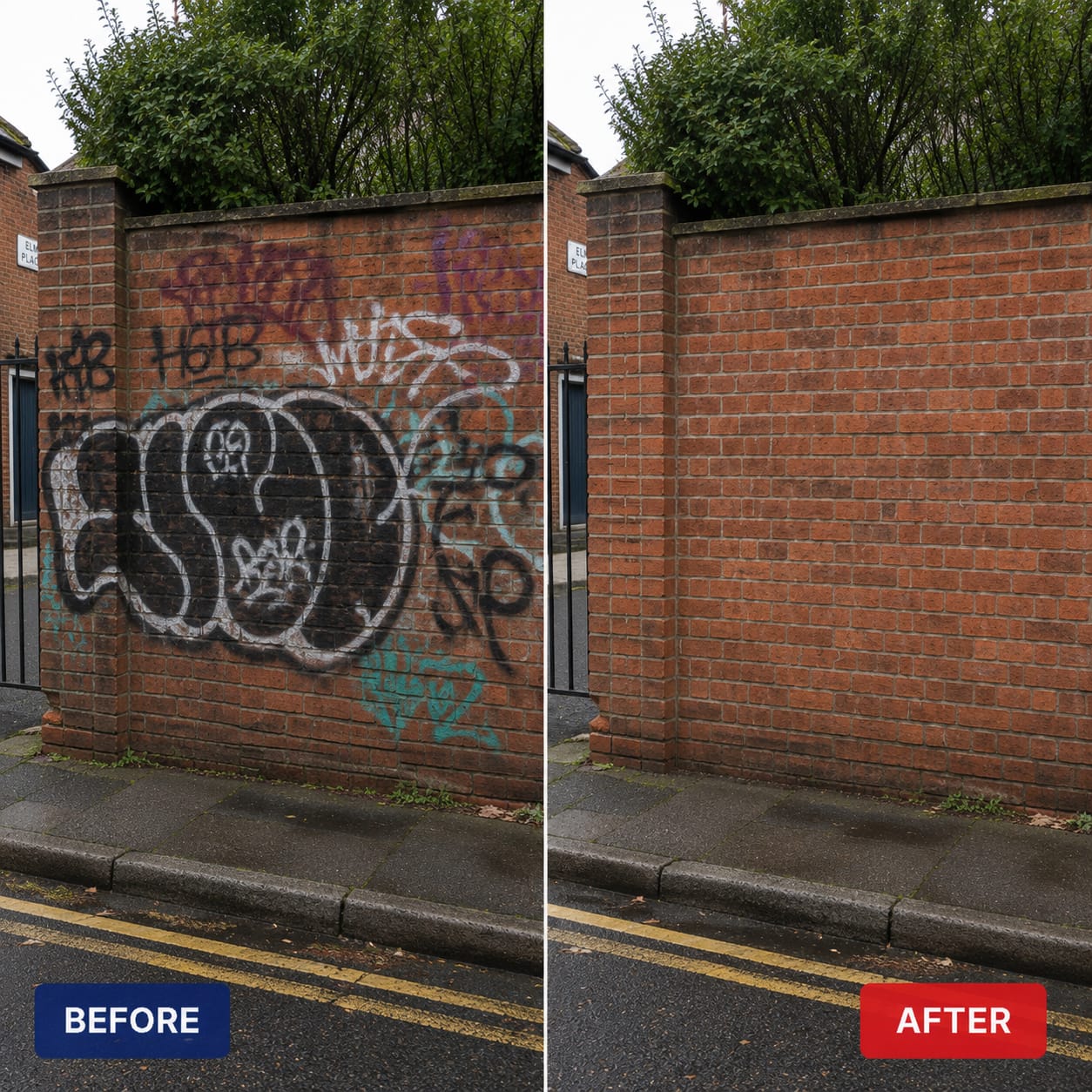
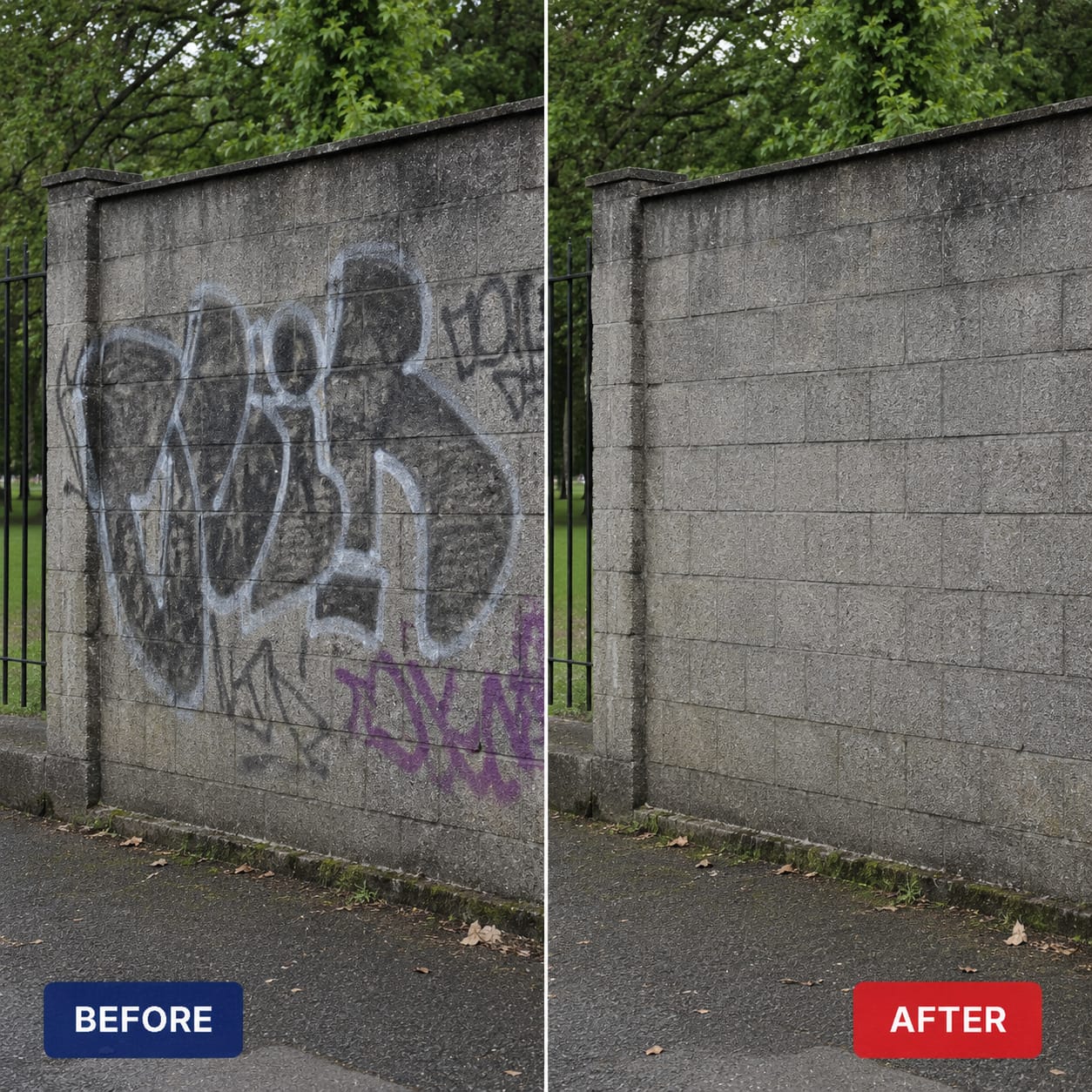
Spray paint on render, stone or concrete needs more care than most people expect. Each of these surfaces reacts differently, and the wrong approach can leave a permanent stain or strip the surface itself.
This guide explains how each surface behaves, sets out a safe step-by-step method that works across all three, and flags the point where it's smarter to call a specialist.
Why these three surfaces need different treatment
Render, stone and concrete are all porous, so spray paint soaks in rather than sitting on top — but they differ hugely in how tough they are. Render is soft and often painted; stone is porous and frequently old or heritage; concrete is hard but still prone to staining.
Use the same aggressive method on all three and you'll damage at least one of them. Matching the approach to the surface is the whole game.
Before you start: what you'll need
- A good look at the surface and how deep the paint has gone.
- A graffiti remover suited to masonry — not a general household solvent.
- PPE: gloves, eye protection and a mask with good ventilation for chemicals.
- Clean water and a low-pressure hose or sprayer.
- A hidden test patch chosen before you touch the main area.
- Realism about the surface: if it's soft render, heritage stone or decorative concrete, consider calling a specialist first.
Render: the most delicate
Why it matters: render is soft, and many rendered walls have a painted or coloured finish that can come away along with the graffiti — leaving a bare patch that stands out as much as the tag did. Aggressive chemicals or high-pressure washing can erode render entirely.
How to do it: use gentle, low-pressure methods and careful product choice, always tested first. In some cases the cleanest result comes from removing the graffiti and re-finishing a section of render, rather than fighting to lift every trace.
Stone: porous and often heritage
Why it matters: natural stone is porous and frequently found on older or listed buildings, so it needs a considered approach. Paint draws into the pores, and the wrong solvent can drive it deeper or discolour the stone permanently.
How to do it: specialist poultices that pull the pigment back out of the stone, along with low-pressure steam or hot-water systems, give the safest results without harming the surface. Heritage stone is a job to approach cautiously — or hand to a specialist.
Concrete: tough but prone to ghosting
Why it matters: concrete is the toughest of the three, but it's still porous and prone to 'ghosting' — a faint shadow left after the main paint is removed.
How to do it: concrete can usually take firmer treatment than render or stone, but the method still needs matching to the finish — especially on decorative, polished or coloured concrete, where harsh cleaning leaves visible marks.
A safe method for all three
- Identify the surface and the paint, and gauge how delicate it is.
- Test a small, hidden area first and let it dry before judging the result.
- Apply a masonry-safe remover (or use steam/hot water) and give it the full dwell time.
- Work gently — soft brush only if needed, never a full-power pressure washer.
- Rinse with clean, low-pressure water and check for ghosting once dry.
- Repeat gently if needed — a second light pass is far safer than scrubbing harder.
What to avoid on all three
- High-pressure jet washing at full power — it erodes render and stone and can mark concrete finishes.
- Unknown household solvents or paint strippers — the wrong chemical can set a permanent stain.
- Wire brushes and abrasive scrubbing — they scratch and spread the pigment.
- Painting over it — it rarely matches and traps the problem underneath.
When to call a professional
For anything more than a small, fresh tag — and for any heritage, painted or decorative surface — it's worth calling a specialist who can test the surface and match the method. The cost of professional removal is almost always lower than repairing a render patch or a stained heritage wall.
No Graffiti removes spray paint from render, stone, concrete and more across Manchester, Cheshire and the North West, using the full range of methods matched to each surface — safely, and first time.
Frequently asked questions
Is render harder to clean than brick?
In some ways, yes. Render is softer and often painted, so both the graffiti and the finish can lift together. It usually needs gentler methods than brick, and sometimes a small re-finish is the cleanest fix.
Can you remove graffiti from heritage or listed stone?
Yes, with the right approach. Heritage stone needs gentle, tested methods — typically poultices and low-pressure steam rather than chemicals or pressure. It's a job best handled carefully or by a specialist.
What causes 'ghosting' on concrete?
Ghosting is a faint shadow left by pigment that soaked into the pores before the main paint was removed. It can usually be lifted with a further gentle application, not by cleaning harder.
Will pressure washing damage render or stone?
At high pressure, yes — it can erode render and stone and blow out joints. Low-pressure and heat-based methods, matched to the surface, are far safer and just as effective.
The bottom line
Render, stone and concrete all need graffiti removed gently and on their own terms: test first, match the method, and never rely on brute force. Render is the most delicate, heritage stone needs the most care, and even tough concrete can ghost. When in doubt, a specialist will save you money over a damaged surface.
Graffiti on render, stone or concrete?
We remove spray paint from every masonry surface across Manchester, Cheshire and the North West — matched to the material, with rapid response available. Get a free quote or site assessment.