Graffiti on shared and public spaces is frustrating — and it's not always obvious who's responsible for removing it. Report it to the wrong place and nothing happens; report it to the right one and it's often gone within days.
This is a plain-English guide to who removes graffiti on public and council property across Manchester and the wider North West, how to report it, and what happens next.
It comes down to who owns the surface
The golden rule is simple: whoever owns the surface is responsible for removing the graffiti on it. In practice that usually breaks down as:
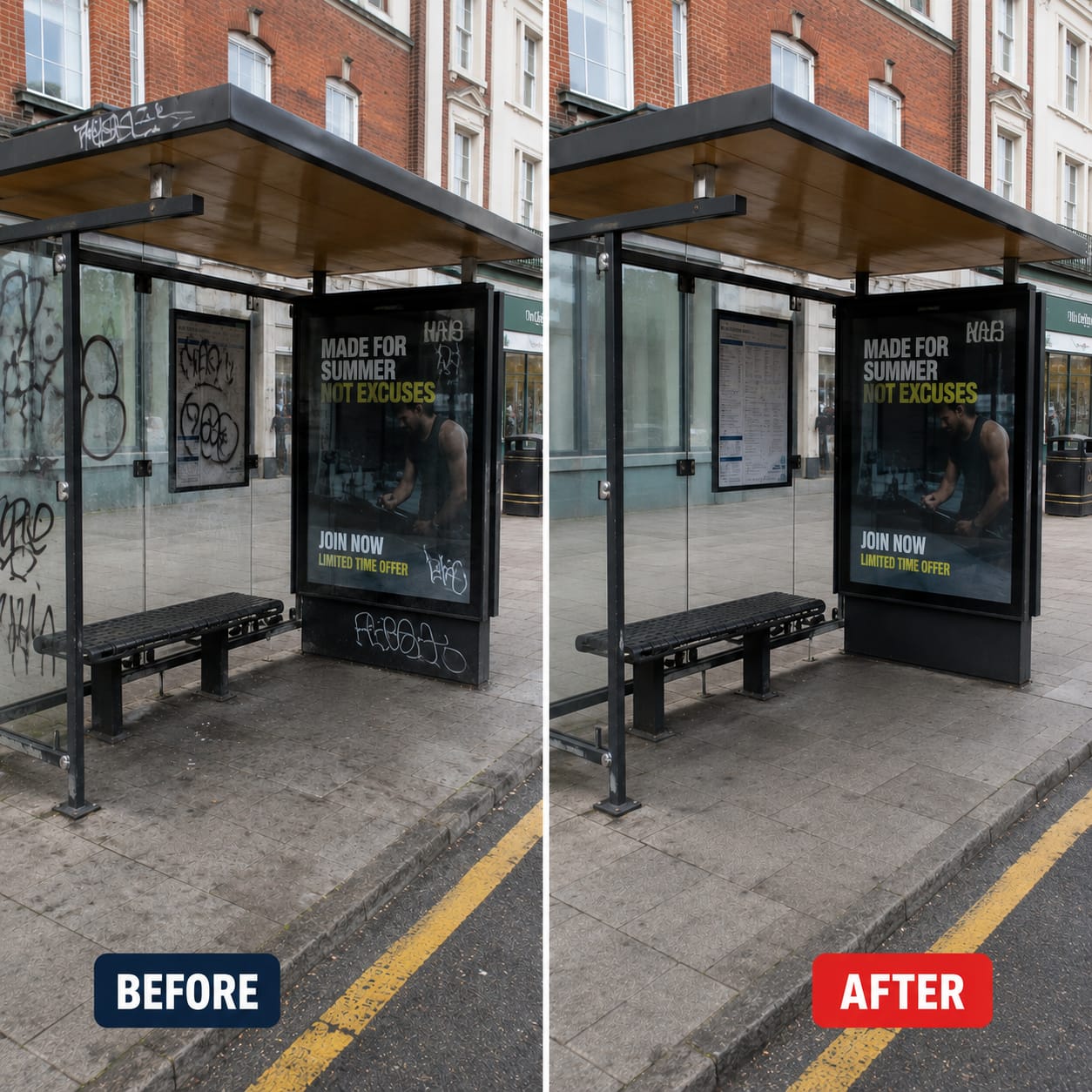
- Council-owned land and property — many walls, bus shelters, subways, signage, bins and street furniture. Usually the local council's responsibility.
- Private property — shops, offices, homes and boundary walls. The owner's responsibility.
- Transport, utility and railway structures — bridges, substations, phone cabinets and stations. The relevant operator's responsibility.
Not sure who owns the surface?
If you genuinely can't tell who's responsible, start with the local council — most have a single online form and will redirect anything that isn't theirs to the right place. For a wall or structure that clearly belongs to a business, contact them directly. For anything on or beside a railway, report it to the rail operator; for roadside cabinets or substations, the utility company.
When in doubt, report it anyway with a clear photo and location. It's far better to flag graffiti to a body that can pass it on than to leave it up — where it only attracts more and becomes harder to remove the longer it sets.
How to report graffiti to your council
Most Greater Manchester councils — including Manchester, Salford, Stockport, Oldham, Rochdale, Bury, Bolton and Trafford — let you report graffiti online in a couple of minutes.
Search your council's name plus 'report graffiti' and you'll usually find a form. It typically asks for a location (an address or what3words), a photo, and a note on what's been tagged. The more precise the location, the faster it gets actioned.
What happens after you report it
Once reported, graffiti on council property is usually logged and scheduled for removal. Timescales vary by council and by how busy their teams are, but there's one consistent rule across the board:
Offensive, racist or abusive graffiti is treated as a priority and removed much faster — often within a day or two. Always flag clearly if what you're reporting is offensive, as it moves the job up the queue.
If the graffiti is on your own property
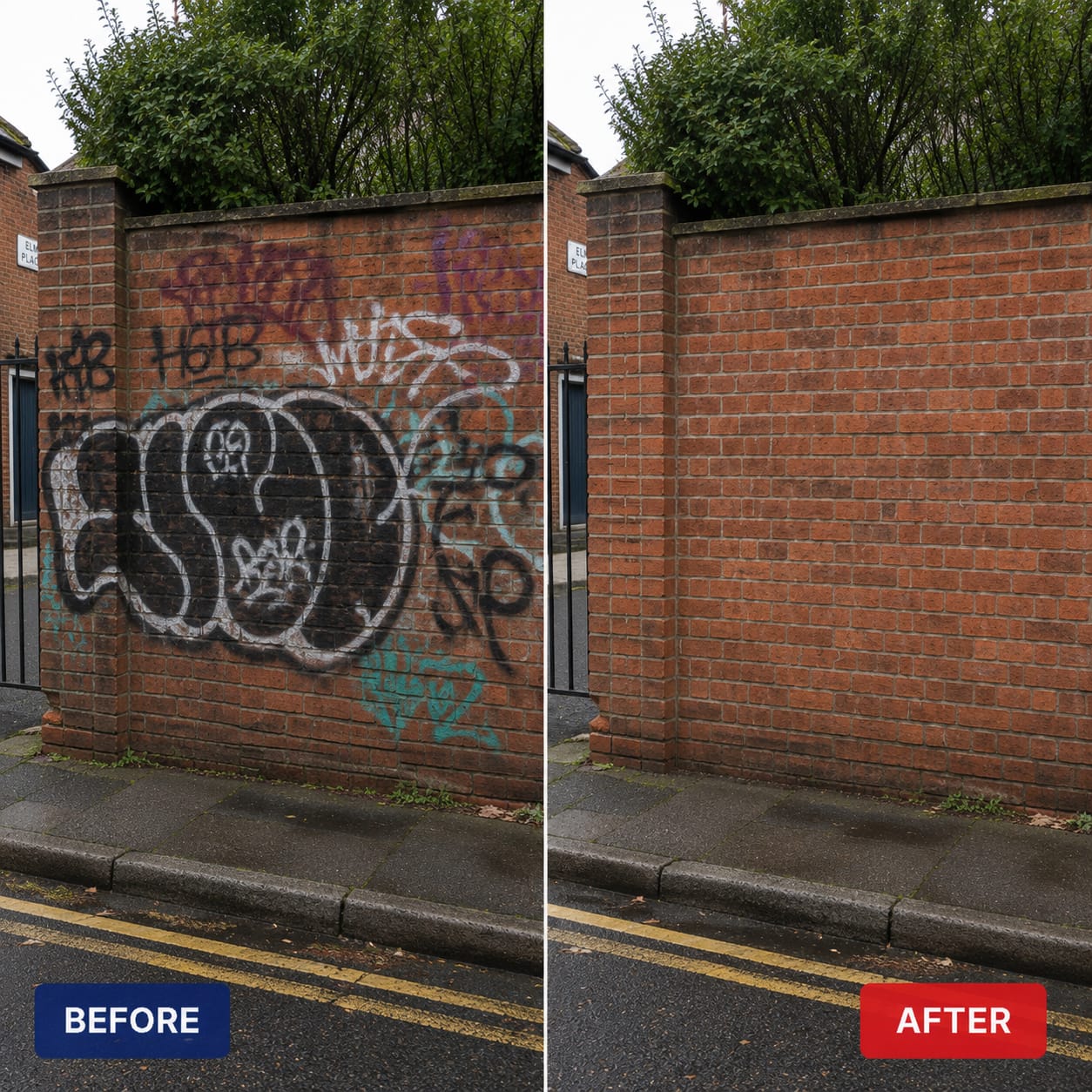
If it's on a wall, shutter or building you own or manage, removal is down to you — the council won't clean private property. Acting quickly still matters: fast removal discourages repeat tagging and stops the graffiti setting into porous surfaces like brick and render.
For businesses and landlords, it's worth having a plan in place before it happens, whether that's a trusted contractor on call or a rapid-response arrangement.
How councils and organisations get graffiti removed
Many councils, housing associations and businesses use specialist graffiti-removal contractors rather than handling it in-house — for rapid response to reports, safe removal on every surface, and planned maintenance across a whole area.
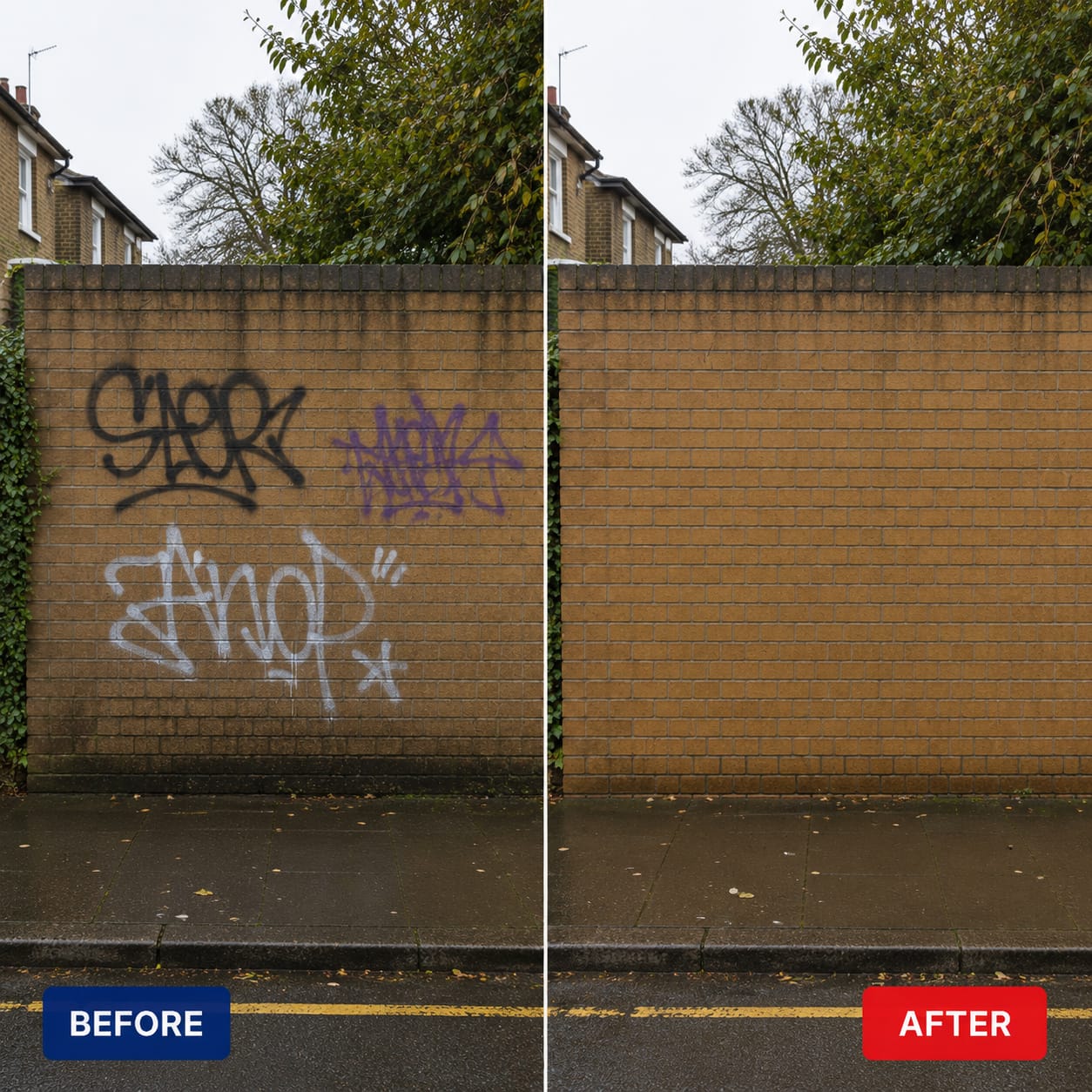
That's what we do at No Graffiti. We work with public-sector and private clients across Manchester, Cheshire and the North West, using the full range of methods — steam and hot-water systems, specialist removers, chemical-free options and pressure washing — matched to each surface, with clear reporting on work completed.
Pro tips for reporting graffiti
- Include a clear photo and an exact location — it speeds everything up.
- Flag offensive graffiti explicitly so it's prioritised.
- Note if it's on private property, so it can be redirected to the right owner.
- Keep a reference number if the council gives you one, in case you need to follow up.
Frequently asked questions
Will the council remove graffiti from my house or business?
No — councils only remove graffiti from land and property they own. Graffiti on private property is the owner's responsibility, though many councils can advise or, for offensive graffiti, may offer help in some cases.
How quickly do councils remove graffiti?
It varies by council and workload, but offensive or abusive graffiti is normally prioritised and removed within a day or two. Non-offensive graffiti is usually scheduled into routine work.
Who removes graffiti from bridges and railway property?
Structures owned by transport, rail or utility operators are their responsibility. Report it to the relevant operator rather than the council.
Can a private contractor remove graffiti from public spaces?
Yes — many councils and organisations contract specialists like us to remove graffiti from the public realm safely and quickly, on a reactive or planned basis.
The bottom line
Responsibility for graffiti follows ownership: council land is the council's, private property is the owner's, and transport or utility structures belong to their operators. Report it to the right place with a clear photo and location — and flag anything offensive so it's prioritised.
Responsible for keeping a site clean?
We provide rapid-response and planned graffiti removal for councils, housing providers and businesses across Manchester, Cheshire and the North West. Get a free quote.