Client: A North West residential developer — project & marketing teams
Quick take
A North West residential developer was repeatedly cleaning branded hoardings on a city-fringe site, with a sales launch and phased handovers fixed in the diary. No Graffiti Ltd cleaned and then coated the hoarding runs so subsequent tags lifted off in minutes, provided reactive cover through construction, and cleaned completed façades ahead of each handover and marketing date. Invoicing ran against project purchase orders throughout.
A development hoarding is a large, flat, well-lit surface at street level carrying a developer's name and a set of CGIs promising something better than what is currently there. That combination makes it one of the most reliably tagged surfaces in any town, and one of the most damaging to leave — passers-by read the hoarding as a statement about the quality of the scheme long before there is a building to judge.
This case study looks at how a developer stopped treating that as a recurring cost and started treating it as a design decision. Names and exact figures have been kept general to respect client confidentiality, but the approach is representative of the work No Graffiti Ltd delivers for contractors and developers across Manchester and the North West.
About the client
The client is a residential developer delivering a phased scheme on a city-fringe site in Greater Manchester — several hundred metres of branded hoarding to the main road, phased construction over roughly eighteen months, and a sales suite opening partway through the programme.
Two internal teams had an interest: the project team, working to handover and inspection dates, and the marketing team, working to launch and viewing dates. Neither had budgeted for cleaning the hoarding eight times.
The challenge
Key pain points
The site had been open a few months when we were approached, and a pattern had established itself:
- Hoardings tagged within days. Each clean bought a week or two before the same runs were hit again, and the branding was looking progressively patchier with every clean.
- A fixed sales launch. The launch date and the sales suite opening were set and promoted; the hoarding is what prospective buyers would walk past on the way in.
- Phased handovers. Practical completion on each phase brought an inspection, and completed façades were being marked before anyone had moved in.
- Vacant, unlit phases. Between completion and occupation the buildings were an obvious target with nobody watching.
- Cost with nothing to show. Repeat cleaning was consuming budget without ever getting ahead of the problem.
The impact of the problem
The commercial risk sat with the marketing side rather than construction. Graffiti around a new development undermines exactly the impression a developer is selling — that this is a safe, well-managed place worth paying a premium for — and that impression is expensive to correct once a buyer has formed it. Meanwhile the project team was absorbing an unplanned recurring cost and a diary risk each time a date approached.
The solution
Why they chose No Graffiti
We were asked to price another clean and instead proposed changing the approach:
- Coat the hoardings, don't keep cleaning them. Hoardings are flat, accessible and predictable, which makes them ideal candidates for a protective coating.
- Mobilisation that matches fixed dates. Site rules, RAMS and inductions handled in advance so attendance before a launch or handover was a scheduling matter, not a mobilisation one.
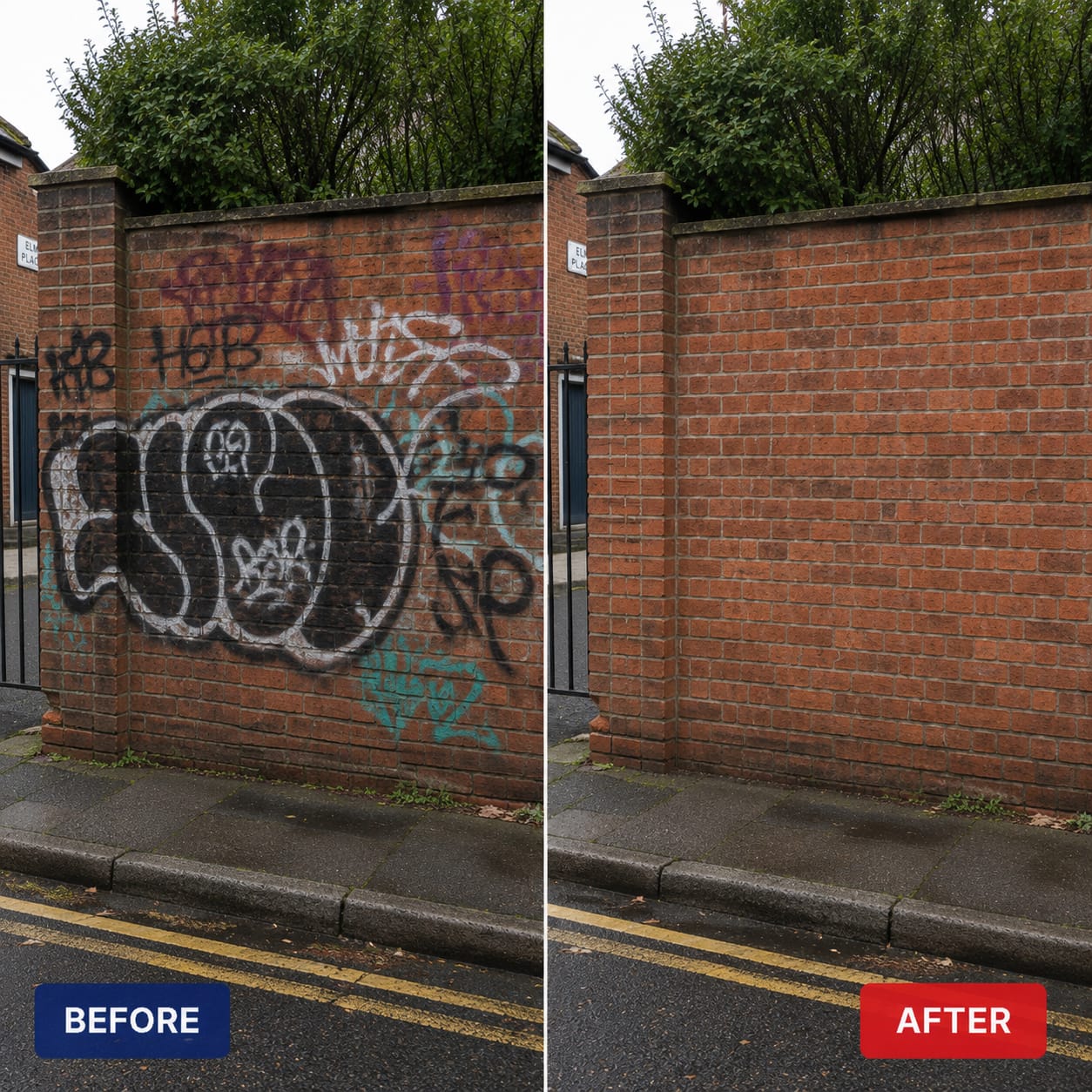
- The right method for new façades. New brick and render mark permanently under the wrong approach, and a damaged elevation days before handover is a far worse problem than the tag.
- Invoicing against project POs. Costs landing correctly on the project rather than arriving as unallocated invoices.
Implementation: team & resources
The work ran across the remainder of the programme in three overlapping strands.
Phase 1 — Clean and coat the hoardings
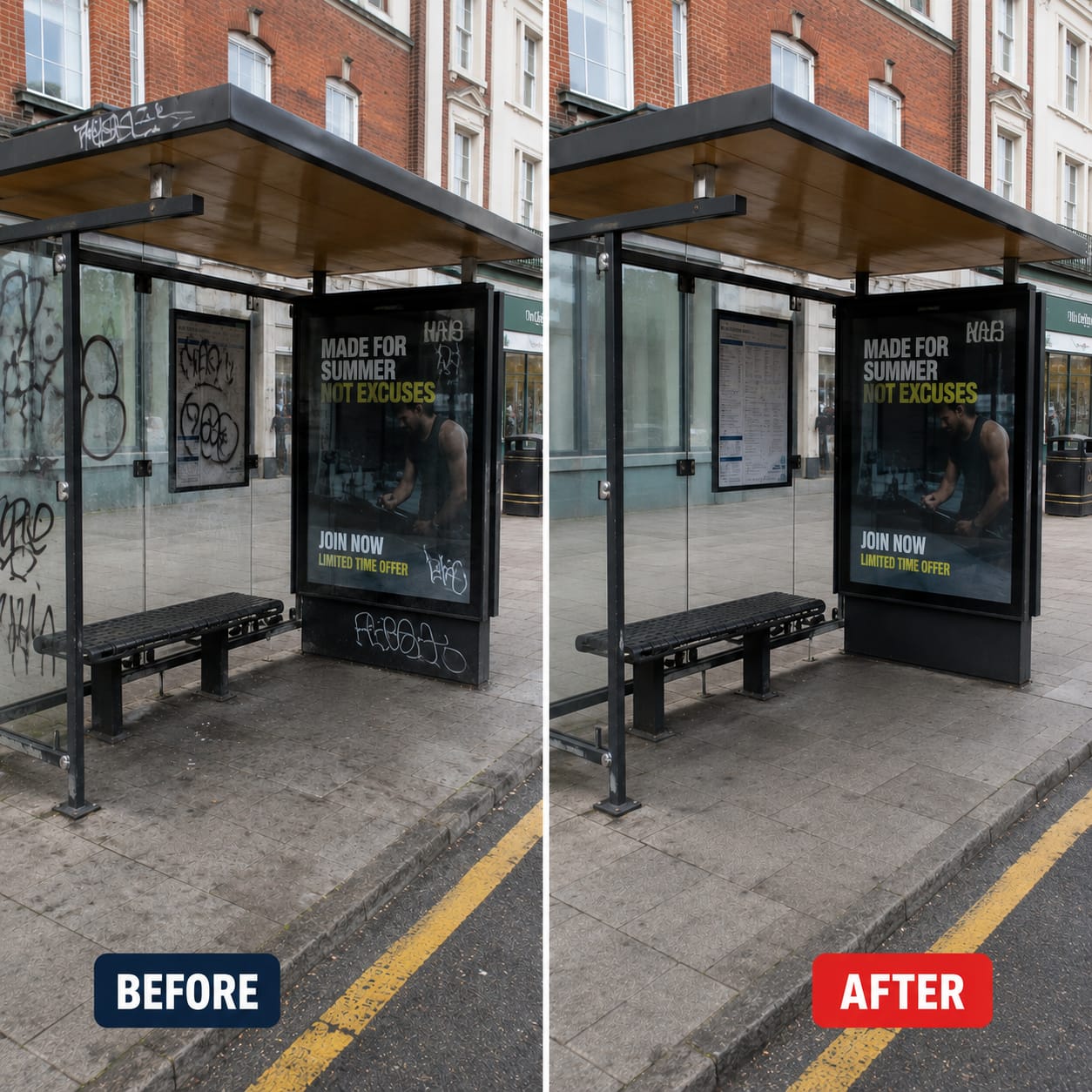
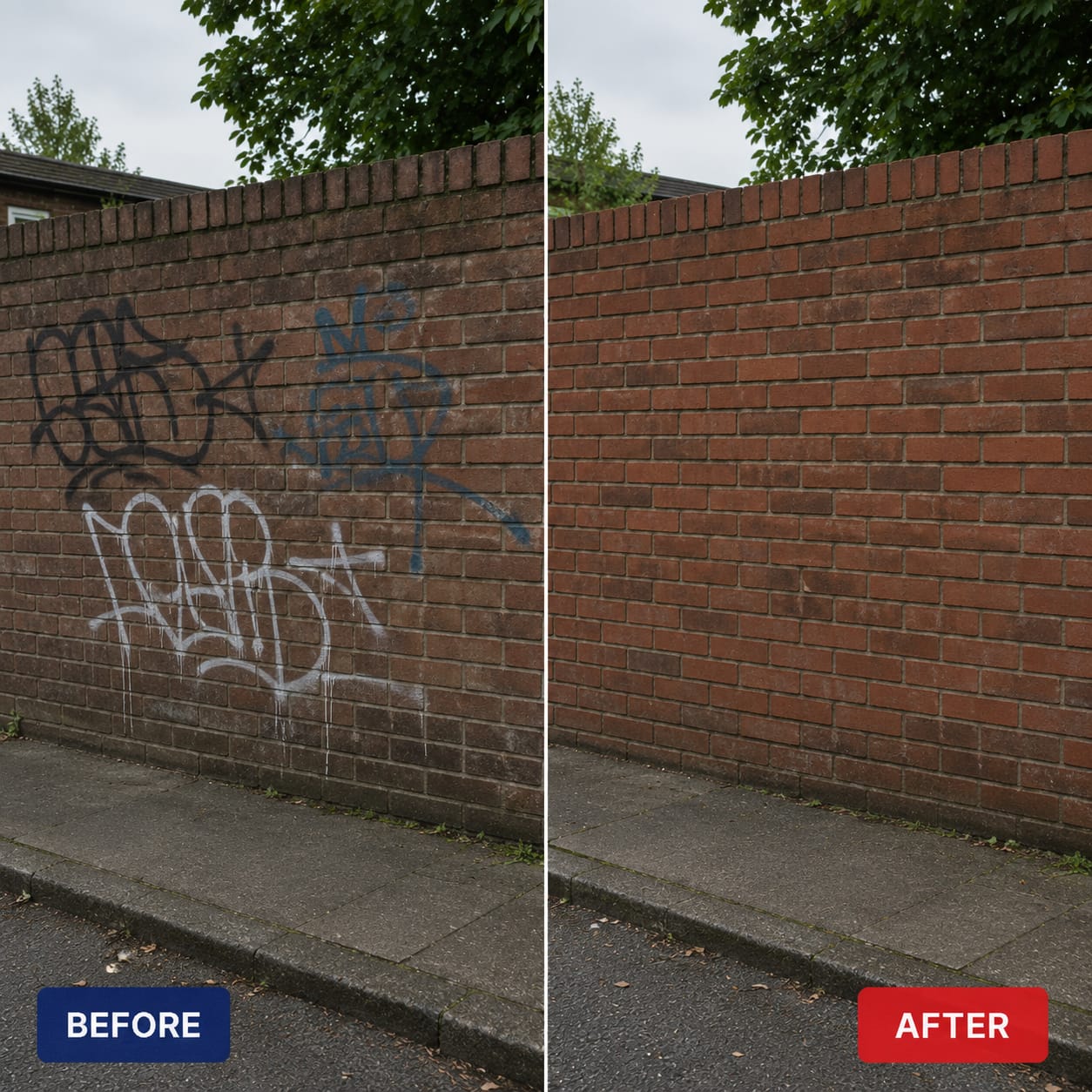
The hoarding runs were cleaned back to the branding and then treated with anti-graffiti coatings. From that point a fresh tag could be cleared in minutes without stripping the print underneath, which is what had been degrading the branding with each previous clean.
Phase 2 — Reactive cover through construction
A standing arrangement covered new tags on hoardings, site fencing and welfare units. Because the coating did most of the work, these visits were short and cheap — the opposite of the pattern the developer had been paying for.
Phase 3 — Façades before each date
Ahead of each handover, inspection and marketing shoot, completed elevations were cleaned using methods appropriate to new brick and render, along with the approach paths and car parking. Vacant phases were visited on a schedule through the marketing period rather than waiting for a report.
The results
The hoardings stopped being a recurring problem and the fixed dates stopped being a risk. The developer's own summary was that the coating paid for itself well before the halfway point of the programme.
| Measure | Before | After |
|---|---|---|
| Hoarding cleans | Full clean every few weeks | Quick wipe-down as needed |
| Branding condition | Degrading with each clean | Print intact under the coating |
| Launch and handover dates | A recurring diary risk | All met |
| Vacant phases | Targeted, reported late | Scheduled visits through marketing |
| Invoicing | Unallocated ad-hoc invoices | Against project purchase orders |
Coat a hoarding when it goes up, not after the fourth clean. Over an eighteen-month programme it is almost always the cheaper decision, and the branding stays legible.
Client testimonial
“We had been treating it as a cleaning cost and just absorbing it. Coating the hoardings at the start would have saved us the first six months of that. The bigger thing was knowing the elevations would be right for handover without someone having to chase it every time.”
Lessons learned & key takeaways
Three key insights
- Hoardings are a coating decision. Flat, accessible and up for a long time — the economics favour protecting them immediately.
- Repeat cleaning damages branding. Each full clean takes a little more of the print with it, which is a cost that never appears on an invoice.
- The vacant period is the riskiest. Buildings between completion and occupation are targeted precisely when appearance matters most to buyers.
Advice for others
- Do give your contractor the handback deadline, not just the start time — it determines which method is viable.
- Do get site rules, RAMS and inductions sorted before you need an urgent visit.
- Don't let a general cleaning contractor near a new façade. New brick and render mark permanently, and the repair costs far more than the clean.
Book graffiti removal for your site
Deadline coming up on site?
We work with contractors and developers across Manchester and the North West — hoardings, façades and site perimeters, mobilised to fixed dates with RAMS and PO-referenced invoicing. Tell us the date and we'll confirm whether we can hit it.
Frequently asked questions
Can you attend before a handover or client visit at short notice?
Yes — that is most of what this work is. Tell us the date and we will tell you honestly whether we can hit it before you commit to anything. Where a deadline is fixed, we plan the method around the time available rather than the other way round.
Is coating a hoarding worth it?
On a programme lasting more than a few months, almost always. Hoardings are flat and accessible, so coating is straightforward, and once treated a tag lifts off in minutes rather than requiring a full clean that takes a little more of the printed branding each time.
Do you provide RAMS and work to our site rules?
Yes. Site-specific risk assessments and method statements are supplied before we mobilise, our operatives work to your induction and PPE requirements, and we hold CHAS accreditation with full insurance.
Can you clean new brick and render without damaging it?
Yes, with the right method. New masonry and render are easily marked by excessive pressure or aggressive chemicals, and a damaged elevation days before handover is a far worse problem than the graffiti. We match the method to the substrate and test where there is any doubt.