Client: A national facilities management company — North West contract team
Quick take
A national FM company lost its graffiti-removal supplier partway through a North West contract, leaving open jobs, an SLA running and an end client expecting closure evidence. No Graffiti Ltd was set up as an approved supplier within days, cleared the outstanding jobs, and moved onto a standing arrangement — accepting or declining work quickly, attending to the FM company's SLA and returning photographic closure against their job references.
Most of the specialist work we do for facilities management companies starts calmly, with a procurement process and a rate card. This one did not. A supplier had stopped responding partway through a contract, leaving a handful of open graffiti jobs, a service standard still running against them, and an end client who would notice.
This case study looks at how that gap was covered. Names and exact figures have been kept general to respect client confidentiality, but the sequence and the working arrangement are representative of the subcontract support No Graffiti Ltd provides to FM companies across Manchester and the North West.
About the client
The client is a national facilities management company delivering hard and soft FM services across a portfolio of commercial and public-sector buildings. The North West contract team manages delivery in the region, largely through a supply chain of specialist subcontractors rather than directly employed operatives.
Graffiti removal was a small line in a much larger agreement — genuinely required, entirely dependent on a single supplier, and invisible until that supplier stopped answering.
The challenge
Key pain points
The contract team called us on a Thursday afternoon with a specific and immediate set of problems:
- Open jobs with a clock running. Several reported graffiti jobs were outstanding and already close to breaching the service standard agreed with the end client.
- No approved alternative in place. The supply chain had one specialist for this work and no second name that had been through compliance checks.
- Compliance checks take time. Accreditation, insurance and RAMS all had to be verified before anyone could attend — normally a process of weeks.
- Evidence was missing. Some jobs the previous supplier claimed to have completed had no photographs, so the FM team could not close them or prove anything to the client.
- Escalation was the real risk. A missed SLA would have gone to the client's own management, which is the outcome an FM contract team is measured on avoiding.
The impact of the problem
The commercial exposure was modest; the reputational exposure was not. An FM company's value to its client rests on problems being handled without the client having to think about them. A supply-chain failure that surfaces as a missed service standard undermines that directly, and it tends to be remembered at renewal far longer than the size of the job would justify.
The solution
Why they chose No Graffiti
We were approached because we could move quickly and because our paperwork was already in order:
- Accreditation ready to hand. CHAS certificates and insurance documents supplied the same afternoon, which compressed the supplier-approval step from weeks to days.
- A straight answer on timing. We confirmed which of the outstanding jobs we could attend before the deadline and which we could not, rather than accepting everything and hoping.
- Photographic closure as standard. The missing evidence from the previous supplier was precisely the gap the team needed filling.
- Local coverage. Vans based in Macclesfield covering Greater Manchester and Cheshire East meant attendance was a scheduling question, not a mobilisation one.
Implementation: team & resources
The work fell naturally into three stages over about a month.
Phase 1 — Approval and backlog (week 1)
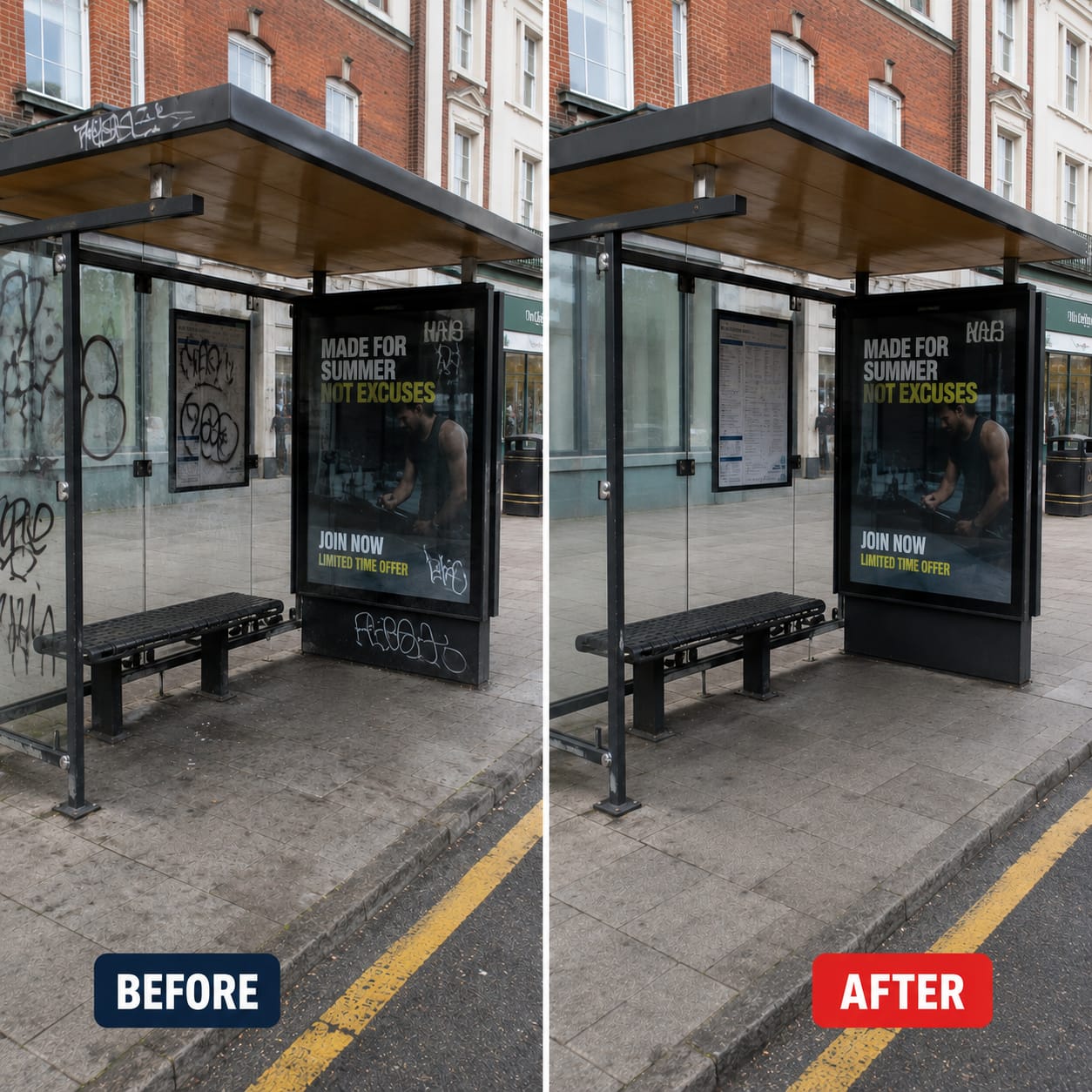
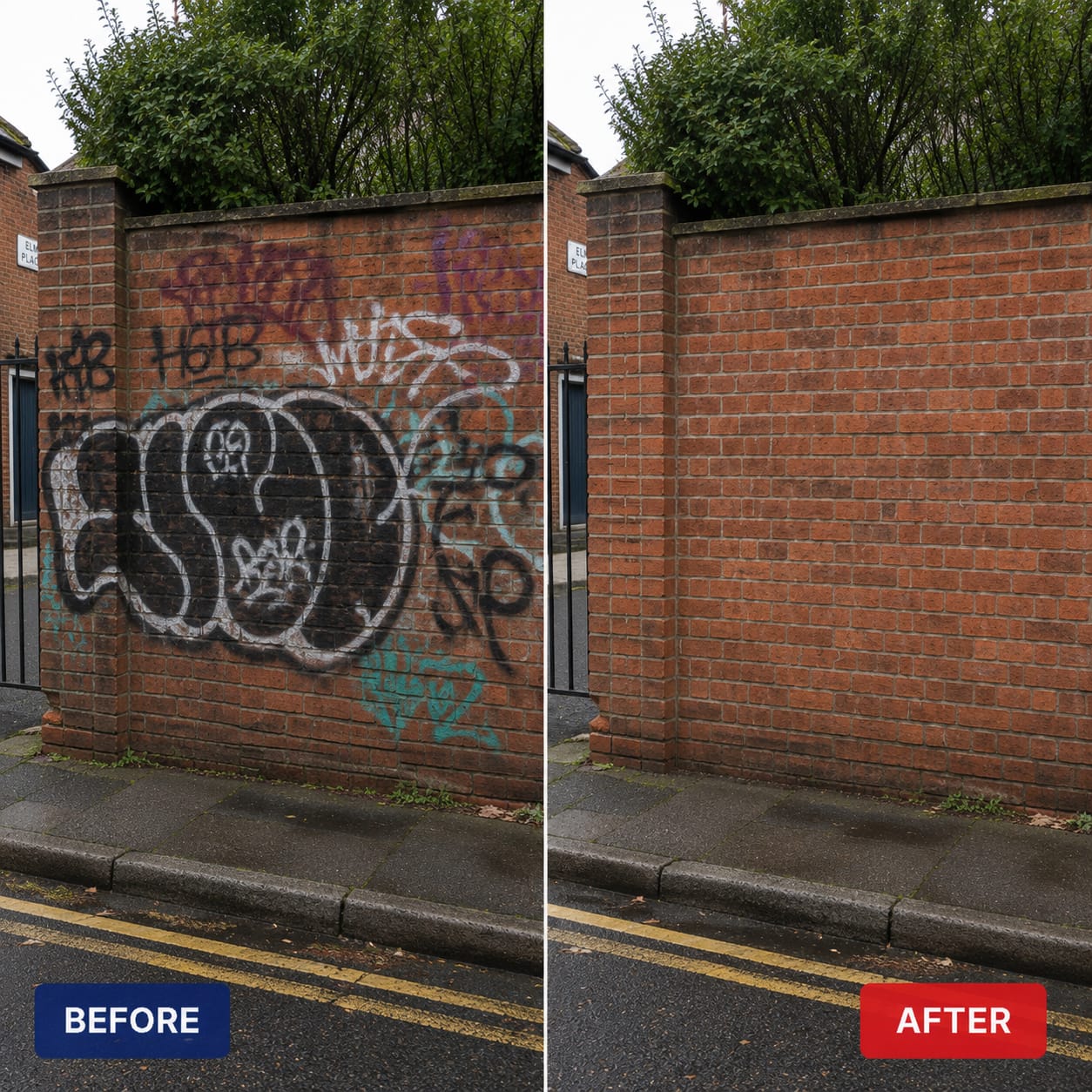
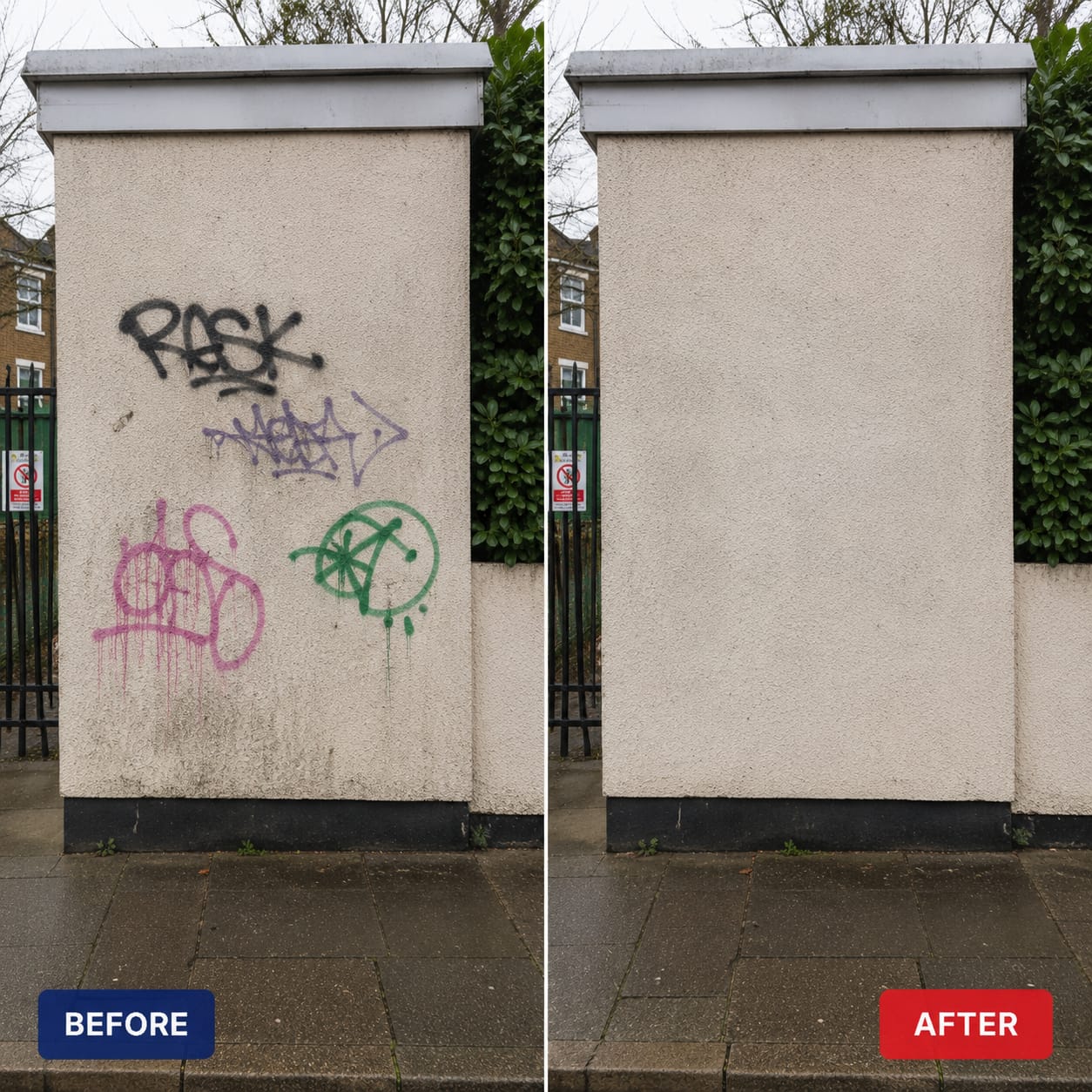
Compliance documents went over on day one and approval came back within a few days. We attended the outstanding jobs in deadline order, prioritising the two closest to breach, and returned photographs against each of the FM company's job references so they could be closed properly in the client's system.
Phase 2 — Verifying the unknowns (week 2)
For the jobs the previous supplier had marked complete without evidence, we visited each location and photographed the current state. Two had not been done at all, which the team needed to know before the client discovered it. Those were completed and documented alongside the rest.
Phase 3 — A standing arrangement (ongoing)
With the immediate problem resolved, we agreed a rate card and a working pattern: work sent by email with a location, photograph and job reference; acceptance or a decline confirmed quickly; attendance to their SLA including out-of-hours where a site required it; and anti-graffiti coatings priced separately on the buildings generating repeat reports.
The results
The measure that mattered was that the end client experienced no interruption. Everything else followed from getting the compliance step out of the way quickly.
| Measure | Before | After |
|---|---|---|
| Supplier approval | Weeks, blocking attendance | Days — documents ready on request |
| Outstanding jobs | Several near SLA breach | All closed with evidence |
| Jobs 'completed' without proof | Unknown status | Verified, two re-done |
| Closure evidence | Missing | Photos against every job reference |
| Escalations to end client | Imminent | None |
Worth approving a specialist as a supplier before you need one. Accreditation checks take minutes when nothing is on fire and days when a client is waiting.
Client testimonial
“We needed someone approved and on site inside a week, which normally is not possible. Having every certificate ready to send made the difference. The jobs got closed, the evidence was there, and our client never knew we had a problem.”
Lessons learned & key takeaways
Three key insights
- Single-supplier specialisms are a hidden risk. A small line in a contract can still cause an escalation if only one company can deliver it.
- Compliance readiness is a service. How quickly a subcontractor can be approved often matters more than their day rate.
- No evidence means no completion. A job without a photograph cannot be closed, and cannot be defended if the client asks.
Advice for others
- Do approve a second specialist before you need them — the cost of doing so is nothing.
- Do require photographic closure as standard rather than on request; it is the only thing that survives a dispute.
- Don't assume a job marked complete was completed. Where evidence is missing, verify it before the client does.
Add a graffiti specialist to your supply chain
Need specialist cover under your contract?
We work as the graffiti removal subcontractor for FM companies and principal contractors across Manchester and the North West — fast acceptance, full accreditation and photographic closure. Tell us how your contracts run and we'll explain how we'd fit.
Frequently asked questions
How quickly can you be approved as a supplier?
Usually days rather than weeks, because our accreditation certificates, insurance documents and standard RAMS are ready to send on request. The limiting factor is normally your own approval process rather than anything at our end.
Can you work under our contract and service standards?
Yes — it is a large part of what we do. We accept work through your systems, attend to your SLA and return completion evidence and paperwork in the format you need to close the job with your client.
What happens if you cannot meet a deadline?
We tell you straight away rather than accepting the job and letting it drift. A fast decline is far more useful to a contract team than a slow failure, because it leaves time to find another route.
How do you invoice?
Against your purchase order or job reference at the rates agreed, with no extras appearing after the event. If you run scheduled work alongside reactive call-outs we can consolidate the billing.