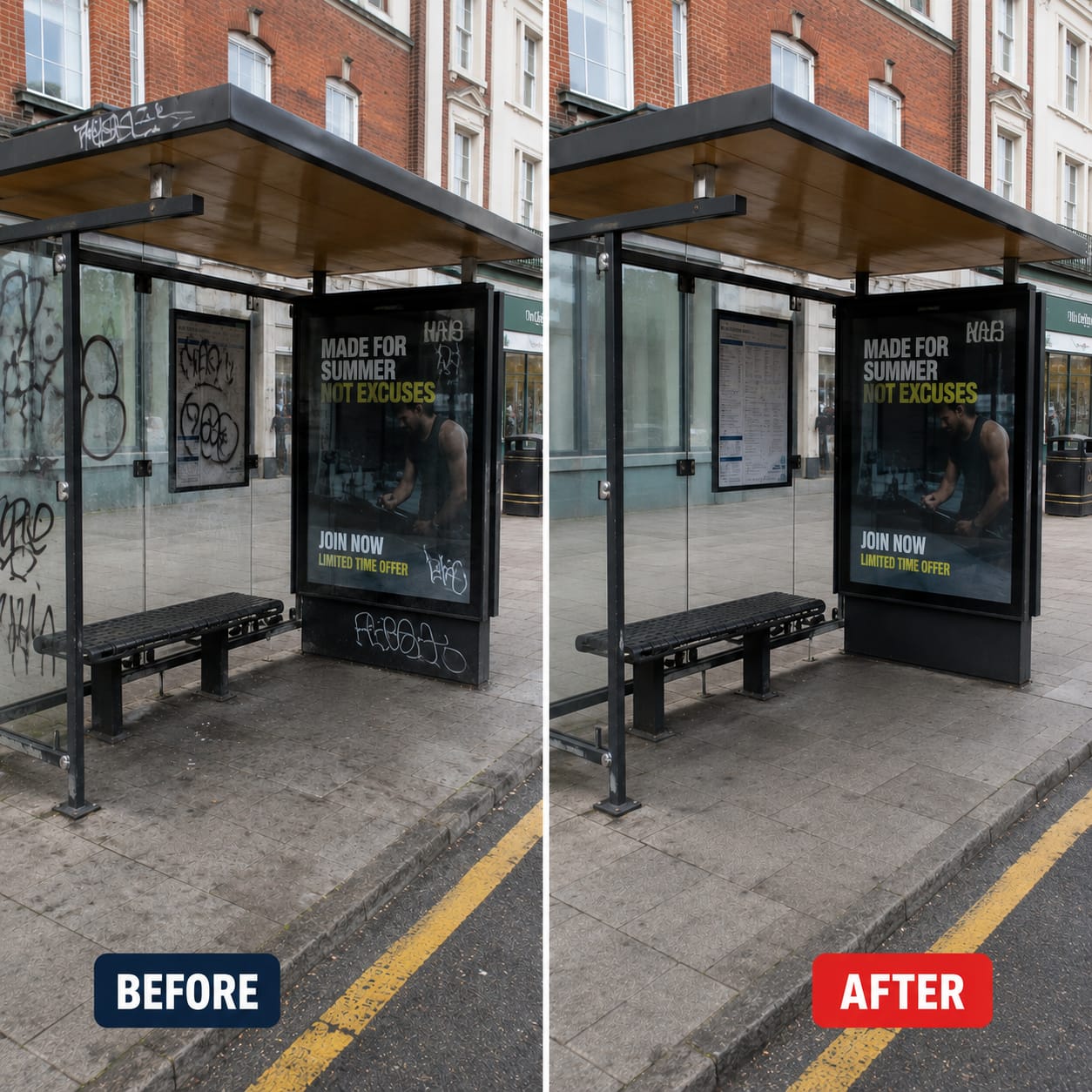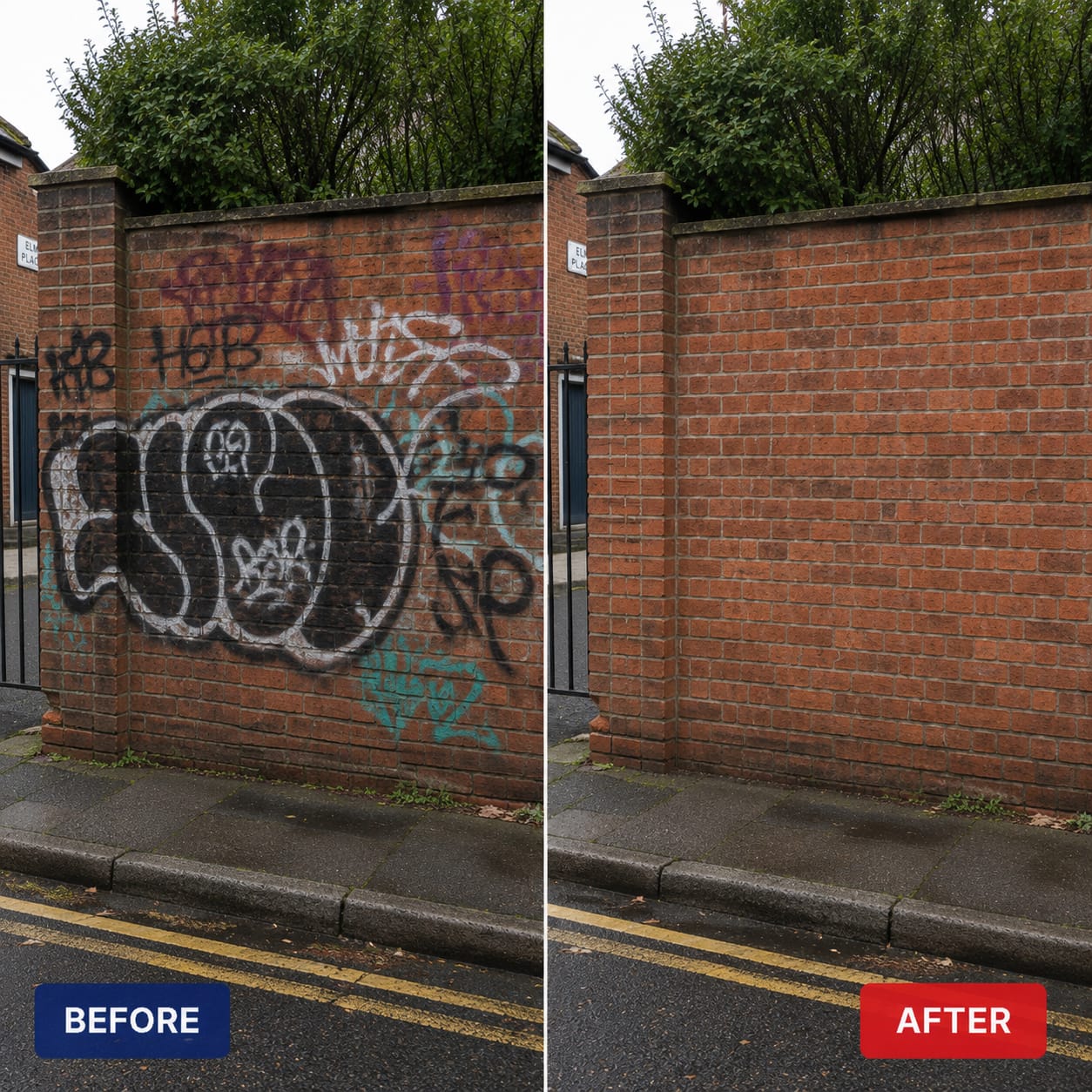
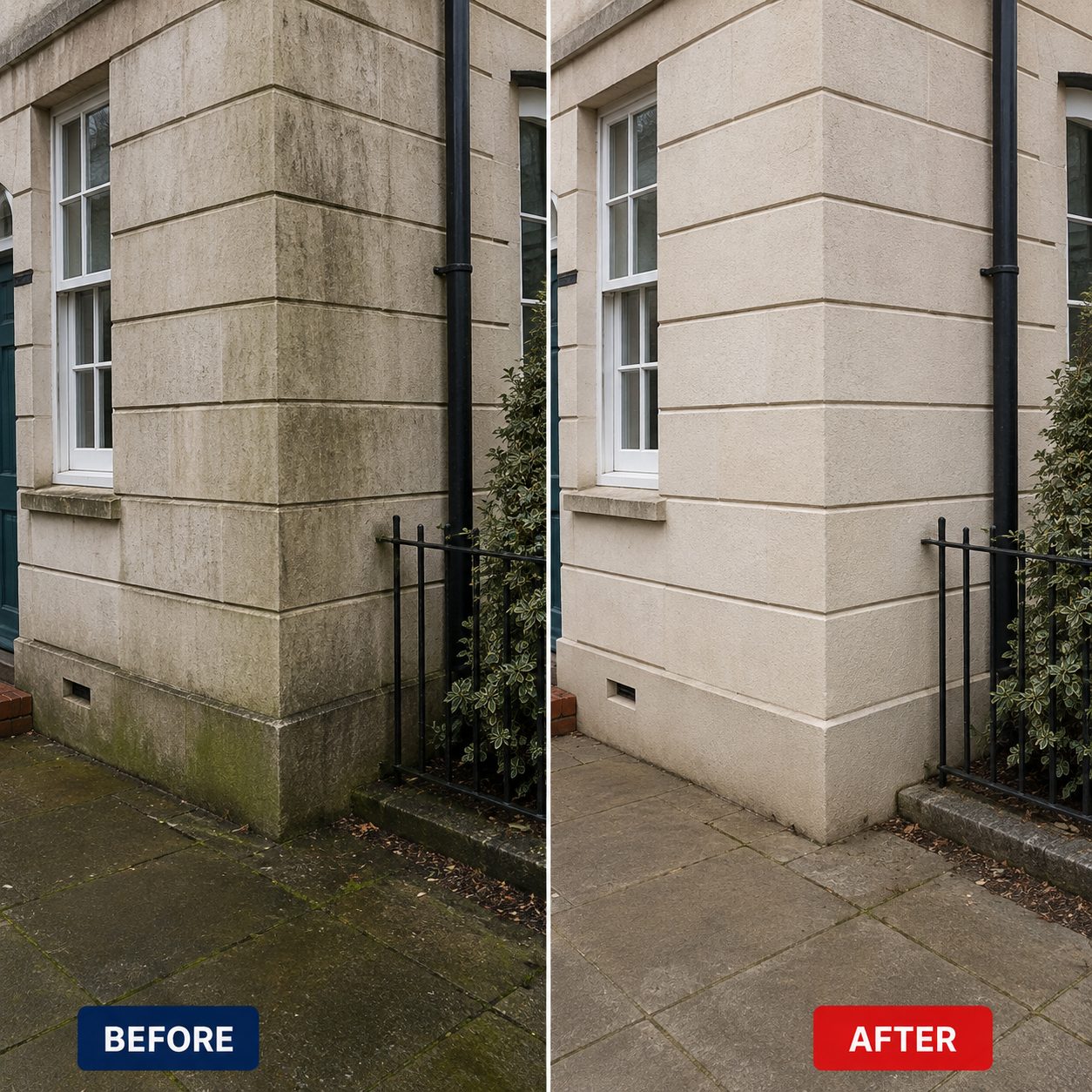
Client: A North West university — estates & campus services team
Quick take
A North West university estates team needed its campus presentable for open day, with a listed sandstone frontage, a poorly regarded underpass on the main walking route and graffiti across service areas. No Graffiti Ltd worked to a six-week schedule built around the teaching timetable, using surface-appropriate methods on the historic stonework and treating the routes prospective students actually walk. Work was recorded by location so the estates team could see which areas generate repeat problems.
A university campus is effectively a small town, with a small town's range of problems and none of its anonymity. Buildings of wildly different ages sit alongside each other, service yards hide behind grand frontages, and once a year the whole thing is walked by prospective students and their parents forming a view about whether this is somewhere they want to spend three years.
This case study looks at how a North West university prepared for exactly that. Names and exact figures have been kept general to respect client confidentiality, but the constraints and approach are representative of the campus work No Graffiti Ltd delivers across Manchester and the North West.
About the client
The client is a university in Greater Manchester with a city-centre campus mixing Victorian sandstone buildings, mid-century concrete and recent rainscreen-clad additions. The estates and campus services team maintains the buildings, grounds and routes between them alongside a busy programme of refurbishment work.
Open days, applicant visit days and graduation are the fixed points the estates year is built around, and they are known a long way in advance.
The challenge
Key pain points
Six weeks out from an open day, the estates team had a clear list and a set of constraints that had previously made it hard to act:
- A listed sandstone frontage. Darkened by algae and soot, and the surface that most defines how the institution looks in photographs — but also the one most easily damaged by the wrong method.
- An underpass nobody liked. On the main walking route between two parts of the campus, heavily tagged and consistently mentioned in student feedback about feeling unsafe.
- Graffiti across service areas. Bin stores, bike shelters and the backs of halls of residence, largely unseen by staff but directly on the routes visitors are walked along.
- Teaching could not be disturbed. Noise and water near lecture theatres and research space ruled out large parts of the working day.
- Uncertainty about consent. Nobody was clear whether cleaning the listed frontage needed approval, which had stalled the job in previous years.
The impact of the problem
The campus was being judged on its worst hundred metres. Prospective students form an impression walking between buildings rather than sitting in the presentation, and the underpass in particular was doing real damage — a route that feels unsafe after dark is a genuine factor in where an eighteen-year-old chooses to live. Internally, the frontage had been on the estates list for three years and kept slipping because nobody wanted to be responsible for damaging a listed building.
The solution
Why they chose No Graffiti
The deciding factor was confidence about the historic stonework:
- Surface-appropriate methods. Sandstone, soft brick and lime mortar need gentle steam or poultice approaches, not pressure. We test a discreet area before committing on any uncertain substrate.
- Clarity on consent. We set out early what would and would not need approval, which unstuck a job that had been deferred for years.
- Scheduling around teaching. A written sequence tied to the timetable, using early mornings and one vacation week rather than assuming the campus would work around us.
- Whole-campus view. Willingness to deal with the service areas and underpass as well as the photogenic frontage.
Implementation: team & resources
Six weeks, sequenced so the most technically sensitive work happened first and the most visible work finished last.
Phase 1 — Test panels and the frontage (weeks 1–3)
We began with small test panels on inconspicuous sections of the sandstone to confirm the method and the finish before touching the main elevation. The stone and masonry cleaning then progressed section by section, working early mornings to avoid the teaching day and giving the team a chance to review each section as it completed.
Phase 2 — The underpass (vacation week)
The underpass was cleaned end to end during a vacation week — walls, ceiling, lighting surrounds and drainage channel. This is the job that changed student feedback most, and it is worth noting the difference came as much from cleaning the ceiling and light fittings as from removing the tags.
Phase 3 — Service areas and routes (weeks 5–6)
The final fortnight covered bin stores, bike shelters, the backs of halls and the paths in between, including moss and algae treatment on the steps and walkways that carry most of the open-day foot traffic.
The results
The campus was ready with a week in hand, and the estates team gained a location-by-location record showing where the recurring problems actually are.
| Measure | Before | After |
|---|---|---|
| Listed sandstone frontage | Deferred three years running | Cleaned, method tested first |
| Main underpass route | Tagged, raised in student feedback | Cleared end to end |
| Teaching disruption | The reason work kept slipping | None |
| Service areas and halls | Outside the usual scope | Included in the programme |
| Campus reporting | None | Recorded by building and location |
Book campus work for the weeks before an open day, not the days before. The finish is better, it costs less, and there is time to revisit anything that needs a second pass.
Client testimonial
“The frontage had been on our list for three years because nobody wanted to risk it. Seeing the test panels first is what gave us the confidence to go ahead. The underpass was the bigger surprise, though — students noticed that far more than the building.”
Lessons learned & key takeaways
Three key insights
- Test panels unstick difficult decisions. On historic stone the risk of damage is what causes deferral; a test panel converts an argument into evidence.
- Routes matter more than frontages. Students judge a campus by the walk between buildings, not the photograph on the prospectus.
- Plan around the timetable, not through it. Early mornings and vacation weeks removed the constraint that had blocked the work for years.
Advice for others
- Do flag listed and conservation-area buildings at the first conversation — it changes both method and consent.
- Do include the service areas and underpasses; they affect perception more than the grand elevations do.
- Don't leave campus work until the week of an open day. Anything needing a second pass will not get one.
Book campus cleaning for your estate
Getting a campus ready for a key date?
We work with university and college estates teams across Manchester and the North West — safe methods for historic buildings, scheduling around teaching and campus-wide reporting. Tell us your dates and we'll build a schedule around them.
Frequently asked questions
Can you clean listed or historic buildings safely?
Yes, and it is where method selection genuinely matters. Sandstone, soft brick and lime-based surfaces are easily damaged by aggressive chemicals or high pressure. We use surface-appropriate methods including chemical-free and poultice-based approaches, and we test a discreet area first where the substrate is uncertain.
Can you work around our teaching timetable?
Yes. Estates teams usually give us the windows that work — early mornings, evenings, vacation periods or specific buildings on specific days — and we plan around them. Noise and water near teaching or research space is worth avoiding, and we would rather schedule properly than disrupt.
Do we need consent to clean a listed building?
It depends on the building, the method and what is being removed, and it is worth establishing early rather than assuming. We will tell you where we think approval is likely to be needed so it can be checked with your conservation officer before the work is scheduled.
Can you report across the whole campus?
Yes. We record work by location with dated before-and-after photographs, so estates teams can see the whole picture rather than individual jobs — including which buildings and service areas generate repeat incidents.